Thomas Jefferson: 10 Historic Achievements That Transformed American Democracy

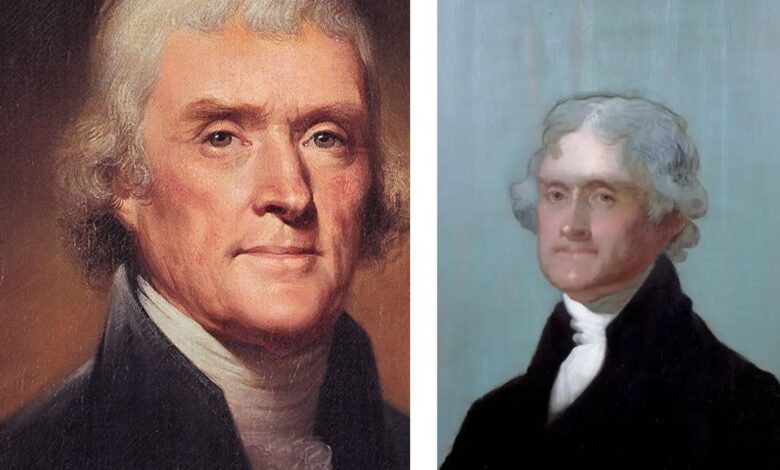
The historical legacy of founding father Thomas Jefferson remains one of the most influential forces shaping modern American governance, philosophy, and political culture. Serving as the principal author of the Declaration of Independence and the third president of the United States, his visionary ideas regarding liberty, individual rights, and democratic self-governance laid the intellectual foundation for a rising republic. Beyond his monumental political career, he was a polymath who excelled in architecture, agriculture, education, and literature. This extensive biography explores his early life, political triumphs, presidential accomplishments, complex personal philosophy, and enduring impact on global democratic ideals throughout world history.
Quick Bio
| Attribute | Details |
| Full Birth Name | Thomas Jefferson |
| Date of Birth | April 13, 1743 |
| Place of Birth | Shadwell, Colony of Virginia |
| Date of Death | July 4, 1826 |
| Key Position | 3rd President of the United States |
Early Childhood and Virginia Roots
Born into a prominent planter family in rural Virginia, young Thomas Jefferson spent his earliest years exploring the lush countryside and gaining a deep appreciation for nature. His father was a successful surveyor and landowner who provided him with classical tutoring, while his mother belonged to a wealthy regional family. Following his father’s sudden passing, he inherited significant property, including farmland and enslaved laborers. These foundational experiences in colonial Virginia shaped his lifelong affinity for agrarian living, architectural design, and scholarly pursuits, laying the groundwork for his future intellectual development and prominent political leadership in early American society.
Education at William and Mary
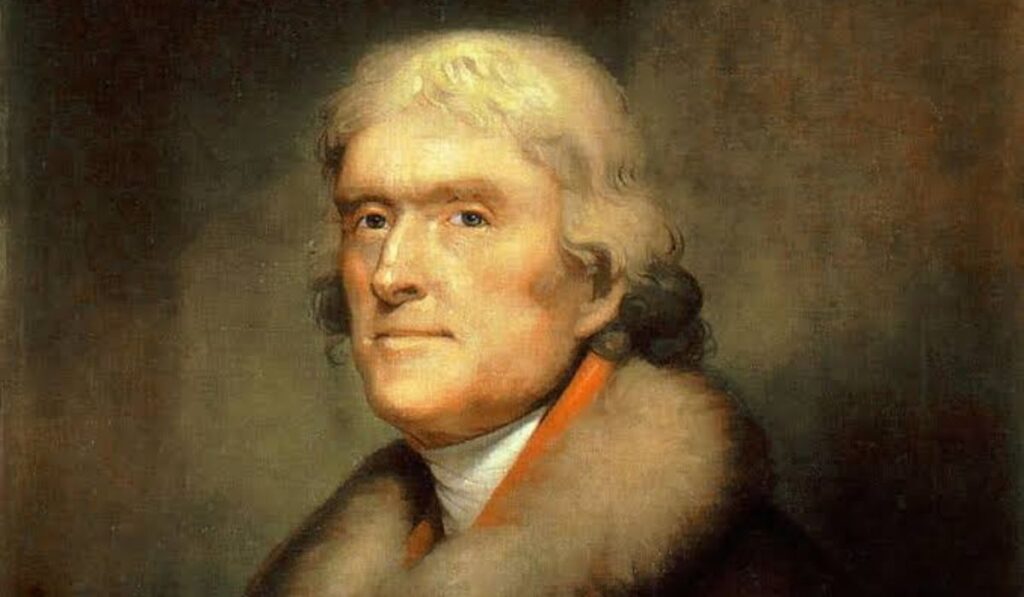
Enrolling at the College of William and Mary in Williamsburg, Thomas Jefferson immersed himself in classical literature, natural philosophy, higher mathematics, and European Enlightenment thought. Under the mentorship of influential professors like William Small, he developed a disciplined regimen of rigorous daily study that lasted throughout his adult lifetime. He spent long hours reading ancient Greek and Latin texts, refining his philosophical views on individual liberty and natural law. This intensive academic preparation fostered a sharp analytical mind, equipping him with the literary fluency and broad intellectual vision needed to articulate revolutionary political concepts for a developing nation.
Legal Career and Early Politics
Admitted to the Virginia bar after studying under prominent legal scholar George Wythe, Thomas Jefferson established a highly successful legal practice across the colony. Handling hundreds of complex land disputes and civil cases, he gained practical insights into colonial statutory law and British constitutional principles. His legal acumen earned him election to the Virginia House of Burgesses in 1769, where he joined radical patriot leaders opposing restrictive British taxation policies. His early legislative work highlighted his exceptional writing abilities, quickly establishing his reputation as a brilliant constitutional defender committed to protecting colonial self-determination and legislative autonomy.
Authoring the Summary View
Publishing a powerful political pamphlet titled A Summary View of the Rights of British America, Thomas Jefferson articulated a bold constitutional argument against royal tyranny. Written in 1774, the document argued that the British Parliament possessed no legitimate authority to pass laws binding the American colonies without their direct representation. His eloquent prose and fiery defense of natural rights circulated widely among colonial patriots, catapulting him into national prominence. This influential legislative paper demonstrated his rare ability to synthesize complex Enlightenment philosophy into persuasive, accessible revolutionary propaganda, establishing him as an indispensable literary voice for the independence movement.
Writing the Declaration of Independence
Drafting the monumental Declaration of Independence in June 1776, Thomas Jefferson immortalized the fundamental principles of universal human rights and self-governance. Chosen by the Continental Congress to compose the official document, he crafted eloquent phrases proclaiming that all men are created equal with unalienable rights to life, liberty, and the pursuit of happiness. Although Congress made minor editorial revisions to his original manuscript, the final text retained his profound moral clarity and philosophical brilliance. This historic accomplishment defined the moral purpose of the American Revolution, creating an enduring global symbol for democratic movements and human freedom worldwide.
Governor of Revolutionary Virginia
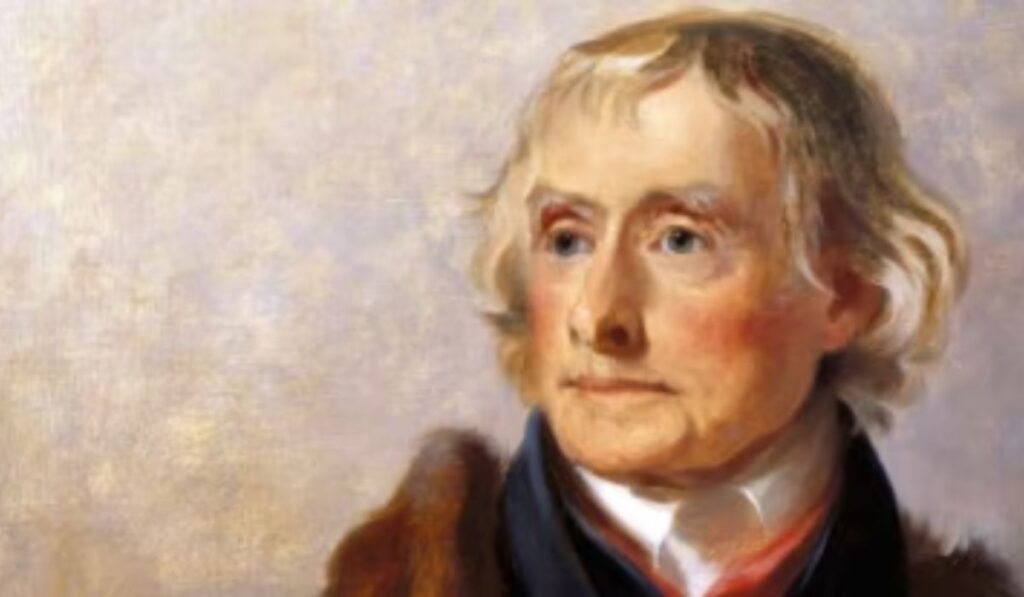
Serving as Governor of Virginia during the height of the Revolutionary War, Thomas Jefferson faced immense administrative challenges and wartime crises. Elected in 1779, he managed troop mobilizations, military supplies, and state defenses while British forces invaded the region. His tenure proved turbulent, culminating in a narrow escape from capturing forces led by Benedict Arnold. Despite facing severe criticism regarding state readiness, he worked tirelessly to reform Virginia’s statutory codes, advocating for religious freedom, public education, and judicial modernization. This stressful executive experience provided crucial lessons in wartime leadership, administrative governance, and political resilience.
Drafting the Virginia Statute for Religious Freedom
Championing total religious liberty, Thomas Jefferson drafted the historic Virginia Statute for Religious Freedom to separate church and state. Introduced in 1779 and officially enacted in 1786 through the efforts of James Madison, the landmark legislation disestablished the Anglican Church in Virginia. The law guaranteed that no citizen could be compelled to attend or support any religious institution, protecting freedom of conscience for all faiths. Considered one of his proudest political achievements, this monumental statute established the constitutional blueprint for the First Amendment of the United States Constitution, permanently safeguarding individual freedom of belief.
Minister to France and European Experience
Succeeding Benjamin Franklin as United States Minister to France in 1785, Thomas Jefferson spent five formative years immersed in European diplomacy, culture, and intellectual life. Residing in Paris on the eve of the French Revolution, he negotiated crucial commercial treaties, observed continental European politics, and collected rare books, scientific instruments, and architectural blueprints. He forged lasting friendships with French intellectuals while witnessing political unrest firsthand. This enriching diplomatic experience broadened his international perspective, deepened his commitment to republican governance, and refined his sophisticated taste in classical architecture, fine wines, and European visual arts.
Secretary of State and Cabinet Rivalries
Appointed as the nation’s first Secretary of State by President George Washington, Thomas Jefferson managed foreign affairs while locked in fierce political battles. He strongly clashed with Treasury Secretary Alexander Hamilton over federal power, economic policy, and interpretation of the United States Constitution. While Hamilton favored central banking and strong federal authority, he championed agrarian interests, states’ rights, and strict constitutional limitations. Their intense cabinet rivalries led to the formation of America’s first political party system, giving birth to the Democratic-Republican Party and establishing fundamental national debates regarding governance that persist today.
Vice Presidency under John Adams
Serving as Vice President after finishing second in the 1796 presidential election, Thomas Jefferson found himself politically alienated within John Adams’s administration. Dissatisfied with federalist policies, he secretly drafted the Kentucky Resolutions in response to the controversial Alien and Sedition Acts. His writings argued that states held the constitutional authority to nullify unconstitutional federal legislation that infringed upon basic civil liberties. This tense political period deepened party divides across the nation, setting the stage for a dramatic national election that would fundamentally transform American political history and shift presidential power between competing partisan factions.
The Election of 1800
Winning the historic Election of 1800, Thomas Jefferson characterized his presidential victory as the peaceful Revolution of 1800. The bitter campaign resulted in a tie in the Electoral College between himself and Aaron Burr, forcing the House of Representatives to break the deadlock after thirty-six grueling ballots. His eventual inauguration marked the first peaceful transfer of executive power between opposing political parties in modern constitutional history. In his conciliatory inaugural address, he sought national unity by declaring that all Americans shared common republican principles, promising a frugal government dedicated to preserving individual liberties and rights.
The Louisiana Purchase Expansion
Orchestrating the monumental Louisiana Purchase in 1803, Thomas Jefferson doubled the geographic size of the United States overnight. Purchasing over eight hundred thousand square miles of western territory from France for fifteen million dollars, he secured full navigational control of the Mississippi River and the strategic port of New Orleans. Although he harbored constitutional doubts regarding executive authority to acquire foreign land without prior legislative amendment, he recognized the immense economic and geopolitical benefits for the young republic. This historic land acquisition transformed America into a continental power, opening vast western frontiers for settlement.
Sponsoring the Lewis and Clark Expedition
Commissioning the Corps of Discovery in 1803, Thomas Jefferson dispatched Meriwether Lewis and William Clark to explore the newly acquired western territories. He personally instructed the commanders to map waterways, establish trade relations with Indigenous tribes, and document flora, fauna, and geography across the continent. Reaching the Pacific Ocean and returning with invaluable scientific data, the successful expedition expanded geographic knowledge and strengthened American territorial claims in the Pacific Northwest. His visionary backing of scientific exploration opened vast trade routes, accelerated western migration, and cemented his legacy as a patron of geographic discovery and natural science.
The Barbary War and Foreign Policy
Facing naval piracy along North African trade routes, Thomas Jefferson launched America’s first overseas military conflict in the First Barbary War. Refusing to continue paying exorbitant tributes to Mediterranean pirates demanding protection money, he dispatched naval frigates and Marines to enforce free navigation in foreign waters. The successful naval blockade and land operations forced the Pasha of Tripoli to sign a favorable peace treaty, securing American merchant shipping without annual tribute payments. This decisive foreign policy response demonstrated national resolve, established naval prestige, and protected vital international commerce for the young American republic on foreign seas.
The Embargo Act Controversy
Enacting the controversial Embargo Act of 1807 during his second presidential term, Thomas Jefferson attempted to avoid war with Britain and France. Designed to protect American maritime neutrality by prohibiting international trade, the law severely damaged the domestic economy instead of foreign powers. American merchants suffered widespread financial distress, leading to massive smuggling and political outrage, particularly in New England trading ports. Recognizing the law’s failure to deter European aggression, he repealed the legislation shortly before leaving office, acknowledging that economic isolationism had imposed burdensome domestic hardships without achieving its intended diplomatic foreign policy objectives.
Architectural Masterpiece of Monticello
Designing his iconic Virginia plantation estate, Thomas Jefferson spent decades constructing and refining his architectural masterpiece, Monticello. Drawing heavy inspiration from Italian Renaissance architect Andrea Palladio and classical Roman ruins, he created a unique neoclassical home featuring a signature octagonal dome, hidden service passages, and innovative mechanical inventions. Monticello served as a living laboratory for his diverse interests in architecture, botany, landscape design, and domestic comfort. Today preserved as a UNESCO World Heritage site, the hilltop mansion reflects his aesthetic brilliance and complex lifestyle, standing as an enduring symbol of early American neoclassical design and cultural heritage.
Founding the University of Virginia
Establishing the University of Virginia in 1819, Thomas Jefferson fulfilled his lifelong dream of creating an institution dedicated to higher education. He personally designed the architectural layout of the Academical Village, developed the academic curriculum, and recruited distinguished international faculty members. Breaking with traditional religious institutions, he established the university as a completely secular sanctuary centered around a magnificent neoclassical library known as the Rotunda. Considered one of his greatest gifts to future generations, the university embodied his firm conviction that an educated citizenry was essential for sustaining a free, self-governing, democratic republic over time.
Complex Relationship with Slavery
Examining the profound historical contradiction surrounding Thomas Jefferson reveals the deep tension between his democratic ideals and his status as a slaveholder. Throughout his lifetime, he owned over six hundred enslaved African Americans who maintained his estate, farmed his lands, and supported his lavish lifestyle. While he penned famous words condemning slavery and advocated for gradual emancipation, he freed only a small fraction of enslaved individuals in his will, including members of the Hemings family. This enduring paradox remains a central subject of modern historical analysis, highlighting the deep moral compromises present during America’s founding era.
The Twilight Years and Adams Reconciliation
Retiring to Monticello after two presidential terms, Thomas Jefferson devoted his final years to reading, managing his estate, and engaging in profound philosophical correspondence. Most notably, he rekindled his historic friendship with John Adams after a decade of bitter political silence, exchanging dozens of warm, insightful letters reflecting on political theory, revolutionary history, and mortality. Their extraordinary intellectual dialogue ended poignantly on July 4, 1826, when both founding fathers passed away on the exact fiftieth anniversary of the Declaration of Independence. Their simultaneous deaths marked the emotional conclusion of an era that birthed the American republic.
Enduring Legacy in Global Democracy
Assessing the monumental historical impact of Thomas Jefferson demonstrates his permanent standing as a cornerstone figure in world history. His eloquent defense of human liberty, religious freedom, and democratic governance inspired revolutionary movements across Europe, Latin America, and beyond. While modern historians grapple with the contradictions between his noble principles and personal actions regarding human bondage, his written words continue to serve as a universal rally cry for freedom. His intellectual contributions remain foundational to understanding American identity, constitutional governance, individual rights, and the ongoing struggle for universal human equality around the world.
Frequently Asked Questions
- Who was Thomas Jefferson?
- Thomas Jefferson was an American founding father, the principal author of the Declaration of Independence, and the third US President.
- What major land acquisition occurred during his presidency?
- He authorized the Louisiana Purchase in 1803, which doubled the size of the United States overnight.
- Which university did he establish in his later years?
- He founded the University of Virginia in 1819, designing its curriculum and famous Rotunda architecture.
- When did Thomas Jefferson pass away?
- He passed away on July 4, 1826, the exact 50th anniversary of the adoption of the Declaration of Independence.
- Where can readers find official biographical records regarding his life?
- Detailed records and historical overviews can be explored directly on his official page on