Charles Lindbergh: Pioneer of Transatlantic Aviation and Modern Flight History

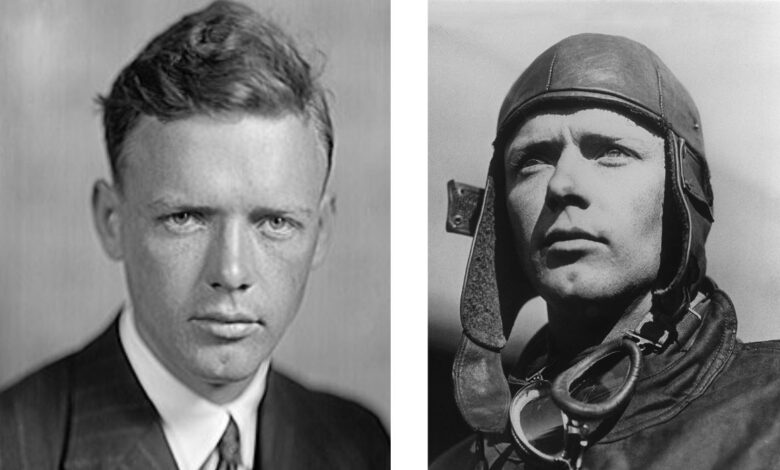
The incredible story of American aviator Charles Lindbergh represents a major turning point in aviation history, transforming how the world viewed long-distance air travel. His historic solo transatlantic flight in 1927 captured global attention and proved that air transportation could connect distant continents safely and efficiently. Through remarkable determination, courage, and technical focus, he advanced early aircraft development while establishing key standards for commercial flight routes. Beyond his celebrated journey from New York to Paris, his life encompassed scientific contributions, military service, authoring books, and later environmental advocacy. This detailed article explores his early years, landmark achievements, lasting legacy, and complex place in aviation history.
Quick Bio
| Attribute | Details |
| Full Birth Name | Charles Augustus Lindbergh |
| Date of Birth | February 4, 1902 |
| Place of Birth | Detroit, Michigan, U.S. |
| Date of Death | August 26, 1974 |
| Place of Death | Kipahulu, Maui, Hawaii, U.S. |
| Primary Professions | Aviator, Author, Inventor, Explorer, Military Officer |
Early Life in Detroit and Minnesota
Growing up in both Minnesota and Detroit, young Charles Lindbergh developed a deep curiosity about mechanical systems, engines, and transportation technology. His father served as a United States Congressman, exposing him to national public affairs early in life. Though he briefly attended college at the University of Wisconsin, his true passion lay in aviation rather than traditional academic studies. He decided to leave university early to pursue professional flight instruction in Nebraska, mastering basic flight maneuvers, mechanical engine maintenance, and aerial navigation skills that would form the foundation for his future aviation achievements.
Barnstorming Days and Early Flight Training
During the early 1920s, young Charles Lindbergh joined the ranks of adventurous daredevil pilots who traveled across rural America performing stunt flights and wing-walking exhibitions known as barnstorming. Operating a simple World War I era Curtiss Jenny aircraft, he gained invaluable hands-on flight experience in unpredictable weather conditions. These early tours taught him how to handle unexpected mechanical failures and land safely in rough pastures. This practical experience built strong self-reliance and deep technical knowledge, shaping his confidence as a pilot while sparking his ambition to conquer far greater long-distance flight challenges.
Military Aviation Training in Texas
Seeking formal flight discipline, Charles Lindbergh enlisted in the United States Army Air Service flight training program in Texas in 1924. He endured rigorous physical conditioning, advanced flight tactical training, and strict aerial navigation courses, graduating at the very top of his training class. The military structure sharpened his attention to detail, precision flying abilities, and mastery of complex instrument systems. This elite military education transformed him from an adventurous stunt pilot into a highly skilled, disciplined aviator capable of planning and executing long-distance flights with calculated scientific precision and exceptional professional skill.
Flying the Early Airmail Routes
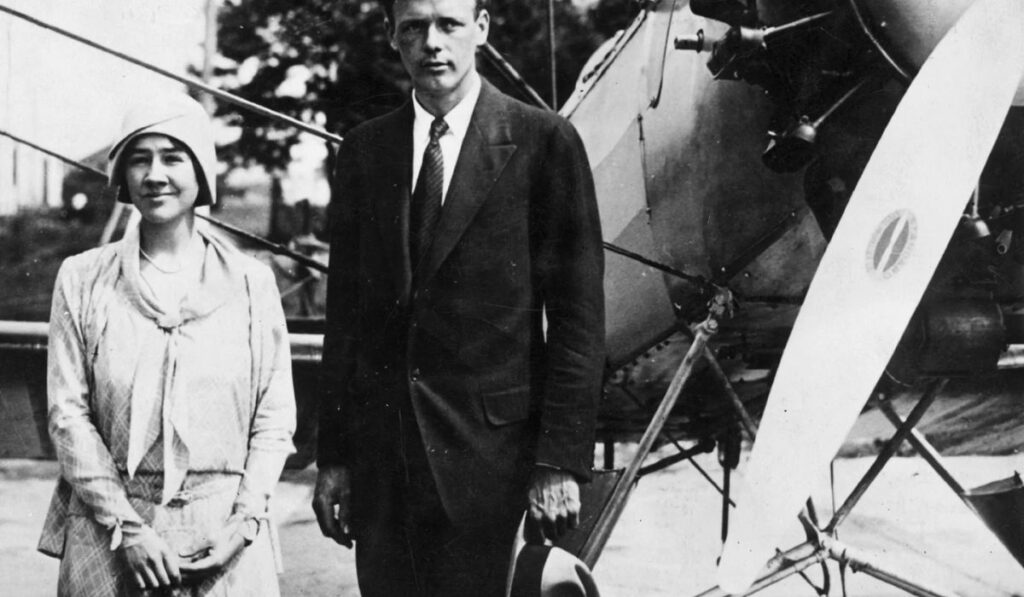
Appointed as chief pilot for the Robertson Aircraft Corporation in 1926, Charles Lindbergh flew regular airmail routes between St. Louis and Chicago. Navigating difficult Midwest weather, night conditions, and limited visibility without modern radar technology required immense focus and emergency preparation. On multiple occasions, severe weather forced him to bail out of his aircraft using a parachute. Flying daily airmail runs honed his night flying skill, endurance, and navigation judgment under extreme stress, giving him the practical flight experience necessary to attempt an unprecedented solo flight across the Atlantic Ocean.
The Orteig Prize Challenge
In 1919, hotel owner Raymond Orteig offered a famous $25,000 prize for the first nonstop flight between New York City and Paris. Inspired by this challenge, Charles Lindbergh resolved to attempt the risky crossing solo, believing a lighter single-engine plane carried a higher probability of success than heavier multi-engine aircraft. Securing financial support from a group of St. Louis businessmen, he began planning the ambitious journey. His belief in a solo attempt set him apart from competing teams, initiating a focused engineering effort to build a specialized aircraft capable of making aviation history.
Building the Spirit of St Louis
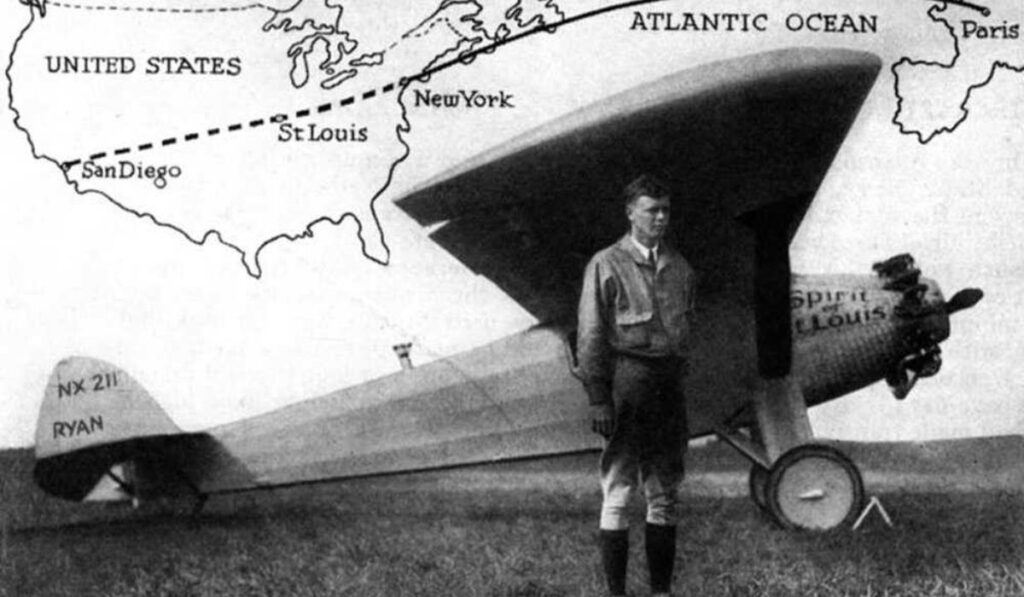
Partnering with the Ryan Airlines company in California, Charles Lindbergh closely supervised the custom design and construction of his famous monoplane. Named the Spirit of St. Louis, the aircraft was engineered specifically for long-range endurance, equipped with massive fuel tanks placed forward in the fuselage to balance weight. This unique structural layout required him to use a periscope rather than forward windshield visibility. Powered by a dependable Wright Whirlwind radial engine, every component was stripped of excess weight to maximize fuel efficiency for the long journey ahead.
Taking Off from Roosevelt Field
On the rainy morning of May 20, 1927, Charles Lindbergh took off from Roosevelt Field on Long Island, New York, bound for Paris. Heavy with fuel, the Spirit of St. Louis cleared power lines at the runway’s edge by a narrow margin before lifting into misty skies. Carrying simple emergency supplies, basic navigational maps, and no radio equipment to save weight, he headed out across the open ocean alone. This tense departure marked the start of a perilous journey that would test his physical endurance, mental resolve, and navigation skills to their limits.
Navigating the Open Atlantic Ocean
Flying across thousands of miles of ocean, Charles Lindbergh battled extreme exhaustion, thick fog, icing conditions, and complete isolation. Without autopilot or modern navigation tools, he relied entirely on dead reckoning using his compass, airspeed indicator, and chart observations. Maintaining altitude required constant vigilance to prevent falling asleep at the controls during the long dark night. Skimming low over ocean waves to avoid wing icing, his steady focus and remarkable endurance kept the aircraft on course through more than thirty hours of continuous solo flight.
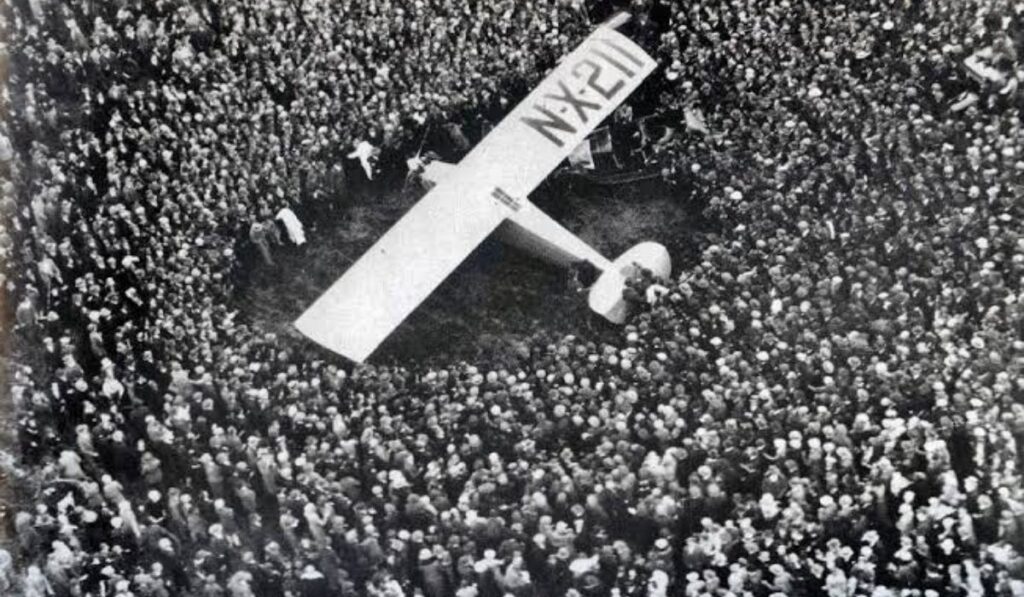
Historic Landing at Le Bourget
After 33.5 grueling hours aloft, Charles Lindbergh safely touched down at Le Bourget Field near Paris on the night of May 21, 1927. An ecstatic crowd of over 100,000 waiting spectators surged toward the aircraft to celebrate the historic achievement. Having covered approximately 3,600 miles nonstop, he became an overnight global hero and an enduring symbol of courage and human achievement. His successful arrival proved that solo transatlantic air travel was possible, capturing world attention and instantly changing public perception of commercial flight potential forever.
Worldwide Fame and Goodwill Tours
Following his legendary flight, Charles Lindbergh was awarded the Medal of Honor and toured numerous nations promoting aviation growth. Visiting cities across North and South America, his goodwill tours drew massive public crowds, inspiring widespread enthusiasm for air transportation. He used his fame to advocate for airport construction, airmail expansion, and professional pilot standards. This period of worldwide celebrity transformed him into a international ambassador for modern flight, accelerating public confidence and commercial investment in the rapidly expanding global aviation industry throughout the late 1920s.
Marriage to Anne Morrow
In 1929, Charles Lindbergh married author and fellow aviator Anne Morrow, forming a celebrated partnership that extended into professional flight exploration. Together, the couple flew across the globe mapping new commercial airline routes for emerging aviation companies. Anne served as radio operator and navigator during these long surveying flights, becoming a pioneer in her own right. Their shared aerial journeys covered distant regions in Asia, Africa, Europe, and Greenland, significantly contributing to global route development while establishing standard safety protocols for long-distance international passenger flights.
Scientific Contributions and Biological Inventions
Beyond aviation accomplishments, Charles Lindbergh collaborated with Nobel Prize winning scientist Alexis Carrel during the 1930s to develop medical technology. Together, they invented the glass perfusion pump, an early organ preservation system capable of keeping living tissue viable outside the human body. This innovative scientific device helped lay early foundations for future open-heart surgery techniques and organ transplant procedures. His work in medical engineering demonstrated a versatile mechanical mind driven to solve complex problems across disciplines, leaving a valuable contribution to medical technology alongside his aviation achievements.
The Lindbergh Kidnapping Tragedy
In 1932, Charles Lindbergh and his family suffered a devastating personal tragedy when their infant son was kidnapped from their New Jersey home. The intense, sensationalized media circus surrounding the trial deeply affected the family, prompting federal legislation known as the Lindbergh Law, which made kidnapping a federal crime. Seeking privacy away from constant press attention, the family moved overseas to Europe. This tragic chapter marked a difficult turning point, darkening his relationship with public news media and reshaping his private life for decades following the high-profile case.
Pre-War European Travels and Political Controversy
While living in Europe during the late 1930s, Charles Lindbergh surveyed European military aviation capabilities, including inspecting German air power. Upon returning to the United States, he became a prominent spokesman for the isolationist America First Committee, arguing against U.S. intervention in World War II. His public speeches and political stances drew severe public criticism and damaged his national popularity. This controversial era created lasting debates regarding his political judgment, contrasting sharply with the unified national hero status he had achieved following his historic transatlantic journey in 1927.
World War II Pacific Flying Operations
Despite earlier political disagreements, Charles Lindbergh served as a civilian technical consultant in the Pacific Theater during World War II. Working directly with fighter pilots, he devised innovative cruise control techniques that significantly extended the operational range of American combat aircraft. He personally flew dozens of combat missions to evaluate plane performance under real battle conditions. His technical efficiency improvements saved fuel, increased flight safety, and enhanced combat capabilities, making a practical contribution to American military aviation efforts throughout the Pacific war effort.
Post-War Commercial Aviation Advisory
Following World War II, Charles Lindbergh served as a high-level advisor to major commercial airlines and the United States Air Force. He evaluated jet aircraft technology, recommended new safety procedures, and advised airline executives on transatlantic commercial routes. His expert counsel helped smooth the industry’s transition into the Jet Age, ensuring higher safety standards for global passenger transport. His technical insights continued to shape modern commercial aviation development, helping transform air travel into a reliable, routine, and globally accessible mode of transportation.
Writing Career and Pulitzer Prize
An accomplished writer, Charles Lindbergh authored several well-received books chronicling his life and aviation philosophy. His autobiography detailing the 1927 solo journey, titled The Spirit of St. Louis, was published in 1953 to widespread literary acclaim. The book won a Pulitzer Prize for Biography in 1954, praised for its vivid descriptions, technical clarity, and personal honesty. Through his writing, he articulated the deep connection between human spirit, technical innovation, and flight, cementing his reputation as an insightful author who recorded aviation history with clarity and skill.
Environmental Advocacy and Global Conservation
During his later years, Charles Lindbergh shifted his primary attention toward international environmental protection and wildlife conservation. Concerned about technological expansion harming natural ecosystems, he campaigned to protect endangered species, including blue whales and rare rainforest animals. He traveled extensively to support national parks and protect indigenous communities in the Philippines and East Africa. This environmental advocacy reflected a belief that modern technology must exist in balance with nature, dedicating his final decades to preserving the planet’s ecological diversity for future generations.
Final Years and Retirement in Hawaii
In his twilight years, Charles Lindbergh sought peace and solitude in Maui, Hawaii, where he built a home overlooking the Pacific Ocean. Embracing a simple life focused on family, writing, and local conservation, he stepped away from public appearances. He passed away peacefully on August 26, 1974, at the age of 72, and was buried at Palapala Ho’omau Church in Kipahulu. His quiet retirement in Hawaii closed a remarkable life that spanned the birth of flight to the space age, leaving behind an enduring legacy.
Lasting Impact on Aviation and Cultural History
The life journey of Charles Lindbergh remains one of the most compelling stories in modern American cultural and technological history. His solo Atlantic crossing proved that long-distance air travel was practical, inspiring rapid innovation across the global aerospace industry. From pioneer pilot to author, inventor, and conservationist, his varied contributions shaped many fields. Today, the Spirit of St. Louis hangs in the Smithsonian National Air and Space Museum, standing as a monument to human courage, engineering spirit, and the bold dream of global flight.
Frequently Asked Questions
- Who was Charles Lindbergh?
- Charles Lindbergh was an American aviator who completed the first solo nonstop flight across the Atlantic Ocean in 1927.
- What was the name of the plane flown by Charles Lindbergh across the Atlantic?
- He flew a custom-built monoplane named the Spirit of St. Louis.
- Where did the famous 1927 flight start and end?
- The flight started at Roosevelt Field on Long Island, New York, and ended at Le Bourget Field near Paris.
- Did Charles Lindbergh win a Pulitzer Prize?
- Yes, he won the Pulitzer Prize for Biography in 1954 for his autobiography, The Spirit of St. Louis.
- Where can readers find additional official biographical details on his life?
- Complete biographical information can be explored on his official reference page on