10 Inspiring Leadership Lessons From Mother Teresa That Transformed Global Charity Work

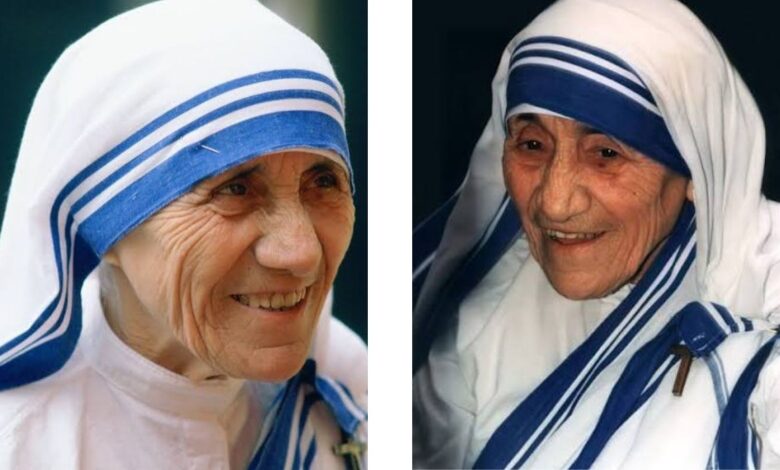
The profound historical legacy of global humanitarian icon Mother Teresa represents one of the most celebrated, influential, and transformative chapters in modern charity history. Recognized as a compassionate figure, devout nun, and saint, her life redefined selfless service, care for the impoverished, and spiritual dedication during the twentieth century. Over her active tenure in public ministry, she championed neglected causes, challenged social indifference, and inspired millions through her hands-on approach to global philanthropy. This comprehensive biographical study examines her Balkan childhood, Indian missionary journey, humanitarian triumphs, personal struggles, and lasting worldwide impact.
Quick Bio
| Attribute | Details |
| Full Birth Name | Anjezë Gonxhe Bojaxhiu |
| Date of Birth | August 26, 1910 |
| Place of Birth | Skopje, Ottoman Empire (now North Macedonia) |
| Date of Death | September 5, 1997 |
| Place of Death | Kolkata (Calcutta), West Bengal, India |
| Primary Professions | Roman Catholic Nun, Missionary, Humanitarian, Saint |
Early Life in Balkan Skopje
Born in Skopje in August 1910, young Mother Teresa grew up as the youngest child of Nikollë and Dranafile Bojaxhiu in a devoutly religious family. Her early years were shaped by the diverse cultural influences of the Ottoman Balkans and strong Catholic family traditions. Following her father’s sudden death during her youth, her mother instilled deep charitable values by regularly inviting impoverished townspeople to family meals. She received religious instruction at her local parish school, developing a keen interest in foreign missions. These formative childhood experiences cultivated her natural empathy, spiritual devotion, and lifelong commitment to helping vulnerable individuals worldwide.
Joining the Sisters of Loreto
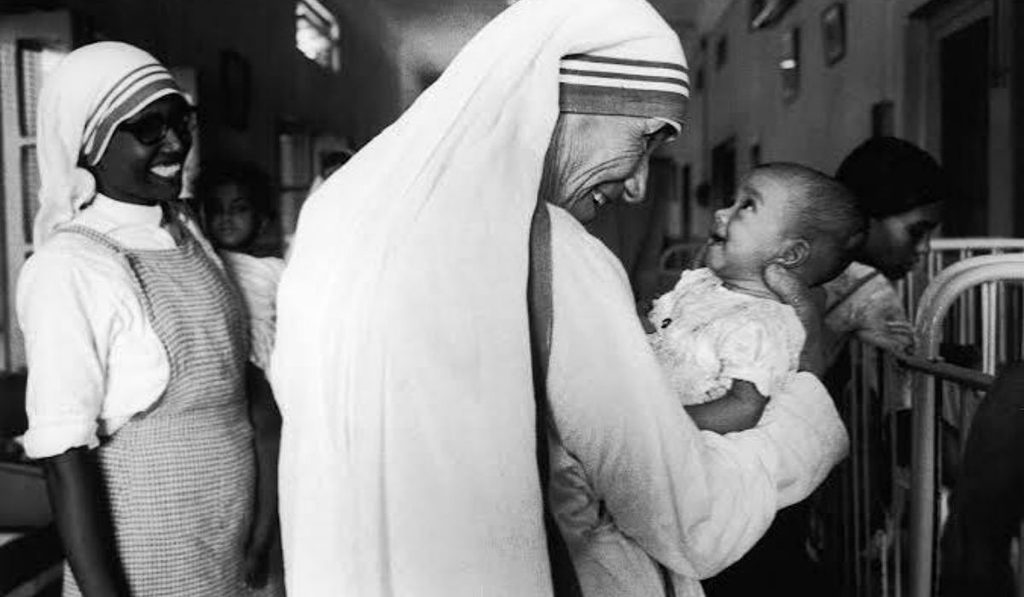
Deciding to dedicate her life to religious service in 1928, ambitious youth Mother Teresa left her childhood home to join the Sisters of Loreto in Ireland. She spent several months learning English at Rathfarnham before traveling to British India to begin her formal novitiate training. Arriving in Darjeeling in 1929, she learned Bengali and taught at a local convent school near the Himalayan foothills. Taking her initial religious vows in May 1931, she chose her spiritual name in honor of Thérèse de Lisieux. This initial transition marked the start of her lifelong dedication to Asian educational and charitable endeavors.
Teaching Career at Entally Convent
Assigned to the Loreto convent school in Entally near Calcutta, dedicated educator Mother Teresa taught geography and history to young girls for nearly two decades. She took her final solemn vows in May 1937, officially adopting the title of Mother within her religious order. Rising to become headmistress of St. Mary’s School in 1944, she gained widespread respect for her organizational talent, patience, and commitment to student welfare. Although she deeply enjoyed teaching, the severe poverty, urban suffering, and recurring starvation visible outside the high school walls deeply affected her spiritual conscience every day.
The Call Within a Call
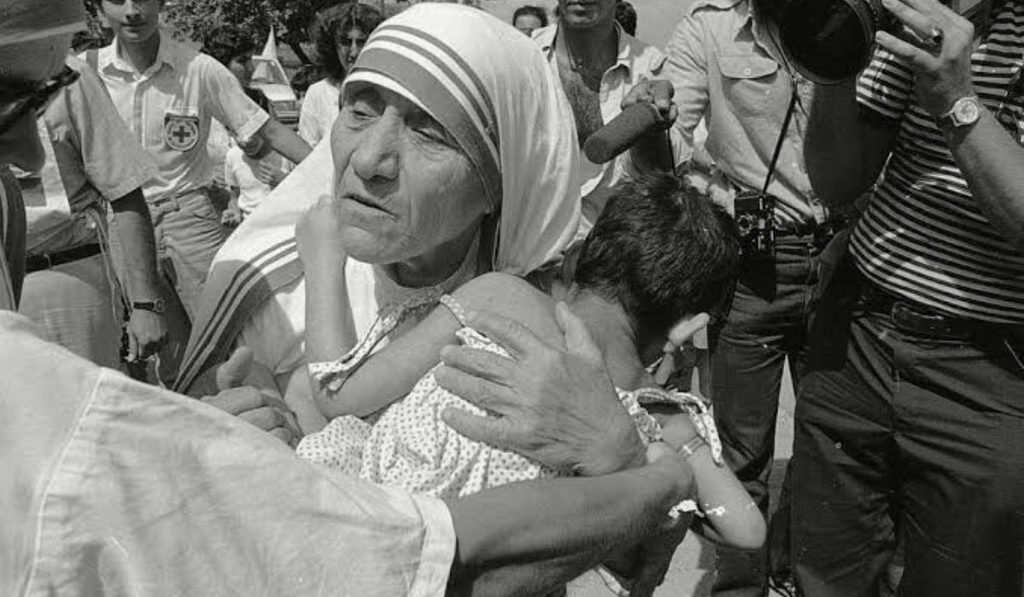
Traveling by train to Darjeeling for an annual retreat in September 1946, inspiring nun Mother Teresa experienced a profound mystical realization that altered her life’s trajectory. She described hearing an inner divine voice instructing her to leave the convent school to serve the poorest people. This pivotal moment, which she called her “call within a call,” compelled her to seek official permission from church authorities to live directly among Calcutta’s slum residents. Her unwavering conviction drove her to trade her traditional habit for a simple white cotton sari bordered in blue, embarking on a bold new mission.
Entering the Slums of Calcutta
Securing Vatican authorization to live outside the convent in 1948, fearless activist Mother Teresa underwent basic medical training with the Medical Mission Sisters in Patna. Returning to Calcutta, she ventured directly into impoverished neighborhoods without fixed financial support, relying entirely on divine providence and public donations. She established an open-air school for destitute street children, teaching them basic hygiene, literacy, and math using wooden sticks in the dirt. Her physical presence among neglected communities attracted local volunteers, former students, and donors who recognized the profound sincerity behind her daily hands-on charitable outreach.
Founding the Missionaries of Charity
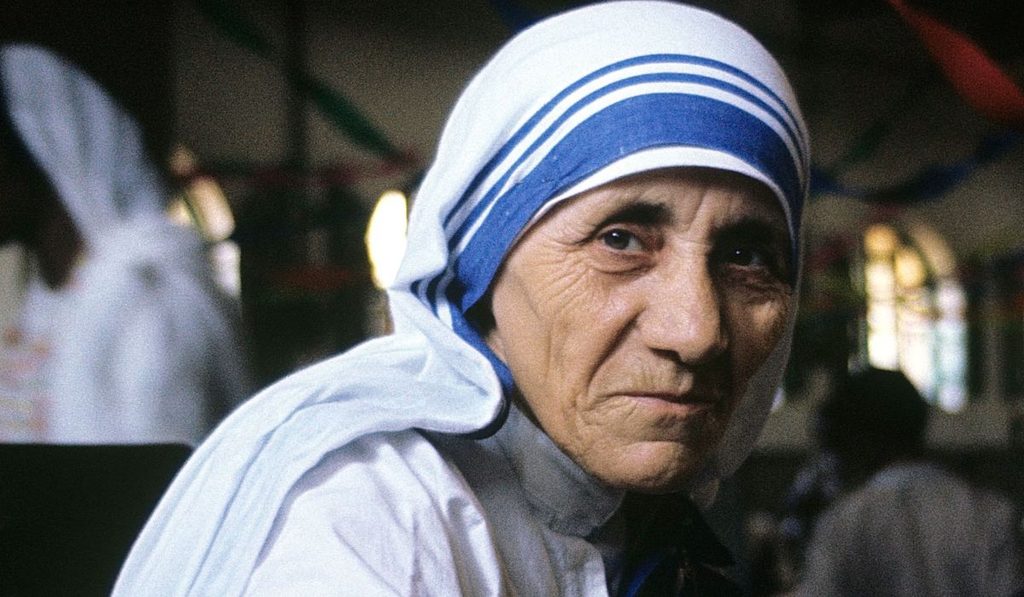
Receiving official papal approval from Pope Pius XII in October 1950, visionary founder Mother Teresa established the Missionaries of Charity in the Archdiocese of Calcutta. The new religious congregation required members to take vows of chastity, poverty, obedience, and wholehearted free service to the poorest citizens. Starting with a small group of former pupils, the order grew rapidly as young women pledged their lives to humanitarian work. Under her dynamic leadership, the congregation established soup kitchens, dispensaries, mobile medical clinics, and orphanages, creating an organized network dedicated to aiding destitute individuals across India.
Kalighat Home for Dying Destitutes
Opening her first major care facility in 1952, compassionate patron Mother Teresa converted an abandoned Hindu temple space into the Kalighat Home for Dying Destitutes. The sanctuary offered medical care, food, and human dignity to terminally ill individuals rescued directly from city streets. Regardless of religious affiliation, patients received personalized care and religious rites according to their individual faiths. By ensuring that forgotten street dwellers passed away surrounded by love and comfort, she redefined societal approaches to end-of-life care, demonstrating that every human life possesses infinite moral value and inherent personal dignity.
Establishing Shanti Nagar for Leprosy Patients
Expanding her medical outreach during the mid-1950s, determined reformer Mother Teresa established mobile leprosy clinics to treat patients shunned by mainstream medical facilities. She later founded Shanti Nagar, a dedicated rehabilitation center where individuals afflicted with leprosy could receive medical care, vocational training, and employment. By directly touching and caring for patients without fear, she helped dispel ancient social stigmas surrounding the disease throughout South Asia. Her practical approach provided afflicted individuals with economic independence and social dignity, proving that medical care must be combined with genuine personal compassion.
International Expansion of Charitable Homes
Earning papal decree status from Pope Paul VI in 1965, global leader Mother Teresa began expanding her charitable order beyond Indian national borders. The first overseas foundation opened in Venezuela, followed quickly by new care homes in Rome, Tanzania, Britain, and across the Western Hemisphere. Her sisters established facilities in war-torn regions, impoverished urban centers, and rural communities across every continent. By adapting her core mission to address diverse global poverty challenges, she built an international humanitarian network operating hundreds of foundations worldwide, proving that localized compassion could successfully address global social crises.
The Nobel Peace Prize Recognition
Receiving international acclaim in December 1979, global icon Mother Teresa was awarded the Nobel Peace Prize for her work in bringing help to suffering humanity. During her acceptance speech in Oslo, she spoke passionately about the dignity of the poor and advocated for global peace through family unity. She requested that the traditional Nobel banquet be canceled, directing the entire budget to feed thousands of hungry individuals in India. Accepting the award on behalf of the impoverished, her international recognition elevated global awareness regarding systemic poverty and social justice.
Global Media Attention and Public Image
Captivating international news outlets throughout the 1970s and 1980s, humble figure Mother Teresa became the subject of extensive documentary films, news profiles, and books. Journalist Malcolm Muggeridge’s 1969 BBC documentary Something Beautiful for God introduced her work to millions of Western viewers, transforming her into a household name. Despite world fame, she maintained a simple lifestyle, wearing her traditional cotton sari and traveling with minimal personal belongings. She used her global media presence strategically to solicit funds, inspire international volunteers, and advocate for marginalized populations worldwide.
Relief Operations in Global Conflict Zones
Navigating international crisis zones during the 1980s, fearless diplomat Mother Teresa traveled to dangerous conflict regions to deliver direct humanitarian assistance. During the 1982 siege of Beirut, she negotiated a temporary cease-fire between warring factions to rescue thirty disabled children trapped in a frontline hospital. She also traveled to Soviet Armenia following the 1988 earthquake, Ethiopia during severe famines, and post-communist Eastern Europe to open new care centers. Her willingness to cross political, ideological, and religious boundaries showcased her belief that human suffering transcends national politics entirely.
Addressing Modern Spiritual and Material Poverty
Addressing affluent Western audiences during her frequent international travels, perceptive thinker Mother Teresa emphasized that emotional and spiritual isolation constituted a severe form of modern poverty. She argued that while developing nations suffered from material lack, developed nations faced pervasive loneliness, unwantedness, and spiritual emptiness. She urged people in wealthy countries to practice charity within their own families and local neighborhoods first before seeking distant causes. Her holistic analysis of human suffering broadened global definitions of charity, reminding modern societies that love and personal connection are fundamental human necessities.
Spiritual Struggles and the Dark Night
Revealed through posthumously published private letters, devout believer Mother Teresa experienced decades of intense internal spiritual dryness and personal doubt. Despite maintaining a cheerful public presence, she secretly endured feelings of spiritual absence that theologians compare to the classical “dark night of the soul”. Far from diminishing her achievements, these private disclosures highlighted her extraordinary willpower, showing that she continued serving the poor out of pure duty and love rather than personal spiritual consolation. Her endurance through spiritual difficulty inspired millions of believers facing personal doubt.
Health Challenges and Final Years
Facing deteriorating physical health during the 1980s and 1990s, resilient leader Mother Teresa suffered multiple heart attacks, pneumonia, and severe chronic health complications. Despite undergoing cardiac surgeries and wearing a pacemaker, she refused to curtail her demanding schedule or step down from administrative duties until absolutely necessary. She continued traveling internationally to inspect care homes, mentor young nuns, and meet world leaders until March 1997, when she officially stepped down as Superior General. Her physical resilience demonstrated her profound commitment to her life’s calling until her final days.
Public Farewell and State Funeral in India
Passing away on September 5, 1997, at age eighty-seven, legendary humanitarian Mother Teresa died at the Missionaries of Charity Mother House in Calcutta. The Indian government honored her extraordinary contributions by granting her a full state funeral, an honor rarely bestowed upon non-politicians. Her body was carried on the same gun carriage that transported Mahatma Gandhi, while thousands of citizens from all religious communities lined the streets. She was buried at the Mother House, which quickly became a permanent pilgrimage site for international visitors seeking to honor her legacy.
Beatification and the Path to Sainthood
Fast-tracking her official cause for sainthood due to widespread public devotion, Pope John Paul II beatified Mother Teresa in October 2003 before a vast crowd at St. Peter’s Square. The Catholic Church recognized required miracles attributed to her posthumous intercession, including the documented healing of individuals with severe medical conditions. The beatification process involved rigorous archival reviews of her writings, personal testimony from associates, and detailed medical evaluations. This rapid recognition reflected her status as a modern spiritual icon whose life exemplified Christian virtue and charity.
Canonization as Saint Teresa of Calcutta
Reaching the pinnacle of Catholic recognition on September 4, 2016, celebrated figure Mother Teresa was officially canonized as Saint Teresa of Calcutta by Pope Francis. The solemn ceremony at the Vatican drew tens of thousands of pilgrims, world leaders, and Missionaries of Charity sisters from around the world. Pope Francis highlighted her tireless defense of unborn children, the elderly, and the abandoned, holding her up as a universal model of mercy. Her official canonization cemented her permanent place in global religious history as a patron saint of marginal populations.
Academic Analysis and Public Debates
Generating significant academic and journalistic commentary over decades, influential figure Mother Teresa attracted both immense praise and notable public criticism. Critics like Christopher Hitchens questioned the medical standards, sanitation, and pain management practices within her care facilities. Others debated her conservative theological stances on social issues and her relationships with controversial political figures. Supporters defended her work by emphasizing that her facilities were designed as sanctuaries for dying destitutes rather than modern hospitals. These ongoing debates reflect the complex nature of evaluating historical icons operating in extreme environments.
Enduring Legacy of Modern Humanitarianism
Reflecting on the monumental life work of Mother Teresa confirms her permanent standing as a timeless symbol of selflessness, compassion, and human service. Her Missionaries of Charity order continues operating thousands of foundations across more than 130 countries, serving millions of destitute individuals daily. Her legacy inspires non-profit organizations, religious orders, and independent volunteers worldwide. Through her life, she proved that individual dedication could spark a global movement, leaving an indelible imprint on human history and reminding future generations that small acts of love can transform the world.
Frequently Asked Questions
- Who was Mother Teresa?
- Mother Teresa was an Albanian-Indian Catholic nun who founded the Missionaries of Charity and won the Nobel Peace Prize for her humanitarian work.
- What organization did Mother Teresa establish in Calcutta?
- She established the Missionaries of Charity in 1950 to care for the poorest of the poor, sick, orphaned, and dying people.
- When did she win the Nobel Peace Prize?
- She was awarded the Nobel Peace Prize in 1979 in recognition of her work in bringing help to suffering humanity.
- When was she officially canonized as a saint?
- She was canonized as Saint Teresa of Calcutta on September 4, 2016, by Pope Francis at the Vatican.
- Where can readers find additional official biographical information regarding her life?
- Detailed historical records, photographic archives, and official documents are available on her dedicated page on