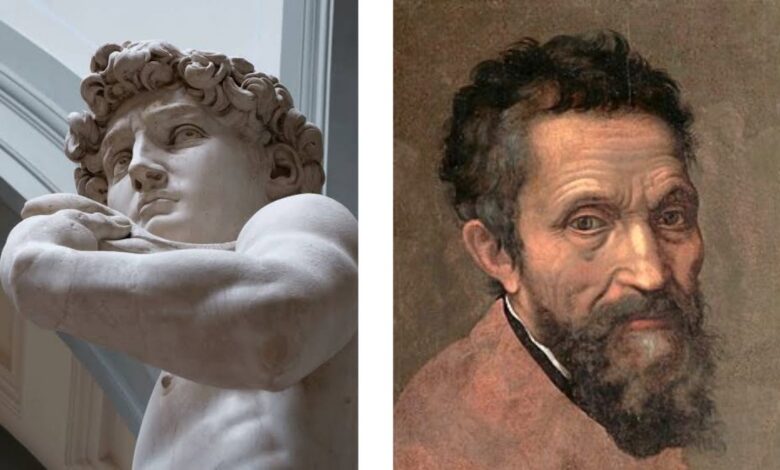
The legendary Italian Renaissance master Michelangelo stands among the most celebrated artists and sculptors in world history. Renowned for his extraordinary skill in sculpting, painting, architecture, and poetry, his creative output fundamentally transformed Western art during the High Renaissance. His revolutionary masterpieces, including the iconic Statue of David and the towering ceiling frescoes of the Sistine Chapel, demonstrated unprecedented anatomical precision and intense emotional depth. This comprehensive biographical article examines his early life in Florence, monumental artistic commissions, architectural triumphs, personal rivalries, and enduring legacy that continues to inspire artists and art lovers across the globe today.
Quick Bio
| Attribute | Details |
| Full Birth Name | Michelangelo di Lodovico Buonarroti Simoni |
| Date of Birth | March 6, 1475 |
| Place of Birth | Caprese, Republic of Florence |
| Date of Death | February 18, 1564 |
| Place of Death | Rome, Papal States |
| Primary Professions | Sculptor, Painter, Architect, Poet |
Early Youth and Youthful Foundations
Growing up in the vibrant Florentine region, young Michelangelo developed a passionate obsession with visual arts despite initial strong resistance from his father. Sent to study under prominent local masters, he quickly demonstrated extraordinary draftsmanship and an innate understanding of physical form. His early exposure to the classic sculptures in the Medici family gardens exposed him to ancient Greco-Roman aesthetics. These formative years in Florence allowed him to study human anatomy directly, hone his carving techniques with marble, and build the foundational creative discipline that would eventually establish his reputation as one of the greatest artistic geniuses in human history.
Apprenticeship in Ghirlandaio Workshop
Entering the famous Florentine workshop of Domenico Ghirlandaio, Michelangelo mastered essential fresco painting techniques, color mixing, and perspective principles. Although his tenure in the studio was relatively brief, the rigorous training provided him with indispensable technical knowledge regarding large-scale mural production. He spent long hours studying classical frescoes, sketching ancient ruins, and copying works by early Renaissance masters. This practical studio experience sharpened his draftsmanship and spatial awareness, giving him the artistic confidence necessary to execute monumental visual projects that would later capture the attention of powerful patrons across the Italian peninsula.
Patronage of Lorenzo de Medici
Recognizing his extraordinary talent, Lorenzo de’ Medici invited young Michelangelo into his household as a favored student. Living among elite scholars, humanists, and poets at the Medici court broadened his intellectual horizons, exposing him to Neoplatonic philosophy and classical literature. Access to the famous Medici sculpture garden allowed him to practice marble carving under the guidance of skilled craftsmen. This prestigious sponsorship ended with Lorenzo’s death in 1492, yet the philosophical ideas and classical artistic ideals cultivated during this period profoundly influenced his artistic vision, thematic choices, and emotional expression throughout his lifelong career.
First Sojourn in Rome and the Pietà
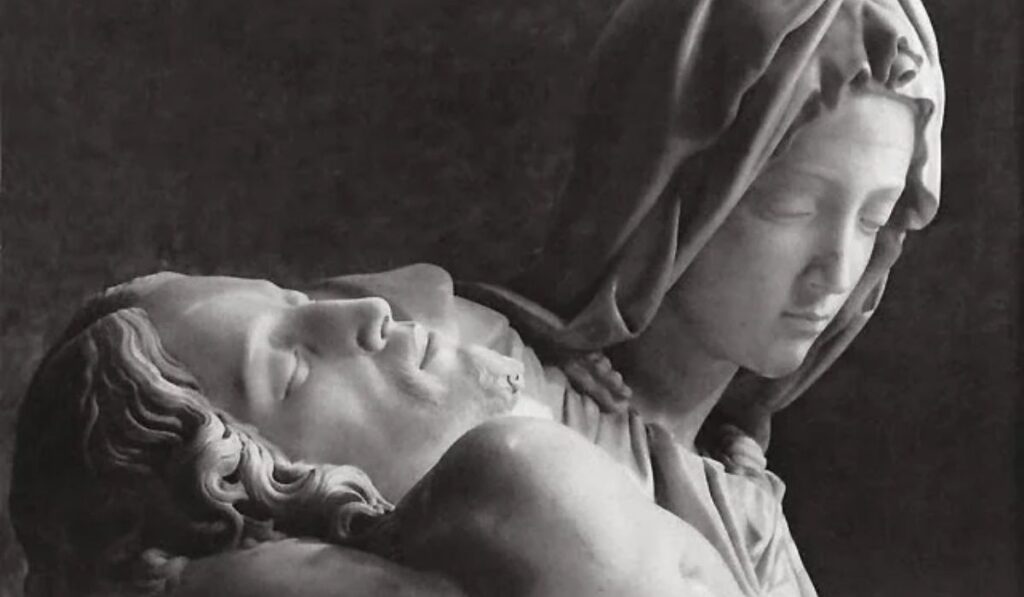
Relocating to Rome in 1496, the ambitious master Michelangelo received a prestigious commission from a French cardinal to sculpt the Pietà. Carved from a single block of pristine Carrara marble, the breathtaking statue depicted Mary cradling the lifeless body of Jesus Christ. The work showcased unprecedented realism, delicate drapery folds, and exquisite anatomical detail that stunned Roman art patrons. Upon completion in 1499, the sculpture established his reputation across Italy as an unrivaled master of marble. Notably, it remains the only masterpiece he ever signed, cementing his position among the supreme artistic talents of his age.
Returning to Florence and the Statue of David
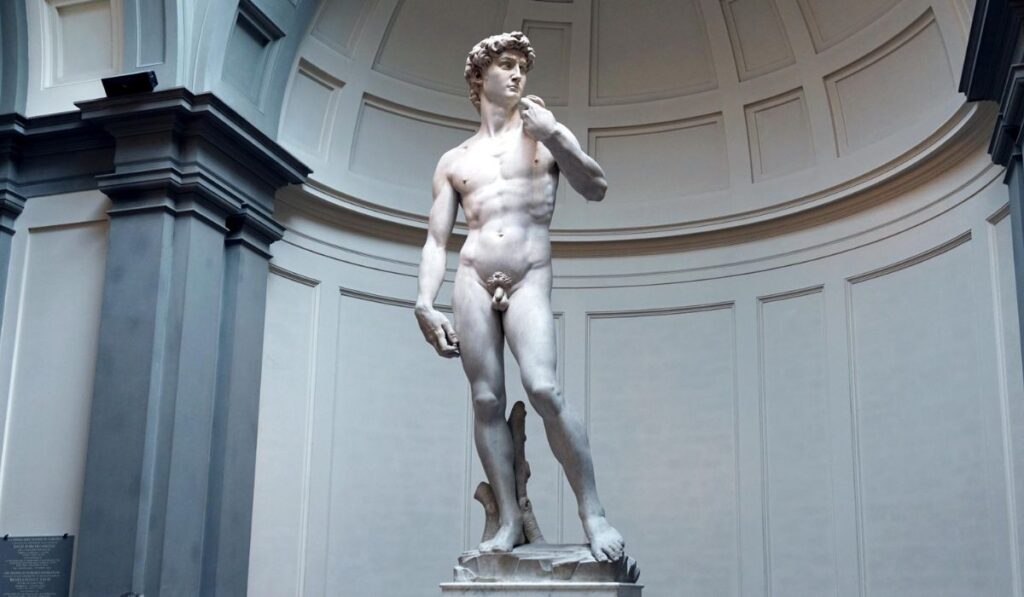
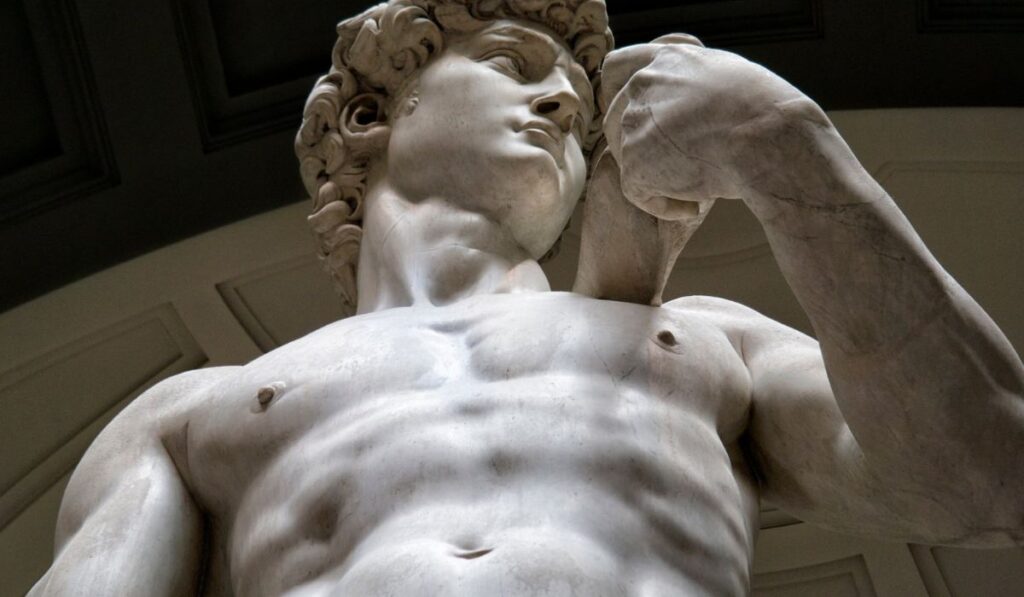
Returning to his beloved hometown of Florence, Michelangelo accepted the formidable challenge of carving a giant marble block that other sculptors had previously abandoned. Working continuously for over three years, he transformed the damaged stone into the towering Statue of David. Unveiled in 1504, the monumental sculpture depicted the Biblical hero before combat, embodying civic liberty, youthful power, and heroic grace. The magnificent creation captivated the citizens of Florence, who placed it outside the Palazzo Vecchio as a symbol of republican pride. The masterpiece firmly established his status as the premier living sculptor of the Renaissance era.
Commission for the Tomb of Pope Julius II
Summoned to Rome in 1505, Michelangelo was commissioned by Pope Julius II to design an colossal papal tomb. Originally envisioned as a massive three-story freestanding structure adorned with forty marble statues, the ambitious project was repeatedly interrupted by financial constraints and alternative papal assignments. Over several decades, he completed notable individual figures for the monument, including the famous Moses and several Dying Slaves. The prolonged design modifications and political delays surrounding the tomb became a source of deep frustration, which he famously referred to in his personal correspondence as the tragedy of his life.
Painting the Sistine Chapel Ceiling
Reluctantly accepting a monumental painting assignment in 1508, Michelangelo embarked on decorating the ceiling of the Sistine Chapel. Although he considered himself primarily a sculptor rather than a painter, he spent four grueling years working high on scaffolding to cover over five hundred square meters of surface area. The resulting fresco cycle depicted dramatic scenes from the Book of Genesis, including the iconic Creation of Adam. Unveiled to the public in 1512, the breathtaking masterpiece featured vibrant colors, dynamic foreshortening, and monumental human figures that permanently revolutionized European painting standards and visual storytelling techniques.
Design of the Laurentian Library
Commissioned by the Medici family in Florence, Michelangelo turned his creative focus toward architectural design by planning the famous Laurentian Library. Designed to house the vast collection of rare manuscripts owned by the family, the building featured a revolutionary vestibule with a dramatic triple staircase. His innovative use of dynamic columns, decorative niches, and spatial geometry broke away from classical Renaissance symmetry, pioneering the Mannerist architectural style. The sophisticated structural layout demonstrated his unique ability to apply sculptural principles to functional space, securing his reputation as a master architect alongside his fame in sculpture and painting.
Defending Florence and Military Engineering
During the turbulent political siege of Florence in 1529, Michelangelo demonstrated his fierce civic loyalty by serving as the chief director of fortifications. Entrusted with protecting the city against imperial troops, he designed innovative defensive earthworks, fortified city walls, and strategic bastions. His clever architectural designs helped Florentine forces withstand prolonged military bombardment for several months. Although the city ultimately surrendered, his courageous military engineering efforts highlighted his versatile technical intellect and unwavering devotion to his homeland, proving that his creative genius extended well beyond pure fine arts into practical engineering challenges.
Return to Rome and The Last Judgment
Settling permanently in Rome during 1534, Michelangelo received a major commission from Pope Clement VII to paint The Last Judgment on the altar wall of the Sistine Chapel. Completed in 1541, the massive fresco depicted over three hundred dynamic figures surrounding Christ during the final judgment of humanity. The dramatic composition featured intense emotional turbulence, swirling muscular bodies, and stark moral themes that reflected the spiritual anxieties of the Counter-Reformation era. The powerful, controversial masterpiece generated intense public debate regarding its nudity, solidifying its place as one of the most provocative monumental paintings in religious art.
Architectural Masterpiece of St Peter’s Basilica
Appointed as chief architect of St. Peter’s Basilica in 1546, the aging master Michelangelo oversaw the construction of the primary center of Western Catholicism without accepting financial compensation. Reorganizing previous floor plans, he simplified the structural layout and designed the massive, iconic dome that dominates the Roman skyline today. He spent his final years supervising engineering details, ensuring the structural stability of the majestic cathedral. The magnificent architectural landmark stands as an enduring monument to his visionary spatial design, harmonizing massive proportions with classical elegance to create one of the world’s most famous places of worship.
Deep Friendships and Poetry
Beyond his visual masterpieces, Michelangelo expressed his profound inner thoughts through beautiful Italian poetry and personal correspondence. He composed over three hundred sonnets and madrigals exploring themes of divine love, artistic struggle, human mortality, and spiritual redemption. His intimate friendship with the noblewoman Vittoria Colonna deeply influenced his late poetic works and religious reflections. Through his eloquent verses, he revealed a sensitive, deeply spiritual soul that wrestled with creative passion and religious devotion, demonstrating a literary fluency that complemented his visual achievements and enriched his legacy as a true Renaissance polymath.
Complex Personal Life and Isolation
Living a simple, frugal life despite accumulating substantial wealth, Michelangelo was known for his solitary, intense personality and uncompromising artistic standards. He preferred working alone for long hours, often sleeping in his clothes while immersed in marble carving or painting. His fiery temperament occasionally led to sharp disputes with rival artists, wealthy patrons, and high-ranking church officials. Despite his outward gruffness and preference for privacy, he provided generous financial support to his family members in Florence throughout his lifetime, maintaining a deep commitment to securing his family’s social standing and future economic stability.
Technical Innovations in Marble Carving
Mastering the physical medium of stone, Michelangelo introduced revolutionary techniques to the art of marble sculpture. He personally traveled to the quarries of Carrara to select ideal blocks, carefully assessing grain patterns and structural integrity before carving. Using specialized chisels and files, he freed dynamic human figures from raw stone with incredible speed and precision. His belief that the sculpture already existed within the marble, waiting to be revealed, transformed how artists approached stone carving. His breathtaking ability to render soft flesh, realistic muscle, and flowing drapery in cold marble set an unmatchable technical standard.
Rivalry with Contemporary Artists
Working during a golden age of art, Michelangelo engaged in fierce creative rivalries with prominent contemporaries, most notably Leonardo da Vinci and Raphael. The intense competition between these brilliant masters drove each artist to push the boundaries of visual expression, draftsmanship, and composition. While Leonardo emphasized soft atmospheric lighting and subtle psychological depth, he prioritized powerful muscular form, dramatic movement, and sculptural weight. These celebrated rivalries energized the Italian art world, generating iconic masterpieces and establishing the High Renaissance as one of the most extraordinarily creative periods in human history.
The Unfinished Slaves and Non-Finito Style
Creating several celebrated works that remained incomplete, Michelangelo popularized the evocative non-finito aesthetic in Renaissance sculpture. His famous Prisoners or Slaves, intended for the tomb of Pope Julius II, feature roughly textured figures appearing to struggle outward from uncarved marble blocks. Art historians debate whether these sculptures were left unfinished due to lack of time or intentionally abandoned to express the soul’s struggle to free itself from physical matter. Regardless of intent, these powerful, roughly carved works offer fascinating insights into his carving technique and continue to deeply move modern viewers.
Twilight Years and Final Pieta Sculptures
Spending his final decade in Rome, the elderly master Michelangelo remained passionately devoted to artistic creation despite failing physical health. He turned his attention toward carving intimate marble sculptures depicting the Pietà, intended for his own personal tomb. Works like the Florence Pietà and the Rondanini Pietà displayed a profound shift toward abstract spiritual expression, prioritizing emotional resonance over anatomical perfection. Carving until days before his death at age eighty-eight, his late artistic works reflected an enduring devotion to his craft and a deep, contemplative preparation for his personal spiritual journey.
Death and Legendary Funeral in Florence
Passing away in Rome in February 1564, Michelangelo was honored with an extraordinary legacy that captivated the entire Italian nation. Against the wishes of Roman officials who desired to bury him locally, his body was secretly transported back to Florence according to his personal wishes. A magnificent public funeral was organized by the Florentine Academy, attended by thousands of admirers, artists, and political leaders. Entombed in the Basilica of Santa Croce, his impressive monument stands near other great Florentine figures, honoring a legendary lifetime that permanently elevated the social status of visual artists throughout Europe.
Influence on Mannerism and Baroque Art
The revolutionary visual style created by Michelangelo exerted an immediate, profound influence on subsequent movements in European art history. His dramatic figure poses, exaggerated muscular anatomy, and emotional intensity inspired the emerging Mannerist painters across Italy. Decades later, pioneer masters of the Baroque era, including Caravaggio and Bernini, drew heavy inspiration from his dynamic compositions, intense lighting contrasts, and powerful emotional drama. By breaking away from strict classical balance, his visionary works paved the way for new artistic freedoms, shaping the evolution of Western painting and sculpture for centuries following his death.
Enduring Universal Legacy in Modern Culture
Reflecting on the monumental life work of Michelangelo confirms his permanent standing as one of the most extraordinary creative figures in world history. His iconic sculptures, breathtaking frescoes, and majestic architectural designs continue to attract millions of visitors to Italian museums and historical sites each year. Beyond physical masterpieces, his life embodies the ultimate ideal of artistic courage, intellectual independence, and relentless pursuit of perfection. As future generations continue to study his timeless creations, his enduring legacy stands as a universal monument to the boundless possibilities of human artistic expression.
Frequently Asked Questions
- Who was Michelangelo?
- Michelangelo was a Italian Renaissance sculptor, painter, architect, and poet who created iconic masterpieces like the Statue of David.
- Where is the Statue of David located?
- The original Statue of David is preserved and displayed at the Accademia Gallery in Florence, Italy.
- How long did it take Michelangelo to paint the Sistine Chapel ceiling?
- He spent approximately four years painting the famous ceiling frescoes, working continuously from 1508 to 1512.
- Which famous dome in Rome was designed by Michelangelo?
- He designed the iconic central dome of St. Peter’s Basilica during his tenure as chief architect.
- Where can art enthusiasts find official biographical records regarding his life?
- Complete biographical details, career history, and artwork catalogs can be explored directly on his dedicated page on