Martin Luther King: Master Civil Rights Leader and His Enduring Moral Contributions Across Global Society

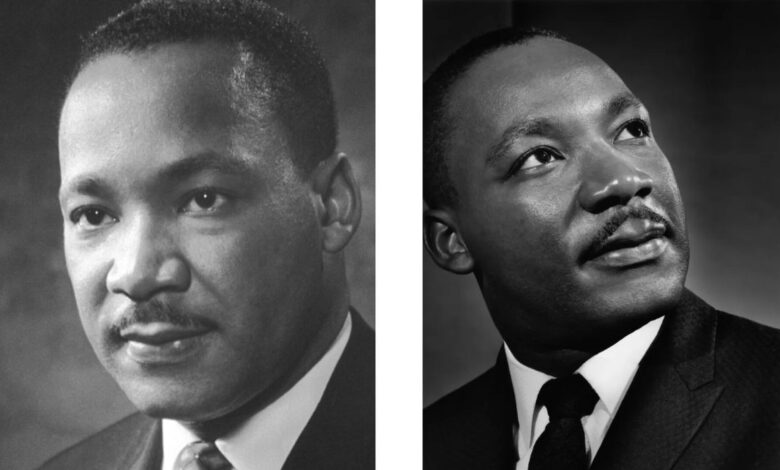
The profound historical legacy of civil rights leader Martin Luther King represents one of the most celebrated and influential chapters in global social justice history. Recognized as a preeminent figure in the American civil rights movement, his visionary leadership revolutionized nonviolent protest, legal desegregation, and human rights advocacy during the twentieth century. Over his productive life, he organized pivotal marches, delivered immortal speeches, and challenged institutional racism across the United States. This comprehensive biographical study examines his childhood in Atlanta, theological education, civil rights triumphs, global achievements, personal hardships, and lasting cultural impact worldwide.
Quick Bio
| Attribute | Details |
| Full Birth Name | Michael King Jr. (later Martin Luther King Jr.) |
| Date of Birth | January 15, 1929 |
| Place of Birth | Atlanta, Georgia, U.S. |
| Date of Death | April 4, 1968 |
| Place of Death | Memphis, Tennessee, U.S. |
| Primary Professions | Baptist Minister, Civil Rights Activist, Author |
Early Life and Childhood in Atlanta
Born in Atlanta, Georgia in January 1929, young Martin Luther King grew up as the son of a prominent Baptist minister and dedicated teacher. Raised in a supportive middle-class neighborhood, he experienced the painful reality of Southern racial segregation firsthand from an early age. These early experiences with systemic prejudice sparked his deep interest in social justice and religious studies. His nurturing family environment and exposure to church traditions provided a strong spiritual foundation, helping shape his character and preparing him for a future role as a transformational social activist.
Higher Education and Academic Pursuits
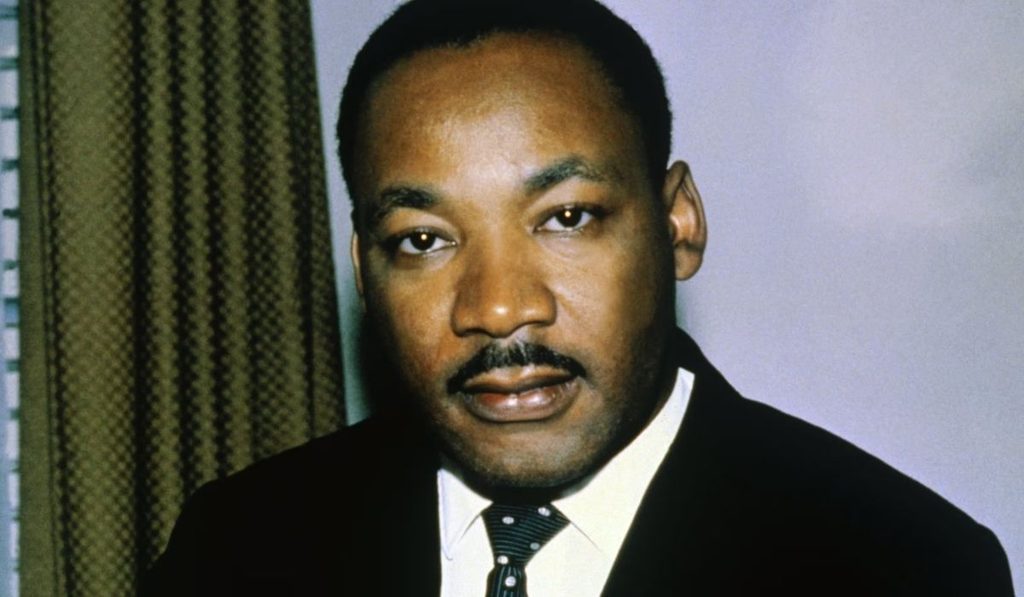
Demonstrating exceptional academic talent, young scholar Martin Luther King entered Morehouse College at age fifteen without formally graduating high school. He earned a sociology degree before pursuing advanced theological training at Crozer Theological Seminary in Pennsylvania. During his seminary studies, he carefully analyzed the peaceful resistance philosophy of Mahatma Gandhi alongside Christian theological doctrines. He eventually completed a doctorate in systematic theology at Boston University in 1955. This rigorous educational background provided him with the intellectual tools and oratorical skills necessary to lead a massive national moral crusade.
Marriage to Coretta and Family Foundation
While completing his doctoral studies in Boston, young minister Martin Luther King met Coretta Scott, an accomplished music student from Alabama. The couple married in 1953 and eventually raised four children together while navigating intense public scrutiny. Coretta proved to be a vital partner in his activist work, offering unwavering emotional support, sharing his commitment to social justice, and actively participating in peaceful demonstrations. Their strong family bond sustained them through constant safety threats, government surveillance, and intense personal stress during the turbulent peak of the civil rights movement.
Leadership in Montgomery Bus Boycott
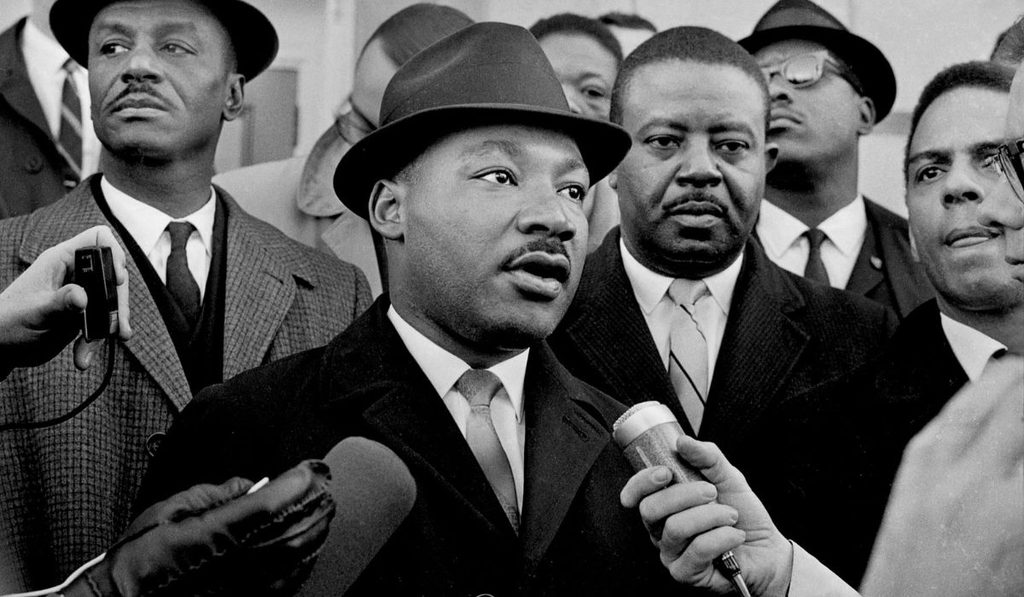
Accepting a pastorate in Montgomery, Alabama, young activist Martin Luther King was thrust into national prominence during December 1955. Following the arrest of Rosa Parks for refusing to yield her bus seat, local leaders chosen him to head the Montgomery Improvement Association. He organized a citywide nonviolent bus boycott that lasted 381 days despite violence and personal bomb threats. The landmark movement ended successfully when federal courts declared segregated bus seating unconstitutional, proving the immense power of unified nonviolent resistance and establishing him as a premier civil rights voice.
Formation of Southern Christian Leadership Conference
Building on the Montgomery victory, visionary organizer Martin Luther King helped establish the Southern Christian Leadership Conference in 1957. Serving as the organization’s first president, he sought to coordinate regional civil rights protests through Black church networks across the American South. The conference advocated for peaceful direct action, voter registration drives, and community education to dismantle Jim Crow laws. Under his dynamic leadership, the organization became a powerful institutional engine driving the national campaign against legal desegregation, institutional discrimination, and economic inequality during the late 1950s.
The Albany Movement and Strategic Lessons
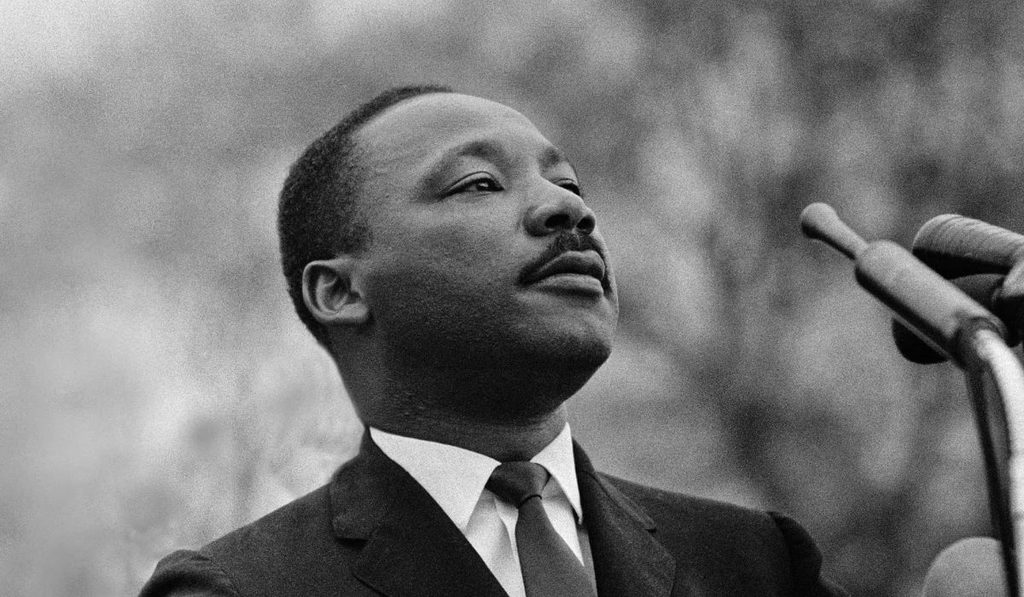
Traveling to Georgia in 1961, civil rights leader Martin Luther King joined local protests known as the Albany Movement. The broad campaign aimed to desegregate all public facilities throughout the city through mass arrests and boycotts. However, local authorities avoided public brutality, frustrating the campaign’s efforts to gain national media attention. Although the Albany campaign failed to achieve its immediate desegregation goals, he drew vital strategic lessons from the experience. He realized the importance of focusing protests on specific targets to maximize political pressure and public visibility effectively.
The Birmingham Campaign and Jail Letter
Launching a major nonviolent campaign in Birmingham during 1963, determined activist Martin Luther King targeted one of America’s most segregated cities. Police responses using high-pressure water hoses and police dogs against peaceful marchers shocked the entire nation. Arrested during the demonstrations, he authored his famous “Letter from Birmingham Jail,” powerfully defending moral obligations to break unjust laws. The successful campaign forced local businesses to desegregate, galvanized national public support for civil rights legislation, and showcased his incredible ability to articulate timeless moral truths during times of severe crisis.
The Historic March on Washington
Co-organizing a massive demonstration in August 1963, prominent orator Martin Luther King helped lead the legendary March on Washington for Jobs and Freedom. Over 250,000 peaceful protesters gathered near the Lincoln Memorial to demand civil rights legislation and economic opportunity. Standing before the vast crowd, he delivered his immortal “I Have a Dream” speech, envisioning a nation free of racial prejudice. The historic event captured international attention, accelerated federal civil rights reforms, and remains one of the most iconic moments in modern world history.
Awarded the Nobel Peace Prize
Receiving international recognition in October 1964, global icon Martin Luther King became the youngest recipient of the Nobel Peace Prize at age thirty-five. The Norwegian Nobel Committee honored his steadfast commitment to achieving racial justice through nonviolent means. During his acceptance speech in Oslo, he dedicated the prestigious award to millions of civil rights activists fighting for freedom. He donated the prize money to further the civil rights cause, cementing his international reputation as a major global advocate for human rights, peace, and universal brotherhood.
The Selma Voting Rights Marches
Turning attention to voting discrimination in 1965, civil rights leader Martin Luther King organized marches from Selma to Montgomery, Alabama. The initial attempt saw peaceful marchers violently attacked by state troopers on “Bloody Sunday,” sparking national outrage. He led a successful, federally protected march shortly after, drawing thousands of supporters nationwide. The intense public pressure generated by the Selma campaign directly moved President Lyndon B. Johnson to sign the Voting Rights Act of 1965, guaranteeing federal voting protections for African Americans across the nation.
Northern Campaigns and Housing Rights
Expanding his activist focus beyond the South in 1966, determined reformer Martin Luther King moved into a tenement in Chicago to highlight northern urban poverty. He launched the Chicago Freedom Movement to protest discriminatory housing practices, educational inequality, and job segregation. Facing intense hostility and violent mobs in northern neighborhoods, he realized that economic discrimination was deeply entrenched across the entire country. Despite limited immediate policy victories, his northern efforts laid the vital groundwork for future fair housing legislation and highlighted systemic economic disparities nationwide.
Opposition to the Vietnam War
Delivering a controversial address at New York’s Riverside Church in 1967, courageous leader Martin Luther King publicly denounced American involvement in the Vietnam War. He argued that war diverted critical resources from anti-poverty initiatives while disproportionately harming impoverished citizens. His anti-war stance drew severe criticism from political allies, major newspapers, and fellow civil rights leaders who feared losing presidential support. Nevertheless, he refused to compromise his principled nonviolent philosophy, insisting that moral integrity required opposing injustice and violence wherever it occurred across the globe.
The Poor Peoples Campaign
Developing a radical economic vision late in life, social reformer Martin Luther King launched the Poor People’s Campaign in late 1967. The ambitious movement aimed to unite impoverished citizens of all racial backgrounds to demand economic justice, jobs, and affordable housing from the federal government. He envisioned constructing a tent city on the National Mall in Washington, D.C., to force national leaders to address widespread poverty. His evolving advocacy demonstrated a profound commitment to expanding civil rights into comprehensive economic equality for all marginalized people.
Support for Memphis Sanitation Workers
Traveling to Tennessee in early 1968, dedicated activist Martin Luther King arrived to support striking Memphis sanitation workers fighting for fair wages and safer working conditions. He led marches and rallied community members to stand in solidarity with the city’s Black municipal laborers. On the evening of April 3, he delivered his haunting final speech, “I’ve Been to the Mountaintop,” expressing faith in the movement’s ultimate victory despite personal threats. His presence in Memphis highlighted his unwavering devotion to working-class labor rights during his final days.
Tragic Assassination in Memphis
Standing on the balcony of the Lorraine Motel on April 4, 1968, visionary leader Martin Luther King was fatally shot by an assassin. His sudden death at age thirty-nine shocked the world, triggering widespread civil unrest in over one hundred American cities. World leaders expressed profound sorrow, while millions mourned the loss of America’s primary nonviolent voice. His assassination silenced a transcendent moral figure, yet his immense sacrifices galvanized Congress to pass the Fair Housing Act of 1968 days later, fulfilling a key objective of his final campaign.
FBI Surveillance and Political Pressure
Throughout his years of prominent national leadership, civil rights icon Martin Luther King faced relentless government surveillance and opposition. Under Director J. Edgar Hoover, the Federal Bureau of Investigation targeted him through covert surveillance programs, aiming to undermine his influence. Bureau agents bugged his hotel rooms, tracked his movements, and attempted to disrupt his personal life and leadership network. Despite severe government pressure, public smear campaigns, and constant death threats, he remained steadfastly committed to his nonviolent mission, proving his extraordinary courage and psychological resilience under immense stress.
Creation of the Federal Holiday
Honoring his monumental contributions to American democracy, campaign efforts led to establishing a national federal holiday dedicated to Martin Luther King. Signed into law in 1983 and first observed in 1986, Martin Luther King Jr. Day is celebrated annually on the third Monday in January. The holiday serves as an official national day of community service, encouraging citizens to engage in volunteer work. It stands as an enduring tribute to his lifelong struggle for racial equality, peace, nonviolence, and fundamental human dignity for all.
Literary Contributions and Major Speeches
Beyond his organizing achievements, eloquent author Martin Luther King produced a vast body of influential writings and speeches that continue to shape modern philosophy. Books such as Stride Toward Freedom and Where Do We Go from Here detailed his social views and strategic insights. His brilliant speeches synthesized biblical theology, American democratic principles, and classical philosophy into persuasive arguments for racial equality. His written works remain required reading in academic institutions worldwide, serving as foundational texts for students studying nonviolent resistance and social change.
The National Memorial in Washington DC
Dedicated in 2011 on the National Mall, the impressive stone memorial honoring Martin Luther King stands near monuments dedicated to former American presidents. The prominent monument features a majestic relief sculpture carved into granite, surrounded by a wall inscribed with famous quotes from his speeches. It represents the first national memorial on the Mall dedicated to an African American leader, symbolizing his permanent standing in American history. Millions of global visitors gather at the site annually to reflect on his timeless legacy of freedom, justice, and human equality.
Enduring Global Legacy and Inspiration
Reflecting on the extraordinary life work of Martin Luther King confirms his permanent standing as a global champion of human freedom and nonviolence. His effective nonviolent strategies have inspired democracy activists, human rights defenders, and freedom movements across every continent. Scholars and citizens continue to draw deep inspiration from his courageous defense of universal human rights. His message of love, justice, and nonviolence remains an eternal beacon of hope, reminding future generations that moral courage can overcome prejudice, oppression, and systemic injustice everywhere.
Frequently Asked Questions
- Who was Martin Luther King?
- Martin Luther King was an iconic American civil rights activist and Baptist minister who led the nonviolent movement against racial desegregation.
- What was his most famous speech?
- His most famous speech was the “I Have a Dream” speech, delivered during the March on Washington in August 1963.
- When did he win the Nobel Peace Prize?
- He won the Nobel Peace Prize in 1964 for combating racial inequality through nonviolent civil disobedience.
- When is the federal holiday celebrating his birthday observed?
- Martin Luther King Jr. Day is observed annually as a U.S. federal holiday on the third Monday of January.
- Where can readers find additional official biographical information regarding his life?
- Comprehensive historical records, speech archives, and detailed summaries can be explored directly on his dedicated page on