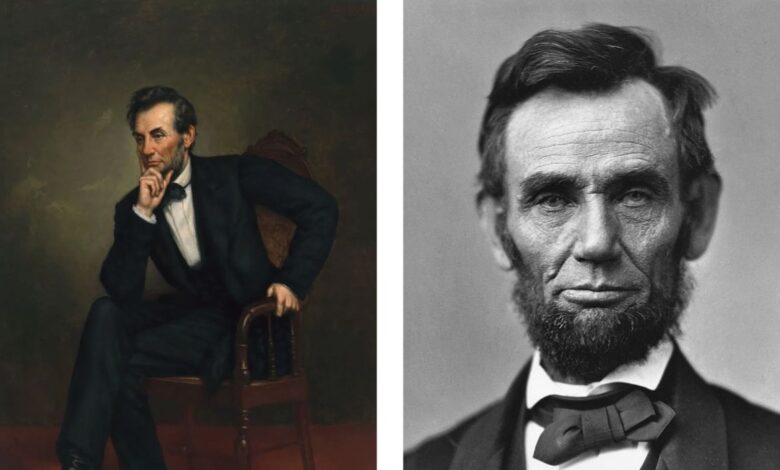
The profound historical legacy of sixteenth American president Abraham Lincoln represents one of the most transformative, heroic, and enduring chapters in United States history. Celebrated for his exceptional political wisdom, eloquent rhetoric, and unwavering moral resolve, he successfully navigated the nation through its greatest internal conflict, the American Civil War. His visionary leadership preserved the constitutional Union, abolished the deeply entrenched institution of chattel slavery, and redefined the fundamental promises of American democracy. This comprehensive biographical article examines his humble frontier origins in Kentucky and Illinois, early legal career, pivotal political speeches, presidential triumphs, personal hardships, and lasting global impact.
Quick Bio
| Attribute | Details |
| Full Birth Name | Abraham Lincoln |
| Date of Birth | February 12, 1809 |
| Place of Birth | Hodgenville, Kentucky, U.S. |
| Date of Death | April 15, 1865 |
| Place of Death | Washington, D.C., U.S. |
| Primary Professions | Lawyer, Statesman, Politician, U.S. President |
Frontier Childhood in Kentucky and Indiana
Born in a modest log cabin in rural Kentucky, young Abraham Lincoln experienced severe hardship during his earliest formative years on the American frontier. Moving with his pioneer family to the forested wilderness of southern Indiana in 1816, he spent his youth clearing heavy timber, farming rugged land, and splitting wooden rails. Despite having less than twelve months of formal schooling throughout his childhood, he possessed an insatiable hunger for knowledge, reading borrowed books by fireplace light after exhausting manual labor. This grueling physical upbringing cultivated remarkable personal resilience, immense physical strength, and a lifelong appreciation for self-education and literature.
Early Career and Life in New Salem
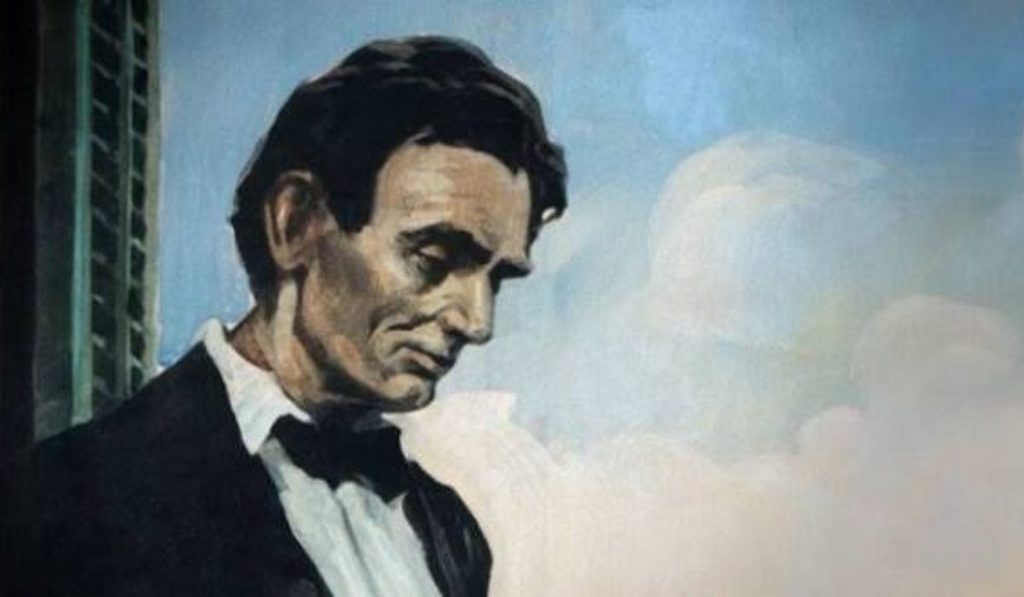
Relocating to New Salem, Illinois in 1831, ambitious young Abraham Lincoln undertook various occupations to earn a living, working as a store clerk, surveyor, and postmaster. His warmth, sharp wit, and reputation for absolute integrity earned him the enduring nickname “Honest Abe” among local townspeople. During this pivotal era, he actively studied law books independently, passing the Illinois bar exam without attending law school or university. Serving briefly as a captain in the local militia during the Black Hawk War, his New Salem experiences established his standing as an approachable, highly trustworthy community leader, launching his lifelong political career.
Prairie Lawyer in Springfield Illinois
Establishing his permanent residence in Springfield, lawyer Abraham Lincoln built a flourishing legal practice handling thousands of cases across the vast Illinois eighth judicial circuit. Traveling on horseback alongside judges for months at a time, he represented diverse clients ranging from impoverished prairie farmers to powerful expanding railroad corporations. His sharp analytical mind, mastery of cross-examination, and ability to explain complex legal principles in simple, persuasive language made him one of the most effective courtroom attorneys in Illinois. His extensive legal work deepened his understanding of constitutional principles, human nature, and political compromise, preparing him for national leadership.
Entry into Illinois State Legislature
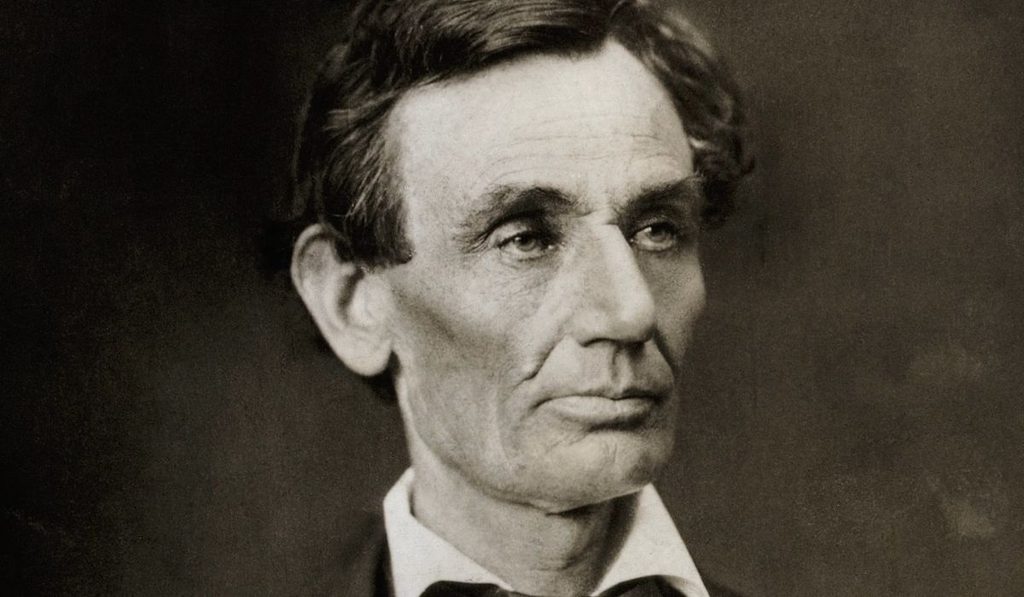
Elected to the Illinois State House of Representatives in 1834, rising politician Abraham Lincoln served four consecutive terms as a dedicated Whig Party leader. He championed state-funded infrastructure projects, including canals, turnpikes, and railroads, to stimulate economic growth across rural communities. During his legislative tenure, he protested early state resolutions supporting human slavery, marking his initial public stance against the institution’s expansion. Collaborating with legislative colleagues, he played a central role in moving the state capital from Vandalia to Springfield, establishing his reputation as a skilled parliamentary strategist and pragmatic policymaker within Illinois state politics.
Single Term in the United States Congress
Elected to the United States House of Representatives in 1846, national statesman Abraham Lincoln served a single two-year term representing his Illinois district in Washington, D.C. During his Congressional tenure, he introduced controversial “Spot Resolutions” challenging President James K. Polk’s justification for declaring war against Mexico. He also drafted legislation proposing the gradual, compensated emancipation of enslaved individuals within the District of Columbia. Although his anti-war stance alienated some hometown voters, his Congressional service provided invaluable exposure to national political figures, federal legislative procedures, and the growing sectional crisis dividing northern and southern states.
Marriage to Mary Todd and Family Life
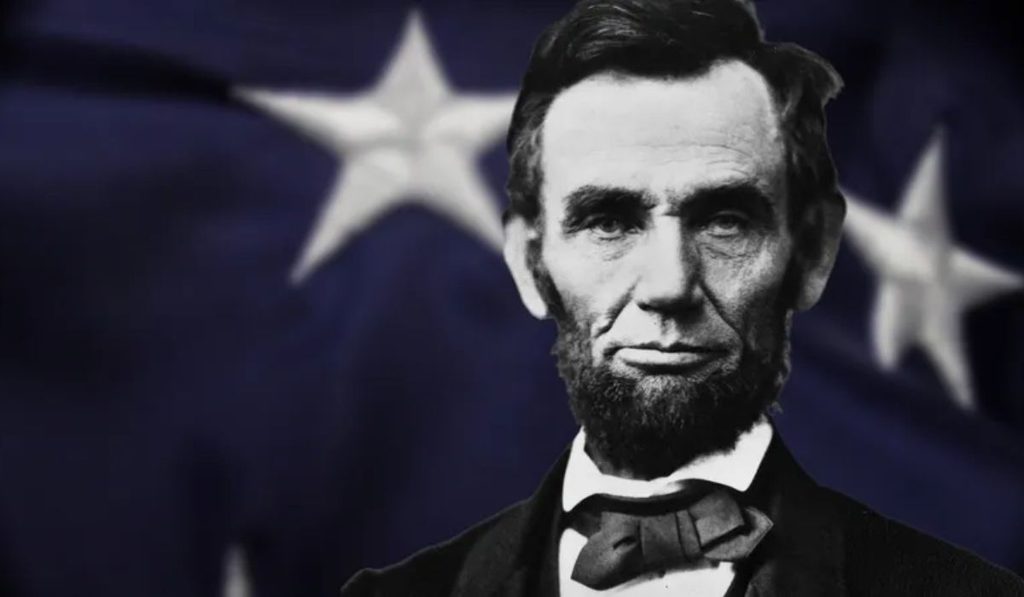
Forming a crucial personal partnership, rising lawyer Abraham Lincoln married Mary Todd, an educated woman from a prominent Kentucky family, in late 1842. Settling into their Springfield home, the couple raised four sons—Robert, Eddie, Willie, and Tad—though tragically only Robert survived to adulthood. Mary provided vital political encouragement, social connections, and emotional companionship throughout his career. HoweverAbraham Lincoln Life Story Legacy and Historical Impact
Abraham Lincoln stands as one of the most transformative leaders in American history, guiding the nation through its greatest moral, constitutional, and political crisis during the Civil War. His steadfast leadership preserved the Union, abolished the institution of slavery, and modernized the national economy. Rising from humble origins on the western frontier, he utilized self-education, sharp intellect, and profound empathy to navigate complex political landscapes. Today, Abraham Lincoln remains a timeless symbol of democracy, freedom, and resilience, inspiring generations worldwide through his principled actions, eloquent speeches, and unwavering commitment to human equality and unity across a deeply divided nation.
Quick Bio
| Attribute | Details |
| Full Name | Abraham Lincoln |
| Date of Birth | February 12, 1809 |
| Place of Birth | Hodgenville, Kentucky, U.S. |
| Date of Death | April 15, 1865 |
| Office Held | 16th President of the United States |
| Political Party | Whig, Republican, National Union |
| Key Achievement | Preserved the Union and issued Emancipation Proclamation |
Early Life on the American Frontier
Abraham Lincoln was born in a modest log cabin in Kentucky, growing up in remote rural settlements across Indiana and Illinois. His early years were defined by physical hardship, manual labor, and the severe loss of his mother at a young age. Despite limited access to formal schooling, he developed an insatiable passion for reading, borrowing books from neighbors to study literature, history, and law. These formative frontier experiences instilled in him a strong work ethic, deep self-reliance, and practical wisdom that shaped his character and prepared him for future political leadership during challenging times.
Self Education and Early Career Pursuits
Abraham Lincoln pursued knowledge relentlessly despite receiving less than a year of formal instruction throughout his entire youth. He mastered grammar, mathematics, and surveying through disciplined independent reading while working various odd jobs, including flatboat operator and country storekeeper. Moving to New Salem, Illinois, his sharp intelligence and engaging storytelling earned him wide respect within the local community. His dedication to self-improvement eventually led him to study law independently, passing the bar exam to launch a legal career that established his reputation as a brilliant, trustworthy, and articulate professional advocate.
Legislative Beginnings in the Illinois General Assembly
Abraham Lincoln entered public service in 1834 when voters elected him to the Illinois State House of Representatives as a Whig. During his four terms in the state legislature, he focused on economic development, promoting infrastructure projects like canals, roads, and railroads to connect rural communities. He also developed essential skills in debate, political strategy, and legislative drafting while forming key political alliances. Crucially, during this early legislative period, he voiced his initial public opposition to slavery, laying the moral foundation for his future national campaign against the expansion of human bondage.
Legal Career and Reputation as Honest Abe
Abraham Lincoln built a highly successful law practice in Springfield, Illinois, traveling extensively across the eighth judicial circuit to represent diverse clients. He handled thousands of cases ranging from simple boundary disputes and criminal defense to complex corporate litigation involving expanding railroad companies. Known for his meticulous preparation, fairness, and persuasive court demeanor, he earned the enduring nickname “Honest Abe.” His legal career sharpened his analytical thinking, deepened his understanding of the United States Constitution, and earned him widespread professional respect, which served as a crucial stepping stone toward national political prominence.
Congressional Tenure and the Mexican American War
Abraham Lincoln served a single term in the United States House of Representatives from 1847 to 1849, representing Illinois with distinction. In Congress, he openly challenged President James K. Polk regarding the origins of the Mexican-American War, introducing his famous “Spot Resolutions” to question the conflict’s justification. His principled opposition drew controversy among his constituents back home, limiting his immediate political prospects. Nevertheless, his time in Washington exposed him to national political dynamics, deepened his understanding of federal legislation, and strengthened his resolve to address pressing national issues surrounding western territorial expansion.
Return to Law and Political Reawakening
Abraham Lincoln temporarily stepped away from national politics after his congressional term ended, returning full-time to his thriving Springfield legal practice. However, the passage of the Kansas-Nebraska Act in 1854 deeply alarmed him by repealing the Missouri Compromise and allowing slavery to expand into western territories. This pivotal legislative event reignited his political passion, compelling him to re-enter public life. He began delivering powerful speeches attacking the moral basis of human bondage, rapidly emerging as a leading regional voice and helping organize the newly formed Republican Party in Illinois.
The Historical Debates with Stephen A Douglas
Abraham Lincoln gained national prominence during his 1858 campaign for the United States Senate against incumbent Democrat Stephen A. Douglas. The two candidates engaged in seven famous face-to-face debates across Illinois, debating popular sovereignty, constitutional rights, and the moral status of human bondage. While he ultimately lost the senatorial election, transcriptions of these debates were widely published in newspapers across the country. His logical arguments, moral clarity, and eloquent rhetoric elevated his national profile, positioning him as a formidable presidential contender for the upcoming 1860 Republican national nomination.
The Cooper Union Address and National Recognition
Abraham Lincoln delivered a monumental speech at the Cooper Union in New York City in February 1860, addressing an influential audience of Eastern political leaders. In this carefully researched address, he demonstrated that the majority of the Founding Fathers sought to restrict the expansion of slavery rather than protect it. His masterclass in legal analysis, historic evidence, and calm moral persuasion captivated the Eastern establishment, proving he was far more than a simple western politician. The resounding success of this single speech solidified his standing as a top-tier candidate for the Republican nomination.
The Presidential Election of 1860
Abraham Lincoln secured the Republican nomination in 1860 and subsequently won the four-way presidential election without carrying a single Southern state. His victory was achieved through strong support across the populous Northern and Western states, signaling a massive political shift in the country. Southern leaders viewed his election as an existential threat to their agrarian economic model and social order, prompting seven Southern states to secede from the Union before his inauguration. His triumph marked a major turning point, placing him at the head of a rapidly fracturing nation on the brink.
Inauguration and the Outbreak of Civil War
Abraham Lincoln took the presidential oath of office on March 4, 1861, delivering a passionate inaugural address appealing for national unity and harmony. He firmly rejected the legality of secession while promising not to initiate military conflict against the Southern states. However, tension erupted into open conflict in April 1861 when Confederate forces fired upon Fort Sumter in South Carolina. Confronted with immediate armed rebellion, he acted decisively, calling for thousands of volunteer troops to defend the capital and preserve the United States, officially marking the commencement of the bloody Civil War.
Wartime Leadership and Constitutional Strategy
Abraham Lincoln navigated unprecedented legal, political, and military challenges throughout the Civil War, constantly striving to maintain constitutional order. To protect national security during extreme domestic crisis, he expanded executive authority, suspended the writ of habeas corpus, and implemented wartime press censorship. While political opponents criticized these extraordinary measures as dictatorial, he maintained that extraordinary actions were essential to prevent the total destruction of the democratic republic. His skillful balancing act preserved constitutional governance while giving the federal government the necessary power to suppress the Southern armed insurrection effectively.
The Path to the Emancipation Proclamation
Abraham Lincoln initially framed the Civil War exclusively as a conflict to preserve the federal Union, treading carefully to retain border state loyalty. However, as the conflict intensified, he recognized that striking at slavery was both a moral imperative and a necessary military strategy to weaken the Confederacy. On January 1, 1863, he officially issued the Emancipation Proclamation, declaring free all enslaved people held within rebellious states. This historic executive order fundamentally transformed the purpose of the war, adding human freedom to national unity as an essential objective of Union victory.
The Gettysburg Address and Moral Dedication
Abraham Lincoln delivered the timeless Gettysburg Address in November 1863 at the dedication of a national cemetery in Pennsylvania. In fewer than three hundred eloquent words, he honored fallen soldiers while redefining the Civil War as a supreme test of democratic principles. He invoked the Declaration of Independence, emphasizing that the nation was dedicated to the proposition that all human beings are created equal. His brief yet profound speech redefined the American democratic experiment, inspiring citizens to ensure that government of the people, by the people, for the people, shall not perish.
Commanding the Military and Finding General Grant
Abraham Lincoln faced immense frustration early in the war, constantly seeking aggressive military commanders capable of defeating Confederate generalship. After enduring years of caution from various Northern generals, he recognized the relentless strategy and determination of Ulysses S. Grant. In 1864, he appointed Grant as general-in-chief of all Union armies, granting him broad strategic autonomy to execute a coordinated nationwide offensive. This decisive military partnership brought focused direction to the Northern war effort, systematically exhausting Southern military resources and ultimately paving the way for total Union victory.
Reelection Campaign of 1864
Abraham Lincoln faced a daunting reelection campaign in 1864 amid deep public war weariness, rising casualties, and intense political opposition from Peace Democrats. Many political observers predicted his defeat as the military campaign appeared stalled during the exhausting summer months. However, crucial battlefield triumphs, including the capture of Atlanta, dramatically restored Northern public confidence in his wartime strategy. He won a decisive electoral landslide in November 1864, securing a powerful public mandate to finish the Civil War, abolish slavery completely, and guide the wounded nation toward lasting peace.
Passage of the Thirteenth Amendment
Abraham Lincoln recognized that the Emancipation Proclamation was a temporary war measure that might face constitutional challenges following the conflict’s conclusion. To permanently end human bondage across the entire nation, he used his full political authority to secure congressional passage of the Thirteenth Amendment. During late 1864 and early 1865, he personally lobbied hesitant lawmakers, offered political appointments, and marshaled public pressure to secure the required votes. His dedicated efforts culminated in congressional approval in January 1865, forever outlawing slavery throughout the United States.
Second Inaugural Address and Reconstruction Vision
Abraham Lincoln delivered his profound Second Inaugural Address in March 1865 as the Civil War neared its final conclusion. Instead of expressing triumph or malice toward the defeated South, he offered a deeply compassionate message of national reconciliation, healing, and shared responsibility. He famously called upon citizens to act “with malice toward none, with charity for all,” setting a gentle, constructive tone for post-war Reconstruction. His visionary address reflected a profound commitment to binding the nation’s wounds, restoring brotherhood, and building a just society for all citizens.
Appomattox and Union Victory
Abraham Lincoln witnessed the ultimate triumph of his wartime leadership when Confederate General Robert E. Lee surrendered to Ulysses S. Grant at Appomattox Court House in April 1865. The formal surrender marked the practical end of four years of devastating civil conflict that claimed hundreds of thousands of lives. He visited the captured Confederate capital of Richmond shortly before the surrender, receiving joyous welcomes from newly freed African Americans. His steadfast determination had successfully preserved the Union, vindicated constitutional democracy, and ushered in a dramatic new era of universal freedom.
Tragic Assassination at Fords Theatre
Abraham Lincoln was tragically assassinated on April 14, 1865, while attending a play at Ford’s Theatre in Washington, D.C. He was shot by John Wilkes Booth, a fanatical Confederate sympathizer seeking to avenge the South’s defeat and throw the federal government into chaos. He passed away early the following morning on April 15, plunging a grieving nation into profound sorrow just days after celebrating military victory. His sudden death turned him into a national martyr, cutting short his visionary leadership precisely when the country needed his reconciliation guidance.
Enduring Legacy and Historical Impact
Abraham Lincoln remains widely regarded by historians and the public as one of the greatest leaders in human history. His successful preservation of the American republic, abolition of human slavery, and rhetorical defense of human equality fundamentalized modern democracy. Memorials, monuments, and currencies across the globe honor his historic contributions, while scholars continually study his political philosophy, leadership style, and writing talent. Through his extraordinary life and ultimate sacrifice, Abraham Lincoln transformed the United States, leaving an indelible legacy of liberty, justice, and human dignity that endures worldwide.
FAQs
- What was the primary goal of the Emancipation Proclamation?
- The primary goal of Abraham Lincoln was to free enslaved people in Confederate territory and weaken the Southern rebellion during the war.
- When was the Gettysburg Address delivered?
- Abraham Lincoln delivered the famous Gettysburg Address on November 19, 1863, at the dedication of a soldiers’ national cemetery in Pennsylvania.
- Which amendment permanently abolished slavery in the United States?
- The Thirteenth Amendment to the United States Constitution, strongly championed by Abraham Lincoln, permanently abolished slavery across the entire nation.
- Who assassinated the 16th President of the United States?
- John Wilkes Booth, a Confederate sympathizer, assassinated Abraham Lincoln at Ford’s Theatre in Washington, D.C., in April 1865.
- Which political party did he belong to when elected President in 1860?
- Abraham Lincoln was elected as the nation’s 16th leader in 1860 representing the newly formed Republican Party platform.