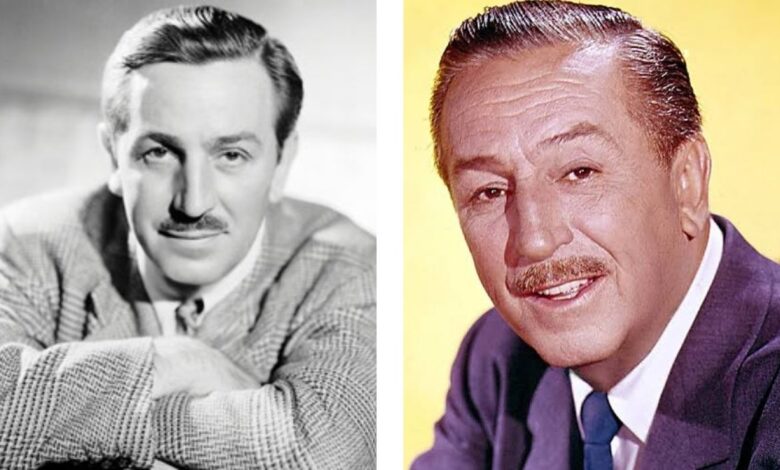
The monumental artistic and cultural legacy of visionary American producer Walt Disney represents one of the most transformative chapters in modern global entertainment history. Celebrated as an innovative animator, entrepreneur, and theme park pioneer, he introduced groundbreaking sound sync technology, full-color feature animation, and immersive family experiences. His timeless creations, led by global cultural icon Mickey Mouse, altered the landscape of cinema and American popular media forever. This comprehensive biographical study explores his early life in Missouri, initial artistic struggles, major Hollywood triumphs, revolutionary theme park projects, and enduring global influence.
Quick Bio
| Attribute | Details |
| Full Birth Name | Walter Elias Disney |
| Date of Birth | December 5, 1901 |
| Place of Birth | Chicago, Illinois, United States |
| Date of Death | December 15, 1966 |
| Place of Death | Burbank, California, United States |
| Primary Professions | Animator, Film Producer, Entrepreneur, Voice Actor |
Early Life in Chicago and Rural Missouri
Born in Chicago during late 1901, young Walt Disney moved to a quiet rural farm in Marceline, Missouri, at a very early age. Surrounded by open fields, barnyard animals, and small-town American life, he developed a deep passion for drawing, sketching neighborhood horses, and painting with watercolors. His idyllic childhood in Marceline deeply influenced his lifelong artistic aesthetic, inspiring the nostalgic, wholesome themes later built directly into the Main Street USA designs across his world-famous theme parks. His early rural experiences established a strong work ethic, creative drive, and enduring connection to American family values.
Artistic Training and Red Cross Service
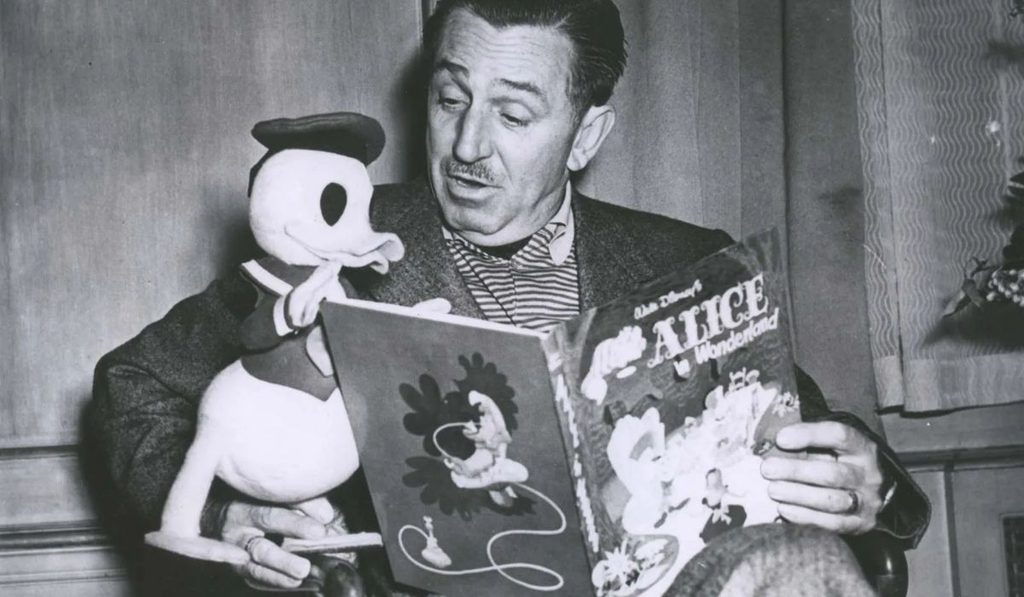
Relocating back to Chicago in 1917, ambitious teenager Walt Disney attended McKinley High School while taking night courses at the Chicago Academy of Fine Arts. Eager to contribute during World War I, he forged his birth certificate at age sixteen to join the Red Cross Ambulance Corps in late 1918. Deployed to France shortly after the armistice, he decorated his ambulance with original cartoon illustrations instead of standard military camouflage. Returning home in 1919 with enriched visual skills and world experience, he resolved to establish a professional career as a commercial illustrator and graphic artist in Missouri.
Commercial Beginnings and Laugh-O-Gram Studio
Finding commercial artwork employment in Kansas City, ambitious innovator Walt Disney learned basic cut-out stop-motion animation techniques while creating local cinema advertisements. Fascinated by moving pictures, he established his first short-lived independent animation company, Laugh-O-Gram Studio, in 1922. Partnering with gifted animator Ub Iwerks, he produced modern fairy tale shorts and innovative live-action mixed short films called Alice Comedies. Although severe financial hardship and client bankruptcy forced the studio to close in 1923, this early business failure taught him critical lessons about intellectual property rights, financing, studio management, and animation production mechanics.
Move to Hollywood and Disney Brothers Studio
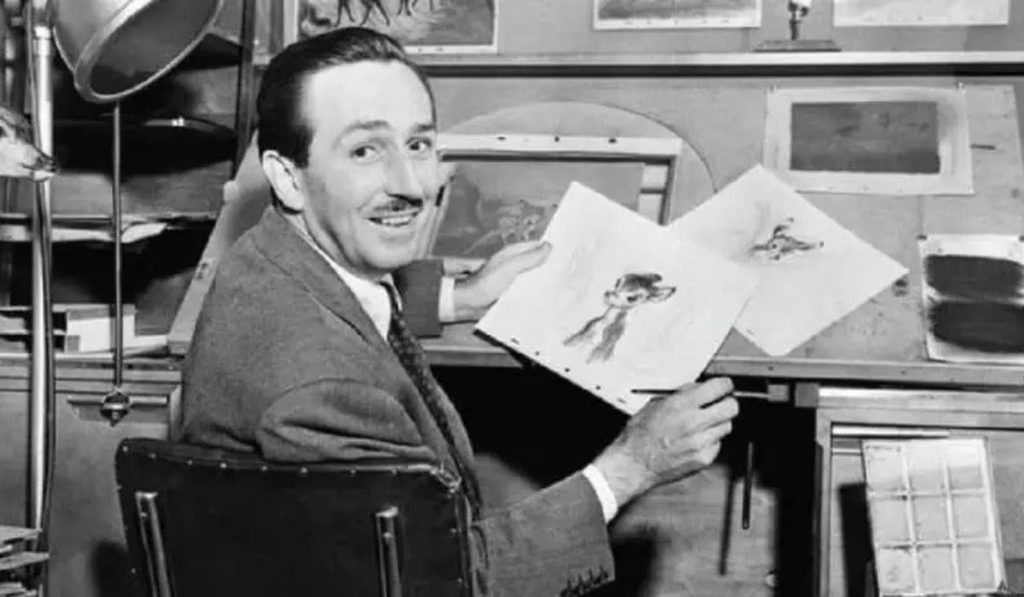
Arriving in California during the summer of 1923 with minimal savings, determined creator Walt Disney partnered with his older brother Roy to found the Disney Brothers Cartoon Studio in Los Angeles. Operating initially out of a small converted garage, they secured a distribution deal to continue producing their Alice Comedies series. Managing artistic production while Roy handled corporate finances, the studio steadily expanded, hired professional animators, and moved to dedicated commercial premises. This fundamental business partnership provided a stable operational foundation, allowing the studio to experiment with higher artistic quality and technological innovation throughout the roaring twenties.
Loss of Oswald and Birth of Mickey Mouse
Experiencing a major professional setback in early 1928, ambitious producer Walt Disney lost the distribution rights and key animation staff for his popular character, Oswald the Lucky Rabbit, to distributor Charles Mintz. Undeterred by this crushing betrayal, he secretly developed a new rodent character alongside master animator Ub Iwerks on his train ride back to California. Named Mickey Mouse, the cheerful character made his public debut in Steamboat Willie in November 1928, featuring synchronized sound and musical scoring. The innovative cartoon became an instant global sensation, revolutionizing theatrical animation and establishing his lifelong independence as a studio head.
Technological Breakthroughs with Technicolor and Silly Symphonies
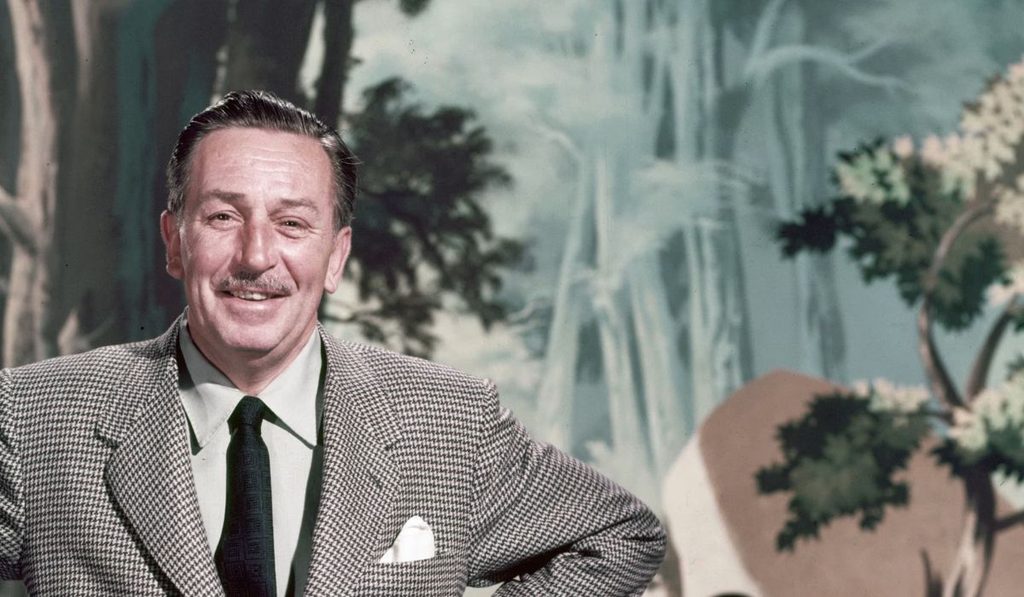
Pioneering cinematic advancements throughout the 1930s, creative visionary Walt Disney launched the groundbreaking Silly Symphonies cartoon series to experiment with advanced storytelling, musical orchestration, and color processes. In 1932, he secured exclusive rights to use full-color three-strip Technicolor in animated short films, winning his first Academy Award for Flowers and Trees. He also developed the revolutionary multiplane camera, which created realistic visual depth and atmospheric perspective in hand-drawn animation. These relentless technical innovations elevated animated cartoons from cheap novelty shorts into a legitimate, highly respected form of fine cinematic art across international theater networks.
Snow White and the Seven Dwarfs Masterpiece
Undertaking a massive financial gamble that Hollywood skeptics dismissed as “Disney’s Folly,” relentless producer Walt Disney produced the world’s first full-length hand-drawn animated feature, Snow White and the Seven Dwarfs. Released in late 1937, the Technicolor masterpiece featured rich character animation, deep emotional storytelling, and iconic musical numbers. The movie smashed box office records, earning immense global critical acclaim and a special Academy Award featuring seven miniature statuettes. Its astounding commercial success funded a state-of-the-art studio complex in Burbank, California, establishing hand-drawn feature animation as a major cinematic industry.
The Golden Age of Feature Animation
Building on his inaugural feature victory, studio founder Walt Disney led his artists through a golden creative era, producing timeless animated classics including Pinocchio, Fantasia, Dumbo, and Bambi between 1940 and 1942. Fantasia introduced Fantasound, an innovative stereophonic sound reproduction system designed specifically to blend classical orchestral music with abstract visual imagery. Though World War II disrupted international box office revenues and temporarily forced the studio to produce military training instructional films, these golden age features showcased incredible artistic craftsmanship, emotional depth, and technical sophistication that set enduring international benchmarks for animation history.
Post-War Recovery and Live-Action Expansion
Rebuilding his commercial operations following World War II, resourceful executive Walt Disney diversified studio output by introducing live-action feature films and natural history documentaries alongside returning animated classics. Hits like Cinderella, Alice in Wonderland, and Peter Pan restored animated feature profitability, while the True-Life Adventures nature series earned numerous Academy Awards for real-world environmental photography. In 1950, he produced Treasure Island, his studio’s first fully live-action feature film, followed by the critically acclaimed 20,000 Leagues Under the Sea. This successful expansion into live-action filmmaking broadened the studio’s audience reach and commercial stability.
Pioneering Television Broadcasts and The Mickey Mouse Club
Recognizing the rising home entertainment power of television in the early 1950s, media innovator Walt Disney embraced the new broadcast medium while traditional Hollywood movie studios resisted its popularity. He launched the anthology series Walt Disney’s Disneyland in 1954 to promote his upcoming theme park while delivering high-quality family entertainment directly into American living rooms. He also created The Mickey Mouse Club, a daily children’s variety show that introduced a generation to talented young performers known as Mouseketeers. These television broadcasts generated steady revenue, strengthened brand loyalty, and established a direct connection with millions of families.
Concept and Construction of Disneyland Park
Conceptualizing a revolutionary family entertainment concept during the late 1940s, visionary designer Walt Disney envisioned a clean, safe, and immersive amusement park where parents and children could have fun together. Purchasing 160 acres of orange groves in Anaheim, California, he formed WED Enterprises to design themed lands, mechanical audio-animatronics, and narrative attractions. Opening in July 1955, Disneyland completely revolutionized the amusement park industry by substituting dirty carnival midways with immersive, story-driven environments. The park became an immediate economic triumph and international cultural landmark, hosting millions of visitors from across the globe.
Audio-Animatronics and the 1964 World’s Fair
Pushing mechanical engineering boundaries in the early 1960s, technological innovator Walt Disney pioneered three-dimensional robotic figures controlled by sound tracks, known as Audio-Animatronics. He showcased this groundbreaking technology at the 1964 New York World’s Fair, creating hugely popular exhibits including Great Moments with Mr. Lincoln, It’s a Small World, and the Carousel of Progress. These successful corporate pavilions demonstrated unprecedented mechanical realism, lifelike human movements, and advanced show control systems. Following the fair, these iconic attractions were relocated directly to Disneyland, cementing his reputation as an extraordinary mechanical showman.
Mary Poppins and Peak Cinematic Triumph
Achieving his ultimate personal cinematic success in 1964, master producer Walt Disney released Mary Poppins, a musical masterpiece combining live-action actors with vivid animated sequences. Starring Julie Andrews and Dick Van Dyke, the film earned thirteen Academy Award nominations and won five Oscar statuettes, including Best Actress and Best Original Song. The movie represented the absolute synthesis of his studio’s creative talents, blending memorable songwriting, advanced visual effects, emotional narrative, and live-action direction. Mary Poppins became his highest-grossing film during his lifetime, receiving universal critical acclaim as an enduring cinematic classic.
The Florida Project and EPCOT Vision
Planning his grandest enterprise during his final years, ambitious urban planner Walt Disney secretly acquired over 27,000 acres of land near Orlando, Florida, for the “Florida Project”. Beyond building a larger theme park resort, he conceptualized the Experimental Prototype Community of Tomorrow (EPCOT), a real-world functional city dedicated to urban planning, technological innovation, and residential living. He envisioned EPCOT as a living laboratory showcasing futuristic transportation systems, efficient waste management, and industrial research. This bold utopian vision demonstrated his lifelong belief that human ingenuity, technology, and optimistic planning could solve complex modern societal challenges.
Record-Breaking Academy Awards and Industry Honors
Throughout his distinguished artistic career, studio executive Walt Disney set unprecedented records within the international film industry, earning more Academy Awards and nominations than any other individual in history. He won 22 competitive Oscars from 59 official nominations, along with four honorary Academy Awards recognizing his historic contributions to cinema, color animation, and character development. He also earned seven Emmy Awards, two Golden Globe Special Achievement Awards, and the Presidential Medal of Freedom. These extraordinary honors reflected his peerless dedication to creative excellence, storytelling craftsmanship, and technical innovation across global media.
Leadership Style and Studio Culture
Managing thousands of animators, artists, writers, and engineers, demanding studio head Walt Disney maintained an intense, highly perfectionist leadership style focused on creative storytelling and technical precision. Known throughout the studio simply as “Walt,” he possessed a rare ability to spot talent, inspire artistic collaboration, and push employees past their perceived creative limits. Though his insistence on absolute control and high standards occasionally generated workplace friction, his leadership fostered an atmosphere of relentless creative innovation. His unique story-first philosophy transformed animation from simple slapstick gags into emotionally resonant narrative cinema.
Final Days and Untimely Passing
Diagnosed with severe lung cancer in late 1966 after decades of heavy chain-smoking, ailing entertainment giant Walt Disney underwent intense medical treatments while remaining actively involved in studio projects and Florida resort planning. He passed away from acute circulatory collapse at St. Joseph Hospital in Burbank, California, on December 15, 1966, at age 65. His sudden death sparked worldwide grief, with heads of state, artists, and millions of fans mourning his passing. He was cremated, and his ashes were interred at Forest Lawn Memorial Park in Glendale, California.
Posthumous Opening of Walt Disney World
Following his brother’s passing, devoted corporate executive Roy O. Disney postponed his retirement to oversee the completion of the Florida resort project. Insisting that the mega-resort bear his late brother’s full name so the public would never forget the man behind the dream, he officially inaugurated Walt Disney World and the Magic Kingdom theme park in October 1971. The Florida resort quickly grew into the most visited vacation destination in the world, proving the commercial viability and everlasting appeal of his original entertainment concepts across generations.
Global Expansion of Theme Parks and Media Empire
Expanding across international borders over subsequent decades, the media empire founded by visionary entrepreneur Walt Disney evolved into one of the largest mass media and entertainment conglomerates in world history. The company opened international theme park resorts in Tokyo, Paris, Hong Kong, and Shanghai, bringing his signature entertainment model to diverse global cultures. Furthermore, the company expanded its media presence through major acquisitions and digital streaming platforms, keeping his original artistic philosophy alive while continually entertaining hundreds of millions of people across every continent around the globe.
Enduring Universal Legacy in Modern Pop Culture
Reflecting on the monumental life work of Walt Disney reveals a lasting cultural legacy that fundamentally reshaped twentieth-century visual entertainment, family recreation, and global pop culture. His pioneering innovations in synchronized sound animation, color film technology, feature storytelling, and themed entertainment established entirely new artistic industries. His optimistic storytelling, iconic characters, and commitment to imagination continue to inspire creative artists, filmmakers, and theme park designers worldwide. He remains an enduring symbol of American ingenuity, proving that imagination, optimism, and perseverance can transform simple drawn sketches into everlasting global magic.
Frequently Asked Questions
- Who was Walt Disney?
- Walt Disney was an iconic American animator, film producer, entrepreneur, and theme park pioneer who co-founded The Walt Disney Company.
- Which iconic cartoon character made Walt Disney world-famous in 1928?
- Mickey Mouse made his famous synchronized sound debut in Steamboat Willie in 1928, establishing his international fame.
- What was the first full-length animated feature film produced by Walt Disney?
- Snow White and the Seven Dwarfs, released in 1937, was his studio’s first full-length animated feature film.
- How many Academy Awards did Walt Disney win during his lifetime?
- He won a record-breaking 22 competitive Academy Awards out of 59 nominations, alongside four honorary Oscar statuettes.
- Where can readers find additional official biographical details regarding his life?
- Detailed career archives, historical records, and biographical overviews can be explored directly on his dedicated