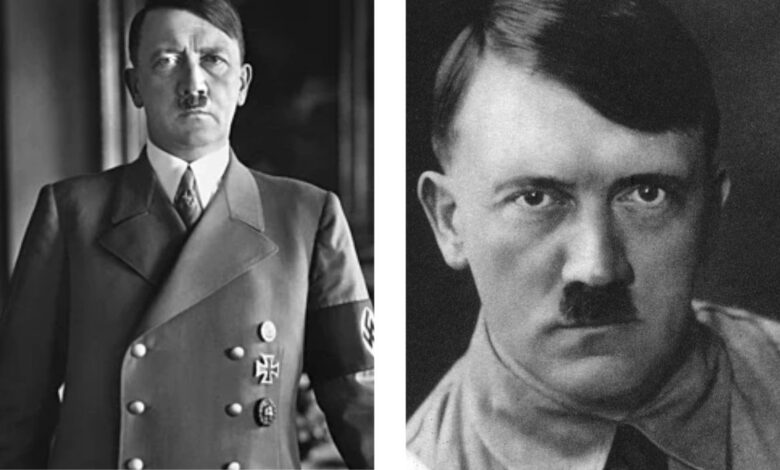
The historical figure known as Adolph Hitler remains one of the most studied and infamous totalitarian dictators in modern global history. Rising to power in Germany during the turbulent interwar period, his aggressive foreign policies, extreme fascist ideology, and brutal dictatorship precipitated the outbreak of World War II across Europe. His oppressive regime orchestrated devastating human rights atrocities, leading to the destruction of millions of innocent lives during the Holocaust. This detailed historical overview examines his early beginnings, political ascent, totalitarian rule, wartime strategies, fall from power, and the profound, enduring lessons his regime left on international law and human history.
Quick Bio
| Detail | Information |
| Full Birth Name | Adolf Hitler |
| Date of Birth | April 20, 1889 |
| Place of Birth | Braunau am Inn, Austria-Hungary |
| Date of Death | April 30, 1945 |
| Place of Death | Berlin, Germany |
| Position Held | Dictator of Germany, Chancellor, Führer |
Early Life and Origins in Austria
Born in a small border town in Austria-Hungary, young Adolph Hitler spent his childhood moving between various Austrian communities with his family. His father worked as a strict customs official, leading to frequent domestic friction regarding his future career ambitions. Demonstrating an early passion for fine arts and architecture, he struggled academically and eventually dropped out of secondary school. Following the deaths of his parents, he moved to Vienna in hopes of attending art school, an endeavor that ultimately failed and initiated a period of economic hardship, social isolation, and exposure to intense nationalist and anti-Semitic political ideologies.
Years in Vienna and Art Rejections
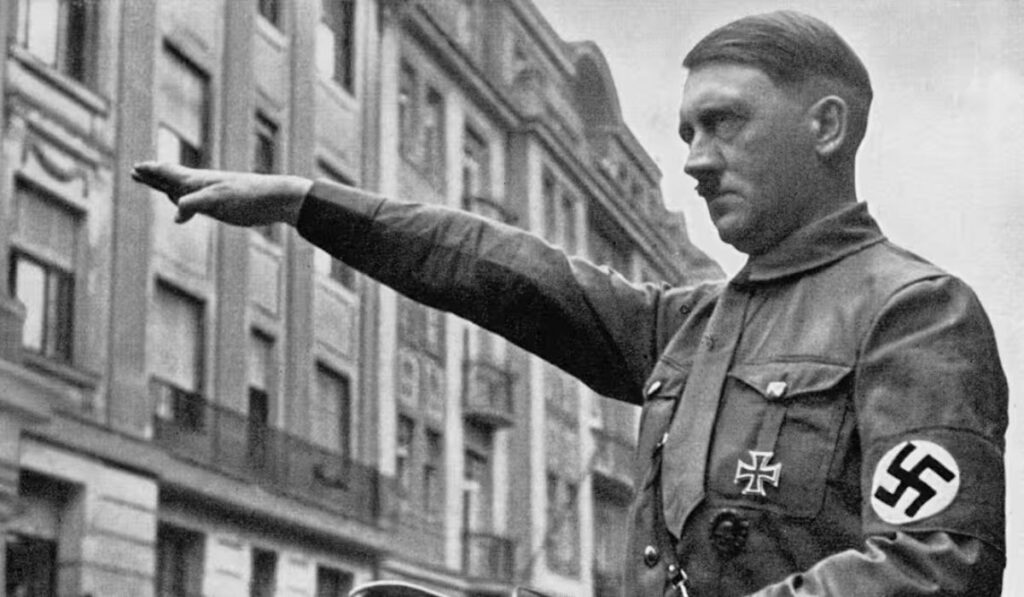
Living in Vienna during his formative young adult years, Adolph Hitler attempted twice to gain admission to the prestigious Academy of Fine Arts. Both applications ended in rejection, forcing him to live in poor boarding houses while earning a meager living painting postcards and watercolor scenes. During this difficult period, he spent vast amounts of time reading radical political pamphlets and absorbing widespread local prejudices. The cosmopolitan atmosphere of Vienna, combined with his personal failures and resentment, fueled his developing world view, laying the intellectual groundwork for his radical racial ideology and extreme nationalist political aspirations in later years.
Military Service in World War I
Relocating to Munich shortly before 1914, Adolph Hitler eagerly enlisted in the German Army upon the outbreak of World War I. Serving primarily as a dispatch runner on the Western Front, he experienced dangerous combat conditions, received two Iron Cross medals for bravery, and was wounded in battle twice. The brutal war environment provided him with a sense of purpose, discipline, and intense national camaraderie. Germany’s unexpected defeat and subsequent 1918 armistice devastated him, fueling bitter theories that internal political subversion, rather than military failure, was responsible for the humiliating loss of the German Empire.
Entering Political Life in Munich
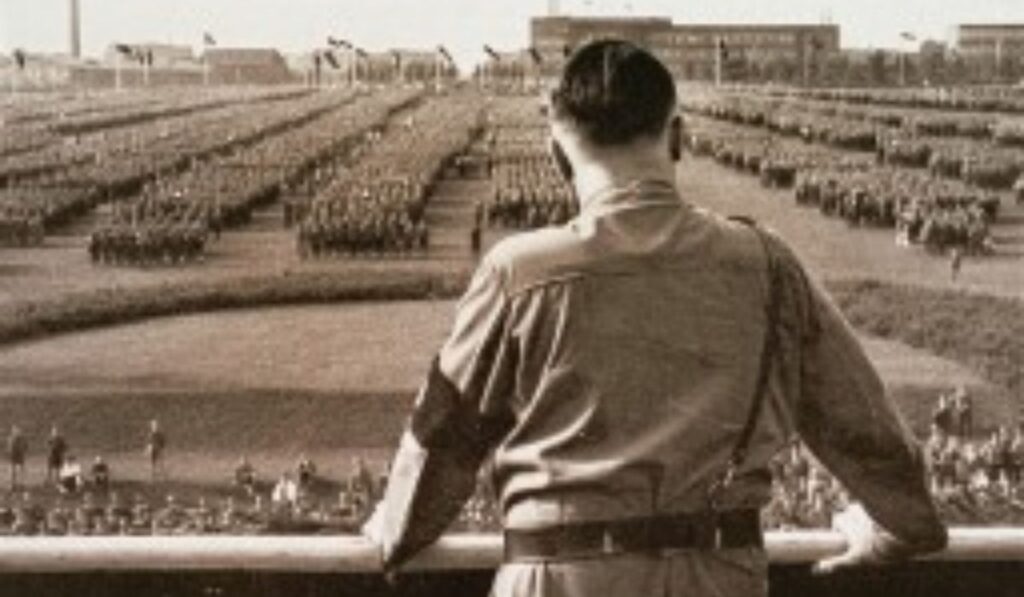
Following the end of World War I, Adolph Hitler returned to Munich and was assigned by military intelligence to monitor small local political groups. In 1919, he attended meetings of the German Workers’ Party, a small nationalist organization whose ideas aligned with his own radical views. Recognized quickly for his fiery public speaking abilities, he joined the group, eventually taking charge of its propaganda efforts. Renaming it the National Socialist German Workers’ Party, he adopted the swastika symbol, organized paramilitary units, and rapidly turned the party into a prominent regional political force across southern Germany.
The Failed Beer Hall Putsch
Attempting to seize government control by force in November 1923, Adolph Hitler led an armed insurrection in Munich known as the Beer Hall Putsch. The poorly planned coup was quickly suppressed by local police forces, resulting in violent casualties and his immediate arrest for high treason. His subsequent public trial offered him a national media platform to articulate his radical nationalist platform. Sentenced to five years in Landsberg Prison, he served less than nine months, during which he dictated his autobiographical manifesto, laying out his political philosophy, anti-Semitic doctrines, and territorial ambitions for territorial expansion.
Writing Mein Kampf and Strategy Shift
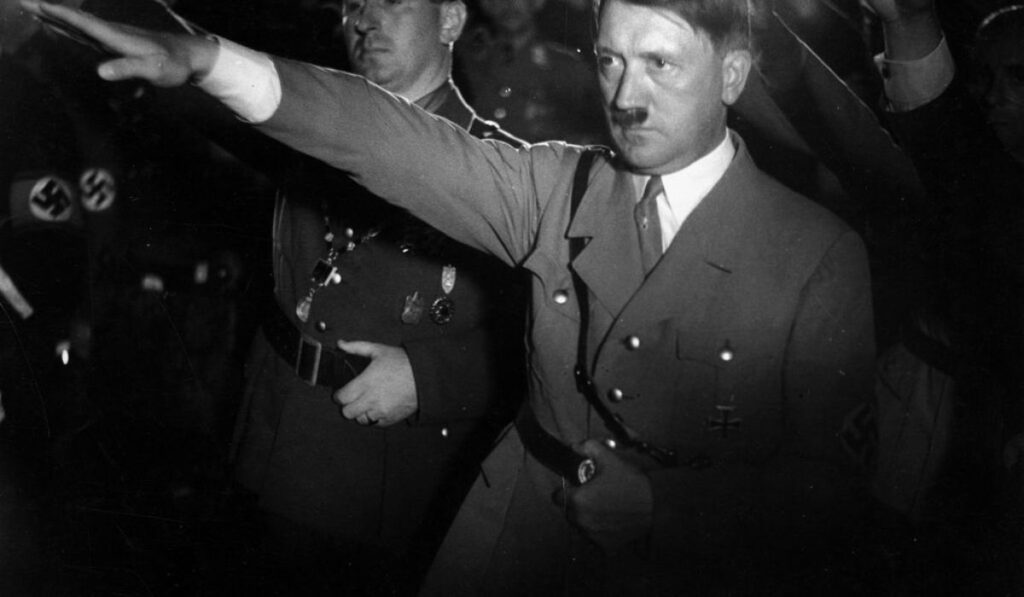
During his brief imprisonment, Adolph Hitler authored his foundational book, Mein Kampf, outlining his radical racial hierarchy and expansionist vision. The text asserted that Germanic peoples belonged to a superior race requiring vast additional living space in Eastern Europe. After his release from prison, he realized that overthrowing the democratic Weimar Republic through violent coups was impractical. Consequently, he shifted his overall political strategy toward gaining legal power through democratic elections, organizing systematic party propaganda, building nationwide grassroots networks, and positioning his party as a strong defense against growing communist political movements.
Economic Chaos and Electoral Growth
The onset of the Great Depression in 1929 created widespread economic collapse, mass unemployment, and political instability throughout Weimar Germany, favoring Adolph Hitler and his party. Leveraging popular dissatisfaction, intense fear of economic ruin, and resentment toward the Treaty of Versailles, party organizers conducted sophisticated promotional campaigns across the nation. His dramatic speeches promised national renewal, economic restoration, strong leadership, and the elimination of internal political corruption. As social conditions deteriorated, voters turned to political extremes, transforming his party from an obscure fringe group into the largest parliamentary faction in the German Reichstag by 1932.
Appointment as Chancellor of Germany
Navigating complex political maneuvering among conservative elites, Adolph Hitler was officially appointed Chancellor of Germany on January 30, 1933, by President Paul von Hindenburg. Conservative politicians incorrectly believed they could control his radical impulses while utilizing his popular support to dismantle leftist opposition. Upon taking office, he moved swiftly to consolidate political power, suppress civil liberties, and eliminate democratic institutions. Capitalizing on the suspicious Reichstag fire weeks later, his government passed emergency decrees that suspended fundamental constitutional rights, paving the way for complete political dominance and absolute autocratic state rule.
Dismantling Democracy and Enabling Act
Securing total parliamentary authority in March 1933, Adolph Hitler pushed through the Enabling Act, granting his cabinet full legislative powers without parliamentary approval. This law effectively dismantled democratic governance, allowing him to rule by dictatorial decree. Over the following months, his regime banned opposition political parties, dissolved independent trade unions, censored freedom of the press, and established concentration camps for political dissidents. By the time President Hindenburg died in August 1934, he combined the offices of President and Chancellor, declaring himself supreme commander of the military and undisputed dictator of totalitarian Germany.
Establishing the Totalitarian Nazi State
Consolidating absolute power, Adolph Hitler established a pervasive police state enforced by the SS, Gestapo, and propaganda apparatus. Cultural institutions, education, law enforcement, and economic sectors were systematically brought under state alignment. Racial laws stripped Jewish citizens of civil rights, while state propaganda promoted strict national uniformity and total obedience to authority. Through large public works programs, infrastructure projects, and secret military rearmament, his regime effectively reduced unemployment, gaining widespread domestic popularity while systematically preparing the German nation for aggressive expansionist warfare and ideological domination across the European continent.
Rearing Militarism and Pre-War Aggression
Directly violating post-war international treaties, Adolph Hitler initiated massive military rearmament and aggressive foreign policy moves during the mid-1930s. He remilitarized the Rhineland in 1936, formed political alliances with Fascist Italy and Imperial Japan, and annexed Austria in 1938. European powers, desperate to avoid another catastrophic war, adopted policy concessions through the Munich Agreement, permitting him to annex parts of Czechoslovakia. Exploiting this diplomatic appeasement, he subsequently occupied the remainder of Czech territory, demonstrating that his territorial ambitions extended far beyond peaceful treaty revisions and would inevitably spark global conflict.
Outbreak of World War II in Europe
Initiating World War II, Adolph Hitler ordered the military invasion of Poland on September 1, 1939, following a secret non-aggression pact with the Soviet Union. In response to this unprovoked aggression, Great Britain and France declared war on Germany. Utilizing revolutionary military tactics known as blitzkrieg, German forces rapidly conquered Poland, Denmark, Norway, Belgium, the Netherlands, and France within months. By mid-1940, his armies controlled the majority of Continental Europe, leaving Britain isolated as his regime established harsh occupational authorities, exploited foreign resources, and enforced total ideological control over conquered nations.
Invasion of the Soviet Union
Launching Operation Barbarossa in June 1941, Adolph Hitler ordered the massive invasion of the Soviet Union, opening the largest land conflict in human history. Driven by ideological hatred and a desire for vast eastern territory, he envisioned a swift victory that would destroy communism and secure resources for his empire. Although German armies achieved massive initial victories, advancing to the gates of Moscow, fierce Soviet resistance, vast geography, and severe winter conditions halted the offensive. This decision opened a devastating two-front war that permanently depleted military manpower and resources.
Ideological War and the Holocaust
Coinciding with military operations, Adolph Hitler instituted the systematic, state-sponsored genocide of six million Jewish people and millions of others across occupied Europe. Known as the Holocaust, this catastrophic tragedy involved organized roundups, mass shootings, and industrial extermination centers constructed throughout occupied territories. Driven by extreme anti-Semitic ideology, the regime utilized state resources, advanced logistics, and bureaucratic infrastructure to systematically murder men, women, and children. This monstrous crime against humanity stands as one of the darkest, most horrific chapters in global history, leaving permanent scars on human civilization.
The Turning Point at Stalingrad
Experiencing severe military setbacks, Adolph Hitler faced a decisive strategic turning point at the Battle of Stalingrad in late 1942 and early 1943. Refusing to allow his encircled Sixth Army to retreat, his rigid operational commands resulted in the total destruction of an entire army group and the capture of over ninety thousand troops. The catastrophic defeat shattered the illusion of invincibility, shifting strategic initiative permanently to the Soviet Red Army. From this point forward, German forces were forced into a continuous, exhausting retreat along the Eastern Front.
Allied Advances and Two-Front Crisis
Facing overwhelming military superiority, Adolph Hitler saw his European empire collapse under simultaneous Allied offensives from the east, west, and south. Following the successful Normandy landings in June 1944, Allied forces liberated Western Europe while Soviet armies swept rapidly across Eastern Europe toward German borders. Despite severe fuel shortages, economic destruction, and devastating Allied bombing campaigns destroying domestic cities, he fanatically refused unconditional surrender terms. He insisted on total war efforts, drafting young teenagers and elderly citizens into desperate, ineffective military defense units to prolong his falling regime.
The July 20 Plot and Internal Resistance
Surviving an assassination attempt on July 20, 1944, Adolph Hitler narrowly escaped a bomb hidden in a briefcase by Colonel Claus von Stauffenberg during a military conference. The failed plot revealed deep dissatisfaction among high-ranking military officers who recognized that the war was irreversibly lost. In retaliation, his regime launched brutal purges, arresting and executing thousands of suspected conspirators, military leaders, and political dissidents. His surviving years were characterized by extreme paranoia, deteriorating physical health, isolation in underground bunkers, and increasingly irrational military commands detached from tactical reality.
Collapse of the Regime and Final Days in Berlin
Surrounded in his underground Führerbunker as Soviet forces fought through central Berlin, Adolph Hitler spent his final days making unrealistic military plans and blaming his generals for defeat. Refusing to face public trial or military capture, he married his long-time companion Eva Braun during a brief private ceremony. On April 30, 1945, as enemy troops advanced within blocks of his command center, he committed suicide by gunshot. His staff burned their bodies in the Reich Chancellery garden, ending a dark dictatorial reign that left Europe devastated.
Post-War Judgments and Legacy of Destruction
Assessing the historical impact of Adolph Hitler reveals an unprecedented legacy of devastation, moral failure, and systemic destruction across human society. His aggressive war caused tens of millions of military and civilian casualties while laying vast regions of Europe in complete physical ruin. The international community responded by conducting the Nuremberg Trials, establishing modern international legal standards for war crimes, genocide, and human rights violations. Historical analysis of his totalitarian regime serves as a permanent, crucial warning regarding the extreme dangers of hatred, authoritarianism, and unchecked political power.
Historical Memory and Universal Lessons
Remembering the destructive era of Adolph Hitler remains essential for educating future generations about defending democratic values, human dignity, and civil rights. Modern history curricula, memorials, and international institutions continuously study the collapse of the Weimar Republic to understand how authoritarian regimes emerge during social crises. Preserving the memory of his victims ensures that the horrors of totalitarianism and state-sponsored hatred are never forgotten or repeated. The lasting legacy of his reign reinforces humanity’s shared responsibility to confront intolerance, protect freedom, and safeguard international peace.
Frequently Asked Questions
- Who was Adolph Hitler?
- Adolph Hitler was the totalitarian dictator of Nazi Germany who initiated World War II and the Holocaust.
- When did Adolph Hitler come to power in Germany?
- He was officially appointed Chancellor of Germany on January 30, 1933.
- What book did Adolph Hitler write while in prison?
- He wrote his autobiographical political manifesto, titled Mein Kampf, while imprisoned in 1924.
- How did World War II begin in Europe?
- World War II began when German forces invaded Poland on September 1, 1939.
- Where can readers find official historical records regarding his regime?
- Detailed historical documentation can be explored on his official overview page on