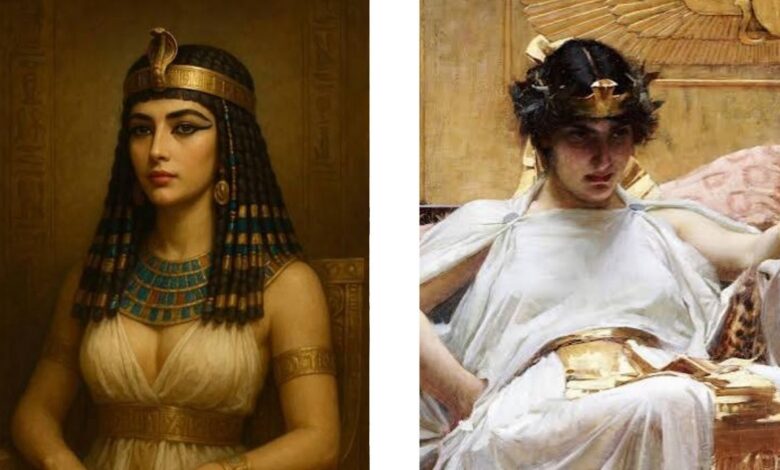
The fascinating historical legacy of legendary Egyptian queen Cleopatra represents one of the most celebrated, influential, and dramatic chapters in ancient Mediterranean history. Recognized as a brilliant strategist, charismatic sovereign, and gifted linguist, her extraordinary life redefined classical politics, imperial diplomacy, and royal leadership during the final era of the Ptolemaic dynasty. Over her active tenure as queen, she forged critical alliances with powerful Roman leaders, managed immense national wealth, and inspired countless legends through her sharp intellect. This comprehensive biographical study examines her Alexandrian childhood, political ascension, famous alliances, tragic downfall, and enduring global cultural impact.
Quick Bio
| Attribute | Details |
| Full Birth Name | Cleopatra VII Philopator |
| Date of Birth | 69 BC |
| Place of Birth | Alexandria, Egypt |
| Date of Death | August 10, 30 BC |
| Place of Death | Alexandria, Egypt |
| Primary Professions | Queen of Egypt, Diplomat, Stateswoman |
Early Life in Royal Alexandria
Born in Alexandria, Egypt, in 69 BC, young Cleopatra grew up within the opulent and culturally diverse palace of the Ptolemaic dynasty. As the daughter of pharaoh Ptolemy XII Auletes, she received a comprehensive Hellenistic education, studying mathematics, philosophy, rhetoric, and astronomy at the royal court. Uniquely among her Greek-speaking royal ancestors, she dedicated herself to mastering multiple languages, including Egyptian, Ethiopian, Hebrew, Arabic, and Latin. This linguistic brilliance and intellectual curiosity laid a strong foundation for her future reign, enabling her to communicate directly with diverse foreign diplomats, regional allies, and her own indigenous Egyptian subjects.
Ascension to the Egyptian Throne
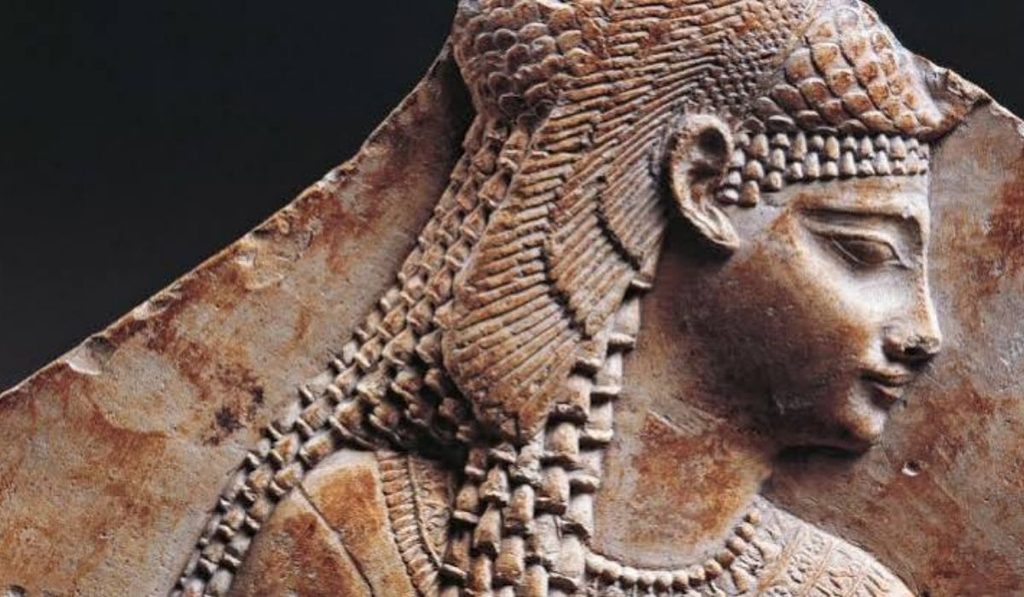
Ascending to the throne following her father’s death in 51 BC, ambitious young Cleopatra began her joint reign alongside her younger brother, Ptolemy XIII. As reigning monarchs of the wealthy Ptolemaic Kingdom, they faced immediate economic challenges, including severe agricultural droughts and food shortages along the Nile River. Political tensions quickly escalated within the royal court as ambitious advisers sought to manipulate the young co-rulers for absolute power. This intense power struggle forced the young queen into exile in Syria, where she began gathering loyal political supporters and military forces to reclaim her rightful crown from her rival brother.
Meeting Julius Caesar in Alexandria
Arriving secretly in the royal palace in 48 BC, clever queen Cleopatra famously gained an audience with the Roman general Julius Caesar, who was pursuing his rival Pompey into Egypt. According to ancient historical accounts, she entered the quarters wrapped in a fine fabric or bedding roll to bypass hostile guards. Caesar was immediately captivated by her charm, sharp intellect, and political vision. This pivotal encounter forged a powerful personal and political alliance, leading Roman military forces to intervene on her behalf during the Alexandrian War, which ultimately defeated her brother’s army and restored her to the Egyptian throne.
Reign as Queen and Roman Alliance
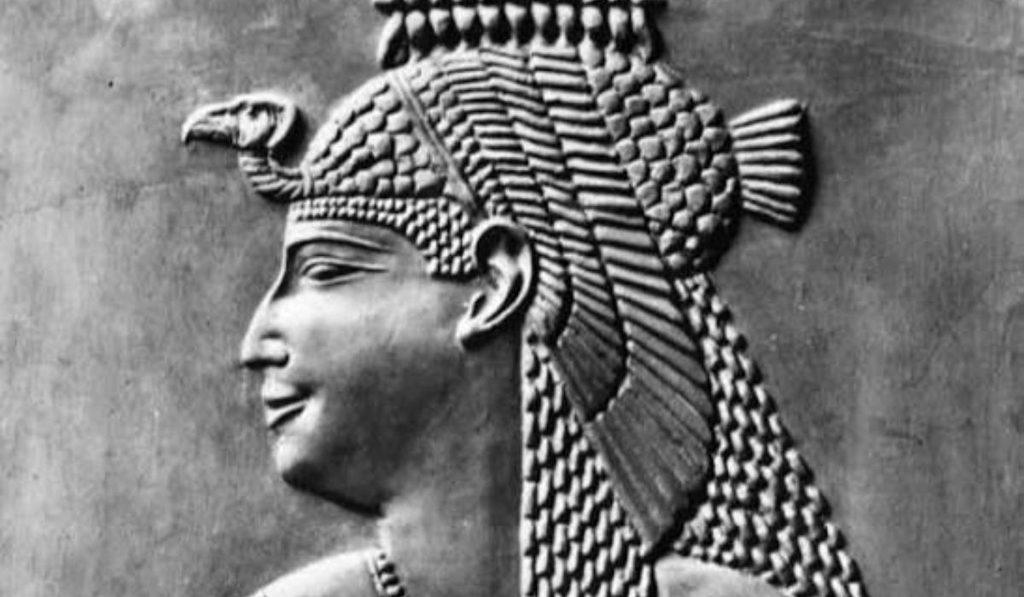
Securing her absolute authority over Egypt with Roman backing, confident ruler Cleopatra strengthened her nation’s strategic position across the Mediterranean basin. She gave birth to a son named Caesarion, whom she claimed was fathered by Julius Caesar, aligning her dynasty closely with Rome’s supreme leader. Her subsequent official state visits to Rome generated immense public curiosity and political tension among traditional Roman senators. By maintaining absolute control over Egypt’s vast agricultural grain supplies and trade routes, she ensured her kingdom remained an indispensable, wealthy partner within the shifting and volatile landscape of late republican Roman politics.
The Assassination of Julius Caesar
Facing deep political shockwaves in March 44 BC, grieving ally Cleopatra witnessed the shocking assassination of Julius Caesar by Roman conspirators in the Senate house. Realizing her vulnerable position in Rome, she quickly fled back to Alexandria with young Caesarion to safeguard her dynasty’s independence. Following Caesar’s death, Roman power fractured into rival factions led by his avenging supporters and political enemies. Demonstrating cool political pragmatism, she navigated these dangerous geopolitical currents while positioning Egypt to support the winning faction of Roman commanders who sought to restore stability across the Mediterranean region and eastern provinces.
Alliance with Roman General Mark Antony
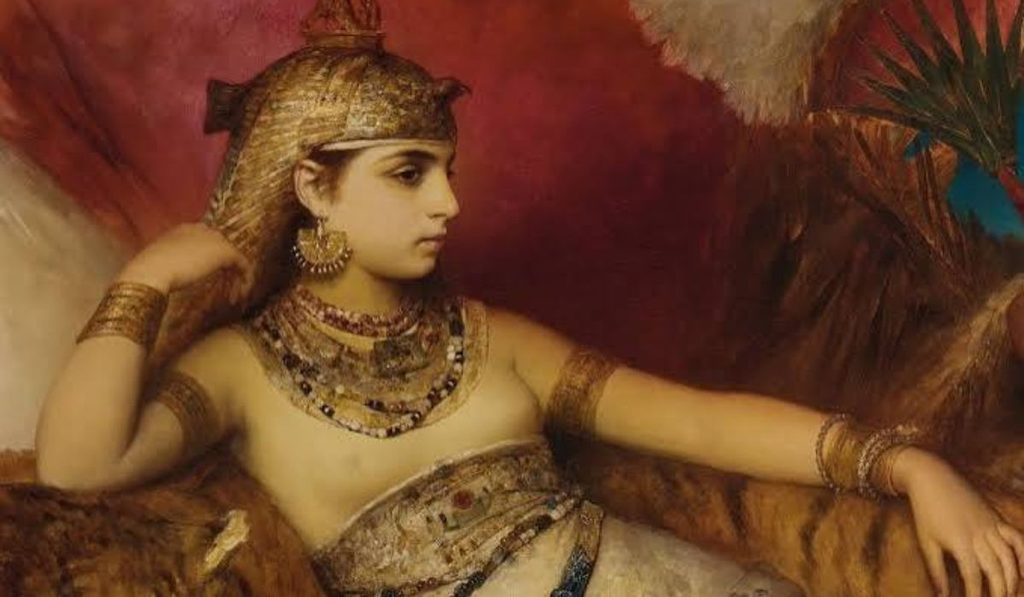
Forging a legendary political and romantic partnership in 41 BC, charismatic queen Cleopatra invited the Roman triumvir Mark Antony to meet her in Tarsus. Dressed to evoke the goddess Isis, she arrived on a magnificent barge, instantly enchanting the powerful Roman general. Their alliance combined Egyptian royal wealth with Roman military might, creating a formidable geopolitical force in the East. Together, they established a powerful joint court in Alexandria, sharing political ambitions, celebrating traditional festivals, and raising three children together, cementing a partnership that dominated ancient historical narratives for centuries to come.
The Donations of Alexandria Ceremony
Hosting a lavish public political ceremony in 34 BC, visionary leader Cleopatra and Mark Antony presided over the famous Donations of Alexandria celebration. Before massive crowds, they distributed conquered lands and kingdoms among their children, declaring Caesarion the legitimate heir to Julius Caesar and naming Cleopatra as Queen of Kings. This grand public spectacle alarmed the Roman Senate and infuriated Octavian, Caesar’s legal heir, who portrayed the event as an illegal transfer of Roman territory to a foreign queen. The ceremony sealed the inevitable propaganda war that would soon erupt into open military conflict.
Escalating Tensions With Roman Octavian
Observing the rapid deterioration of diplomatic relations, strategic queen Cleopatra financed Mark Antony’s military campaigns while preparing her own naval fleet to defend Egypt. Octavian successfully turned the Roman public against them by publishing Antony’s contested will, which requested burial in Alexandria alongside the Egyptian queen. The Roman Senate formally declared war against Cleopatra rather than Antony, framing the upcoming conflict as a defensive crusade for Western civilization against Eastern tyranny. Both sides mobilized massive military forces, setting the stage for a historic naval confrontation that would determine the ultimate political future of the ancient Mediterranean world.
The Decisive Battle of Actium
Commanding Egyptian naval squadrons during the pivotal Battle of Actium in September 31 BC, courageous queen Cleopatra fought alongside Mark Antony against Octavian’s fleet. As the naval engagement turned against them, her squadron broke through enemy lines, enabling her and Antony to escape back to the safety of Alexandria. Despite this tactical retreat, their military forces were severely compromised, leaving Egypt vulnerable to a full-scale Roman invasion. The defeat at Actium shattered their imperial ambitions, marking the beginning of the end for independent Ptolemaic rule and shifting global power firmly toward Rome.
Invasion of Egypt by Octavian
Facing advancing Roman legions led by Octavian in the summer of 30 BC, desperate queen Cleopatra sought diplomatic solutions to preserve her kingdom’s sovereignty. However, Octavian rejected all peace overtures, demanding unconditional surrender and intending to parade her through Rome as a captive trophy of war. As enemy troops breached the outskirts of Alexandria, her remaining military forces collapsed, and rumors spread regarding the shifting loyalties of her garrison commanders. Trapped inside her newly built royal mausoleum, she prepared for the final tragic chapter of her remarkable life and dramatic reign.
The Tragic Death of Mark Antony
Experiencing profound grief amidst the military collapse, Roman commander Mark Antony received false news that queen Cleopatra had already taken her own life inside the royal mausoleum. Distraught by the apparent loss, Antony fell upon his sword, inflicting a mortal wound upon himself. Before he passed away, he learned she was still alive and was carried to her hiding place, where he died peacefully in her arms. This heartbreaking personal tragedy left the isolated queen to face her victorious Roman enemies alone, mourning the loss of her most trusted political partner and beloved romantic companion.
Meeting Victorious Octavian in Alexandria
Refusing to yield her personal dignity, captive queen Cleopatra granted an audience to the victorious Roman conqueror Octavian inside her captured palace. During their tense meeting, she maintained her royal composure, attempting to negotiate favorable terms for her children and the future administration of Egypt. However, she soon realized that Octavian intended to take her to Rome as a prisoner to grace his impending triumphal parade. Possessing fierce pride and refusing to suffer public humiliation, she began making secret preparations to end her life on her own terms rather than submit to foreign captivity.
The Legend of the Asp and Suicide
Passing away on August 10, 30 BC, legendary queen Cleopatra died inside her secure Alexandria palace at age thirty-nine. According to popular classical accounts recorded by writers like Plutarch, she took her own life by allowing a venomous Egyptian cobra, known as an asp, to bite her. Modern historians continue to debate whether she used snake venom or a toxic potion, but her death marked the absolute end of the Ptolemaic dynasty. Following her passing, Octavian annexed Egypt as a direct Roman province, closing the final curtain on the Hellenistic age.
Roman Annexation and Provincial Status
Following the collapse of the royal government, former Egyptian territory under queen Cleopatra was officially transformed into the Roman province of Aegyptus. Octavian assumed personal control over the region’s rich agricultural resources, utilizing Egyptian grain to feed the urban population of Rome and secure his own political dominance. The ancient temples of Alexandria were stripped of their immediate political autonomy, though traditional religious practices were largely respected. This historic transition integrated the ancient Nile civilization permanently into the sprawling administrative machinery of the burgeoning Roman Empire.
Fate of the Royal Children
Enduring a precarious future following their mother’s tragic death, surviving children of queen Cleopatra were taken to Rome by victorious Octavian. Young Caesarion was hunted down and executed by Roman agents to eliminate any rival claimants to Caesar’s political legacy, while her younger children—Cleopatra Selene II, Alexander Helios, and Ptolemy Philadelphos—were marched in Octavian’s Roman triumph. Later, Cleopatra Selene II was successfully married to King Juba II of Mauretania, where she established a vibrant, culturally rich Hellenistic court in North Africa, preserving her royal lineage through subsequent generations.
Historical Historiography and Roman Bias
Shaped heavily by hostile Roman propaganda, historical accounts regarding queen Cleopatra were initially written by poets and historians loyal to Emperor Augustus. Writers like Horace, Virgil, and Propertius depicted her as a dangerous, manipulative seductress who posed an existential threat to traditional Roman moral values. This critical Roman perspective dominated Western literature and medieval historiography for centuries. However, modern historical scholarship has re-evaluated her reign, recognizing her as a brilliant, pragmatic statesman, astute economist, and protective nationalist who fought fiercely to maintain her country’s independence.
Cultural Depictions in Renaissance Art
Inspiring generations of European artists, playwrights, and musicians, iconic figure Cleopatra became a central subject in Renaissance and Baroque culture. Master painters like Artemisia Gentileschi, Guido Reni, and Michelangelo captured her dramatic final moments on canvas, emphasizing themes of tragedy, royal dignity, and feminine power. William Shakespeare immortalized her complex personality in his famous tragedy Antony and Cleopatra, highlighting her unmatched charm, emotional volatility, and grand theatrical presence. These artistic works transformed her historical reality into a permanent, universal symbol of tragic romantic passion and royal majesty.
Hollywood Cinema and Modern Pop Culture
Emerging as a dominant fixture in twentieth-century media, cinematic icon Cleopatra was portrayed by legendary actresses including Theda Bara, Claudette Colbert, and Elizabeth Taylor in lavish Hollywood epic films. The monumental 1963 film production broke box office records while cementing her visual aesthetic—featuring dramatic eye makeup, elaborate gowns, and headdresses—into global fashion culture. Today, her image appears widely in literature, video games, brand advertising, and art, securing her status as one of the most recognizable and enduring female historical figures in human history.
Archaeological Discoveries and Underwater Exploration
Uncovering lost fragments of her ancient capital, modern marine archaeologists have revolutionized our understanding of queen Cleopatra through remarkable underwater excavations in Alexandria’s harbor. Divers have successfully mapped the submerged ruins of her royal palaces, sunken temples, statues, and the legendary Lighthouse of Pharos. These physical discoveries provide tangible evidence of the opulent architectural splendor that characterized her multicultural capital city. By combining classical literary texts with modern archaeological findings, researchers continue to piece together the authentic historical environment of her remarkable reign.
Enduring Legacy of the Last Pharaoh
Reflecting upon the extraordinary life journey of Cleopatra confirms her permanent standing as an eternal titan of ancient history and political strategy. As the last active ruler of Hellenistic Egypt, she navigated a treacherous geopolitical landscape dominated by rising Roman imperialism with extraordinary courage and intellectual brilliance. Her legacy transcends ancient mythology, remaining a powerful testament to female leadership, ambition, and resilience. Her immortal story continues to captivate global audiences, proving that her legendary impact on human history will endure for generations to come.
Frequently Asked Questions
- Who was Cleopatra?
- Cleopatra was the queen of the Ptolemaic Kingdom of Egypt and its last active Hellenistic pharaoh before Roman annexation.
- When did Cleopatra rule Egypt?
- She ruled Egypt from 51 BC until her tragic death in August 30 BC.
- Who were her famous Roman allies and partners?
- She formed powerful political and romantic alliances with the Roman leaders Julius Caesar and Mark Antony.
- How did Cleopatra die?
- She died by suicide in August 30 BC, famously legendary for allowing an Egyptian cobra to bite her after Mark Antony’s death.
- Where can readers find official historical archives and biographical details about her life?
- Comprehensive historical summaries, primary sources, and archaeological references are available on her dedicated page on