10 Unstoppable Leadership Lessons From Napoleon That Reshaped European History

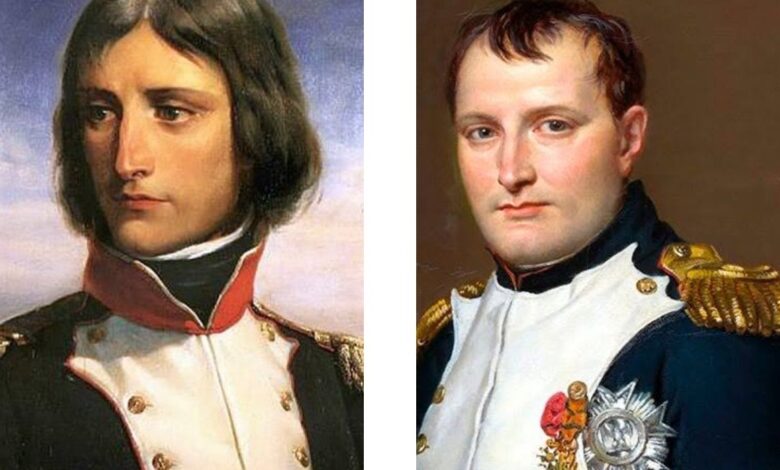
The profound historical legacy of iconic military strategist Napoleon represents one of the most celebrated, influential, and transformative chapters in modern European history. Recognized as a tactical genius, visionary emperor, and administrative reformer, his extraordinary life redefined European warfare, civil law, and global geopolitical power during the nineteenth century. Over his active tenure in statecraft and military campaigns, he expanded French influence, introduced the civil code, and inspired millions through his relentless drive. This comprehensive biographical study examines his Corsican childhood, artillery training, Italian campaigns, imperial rise, dramatic exile, and lasting worldwide impact.
Quick Bio
| Attribute | Details |
| Full Birth Name | Napoleone di Buonaparte |
| Date of Birth | August 15, 1769 |
| Place of Birth | Ajaccio, Corsica, France |
| Date of Death | May 5, 1821 |
| Place of Death | Longwood, Saint Helena |
| Primary Professions | Artillery Officer, General, First Consul, Emperor of the French |
Early Life in Corsican Ajaccio
Born in Ajaccio, Corsica, in August 1769, young Napoleon grew up as the second surviving child of Carlo Buonaparte and Letizia Ramolino. Raised in a noble Corsican family shortly after France acquired the island, he spoke Italian as his native language before learning French. His father’s political connections secured him admission to elite French military academies in Brienne-le-Château and Paris. Showing exceptional talent in mathematics, geography, and history, he studied artillery operations intensely. These formative childhood experiences cultivated his analytical mindset, fierce personal ambition, and lifelong commitment to military science and strategic national organization.
Artillery Officer in French Revolution
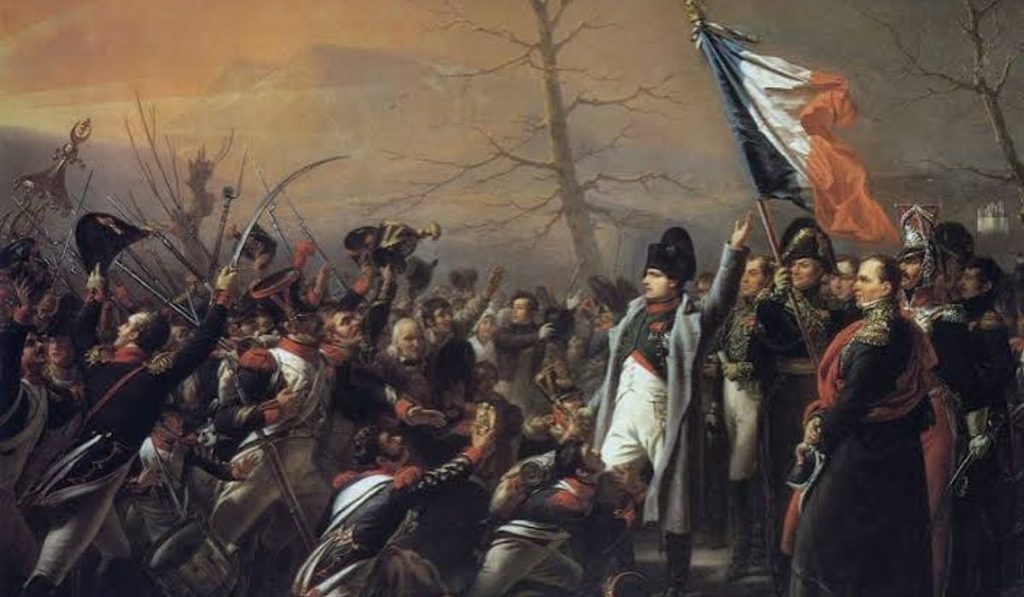
Graduating from the École Militaire in 1785, ambitious officer Napoleon received his commission as a second lieutenant in a French artillery regiment. Returning home frequently during the turbulent outbreak of the French Revolution, he supported revolutionary factions while navigating Corsican political struggles. Forced to flee to mainland France with his family in 1793, he rejoined the republican army during a period of national crisis. His tactical brilliance during the Siege of Toulon in late 1793 forced British naval forces to retreat, earning him widespread national recognition and a rapid promotion to brigadier general at age twenty-four.
The Whiff of Grapeshot Victory
Defending the French National Convention in October 1795, resourceful general Napoleon earned significant political favor by suppressing a royalist uprising in Paris. Utilizing field artillery with ruthless tactical precision, his famous “whiff of grapeshot” crushed the armed insurgents quickly, safeguarding the revolutionary government. Appointed commander of the Army of the Interior, he gained entry into high political and social circles across the capital city. In March 1796, he married Joséphine de Beauharnais, a prominent widow, just days before taking command of the French Army of Italy to launch a bold military campaign against Austrian coalition forces.
The Italian Campaign and Tactical Genius
Taking command of a poorly equipped force in 1896, visionary commander Napoleon transformed the Army of Italy into a rapid, decisive fighting machine. Utilizing rapid troop maneuvers, interior lines, and aggressive concentration of force, he repeatedly defeated larger Austrian and Sardinian armies. Decisive victories at Lodi, Castiglione, Arcole, and Rivoli forced Austria to sign the Treaty of Campo Formio in 1797. The successful campaign brought vast Italian territories under French control, enriched national coffers, and showcased his unmatched strategic ability to outmaneuver coalition armies, making him the most famous and admired military general across continental Europe.
The Egyptian Expedition and Cultural Discoveries
Leading a major expedition to Egypt in May 1798, ambitious general Napoleon sought to disrupt crucial British trade routes to India. Capturing Alexandria and winning the Battle of the Pyramids against Mamluk forces, he established military control over Cairo. Alongside military troops, he brought a scientific commission of 167 scholars, engineers, and scientists who documented ancient monuments and uncovered the historic Rosetta Stone. Although the British Royal Navy destroyed the French fleet at the Battle of the Nile, his scientific and military expedition captivated the French public, enhancing his reputation as a cultured, Enlightenment-era conqueror.
The Coup of 18 Brumaire
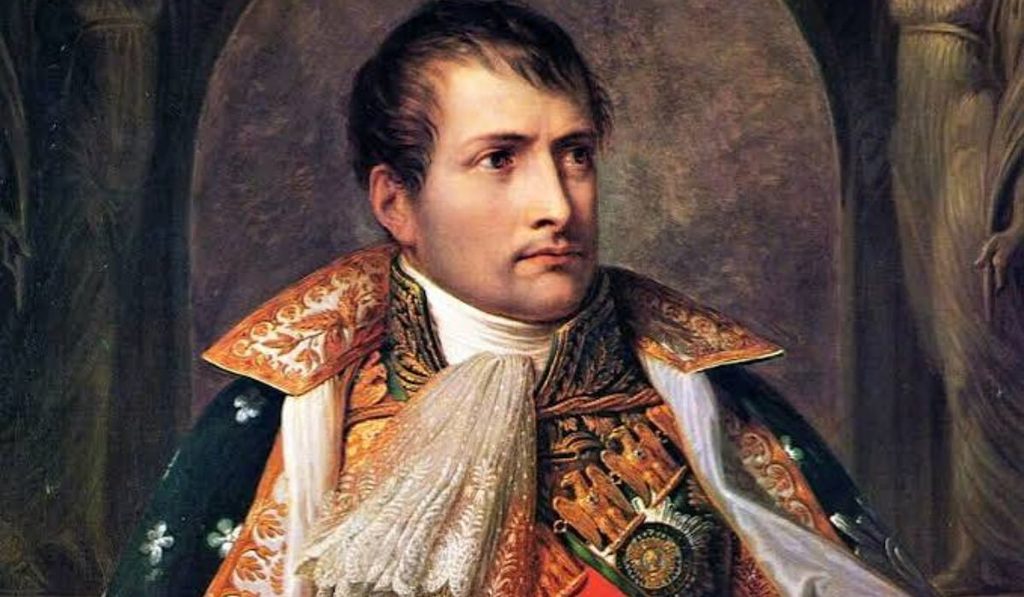
Returning to France in October 1799 amid growing domestic political instability, opportunistic general Napoleon aligned with influential politicians to overthrow the weak French Directory. Executing the famous Coup of 18 Brumaire in November, he dismantled the existing legislature and established the French Consulate. Appointed First Consul, he concentrated immense executive authority in his own hands at age thirty, effectively becoming the supreme ruler of France. His swift political takeover stabilized the revolutionary state, ending years of civil unrest while laying the institutional groundwork for centralized modern governance across the republic.
Victory at Marengo and Peace Restored
Consolidating his political authority in May 1800, energetic First Consul Napoleon led a surprise army crossing through the Great St. Bernard Pass in the Alps. Surprising Austrian forces in Northern Italy, he secured a narrow, decisive victory at the Battle of Marengo in June 1800. The military success compelled Austria to sign the Treaty of Lunéville, while subsequent negotiations led to the 1802 Treaty of Amiens with Great Britain. By establishing temporary peace across Europe, he restored economic stability, earned immense public gratitude, and secured confirmation as First Consul for Life through a national plebiscite.
The Napoleonic Code and Judicial Reform
Promulgating a comprehensive civil legal framework in March 1804, legal reformer Napoleon established the historic Napoleonic Code across France. Replacing a confusing patchwork of regional feudal laws, the unified code enshrined legal equality, religious tolerance, freedom of contract, and property rights. While codifying civil liberties, the law re-established paternal authority within family structures. Exported throughout conquered European territories, the legal system replaced outdated feudal institutions, providing the modern legal foundation for dozens of nations worldwide and standing as one of his most lasting, beneficial non-military administrative achievements.
Coronation as Emperor of the French
Crowning himself at Notre-Dame Cathedral in December 1804, ambitious monarch Napoleon established the First French Empire in the presence of Pope Pius VII. Taking the imperial crown into his own hands to place it on his head, he signaled that his supreme political authority derived from personal achievement rather than divine right or papal mandate. The coronation formalized his hereditary monarchy, creating a new imperial nobility based on military merit and state service. His elevation to Emperor transformed French political identity, establishing a centralized autocratic regime capable of mobilizing vast national resources for upcoming European conflicts.
The Battle of Austerlitz Triumph
Facing the War of the Third Coalition in late 1805, tactical genius Napoleon marched his Grande Armée deep into Central Europe with incredible speed. Feigning weakness on his right flank near Austerlitz, he drew combined Russian and Austrian forces into a trap before launching a crushing tactical assault against the allied center. The decisive victory at the Battle of Austerlitz destroyed the Third Coalition, forcing Austria to sign the Treaty of Pressburg and ending the ancient Holy Roman Empire. The battle is widely considered his ultimate military masterpiece, demonstrating his extraordinary mastery of battlefield timing and troop positioning.
Confederation of the Rhine and Dominance
Reorganizing Central Europe in 1806, imperial sovereign Napoleon established the Confederation of the Rhine, uniting dozens of German principalities under French protection. When Prussia declared war in response, he shattered Prussian armies at the twin battles of Jena and Auerstedt within weeks. Following up with a victory over Russian forces at Friedland in 1807, he negotiated the historic Treaties of Tilsit with Tsar Alexander I. The diplomatic agreements divided Europe into spheres of influence, placing his family members on thrones in Naples, Spain, Westphalia, and Holland, placing continental Europe under French military dominance.
The Continental System and Economic War
Enacting the Berlin and Milan Decrees in 1806, economic strategist Napoleon established the Continental System, a wide naval blockade designed to paralyze British trade. Banning European nations from trading with Great Britain, he sought to bankrupt the British economy and force peace negotiations. However, widespread smuggling, economic hardship across continental ports, and resistance from European allies undermined the blockade’s effectiveness. His relentless efforts to enforce the Continental System dragged France into protracted, exhausting military interventions in the Iberian Peninsula and Eastern Europe, ultimately weakening his overall imperial grip on continental affairs.
The Peninsular War and Spanish Resistance
Invading the Iberian Peninsula in 1808 to enforce trade blockades, determined ruler Napoleon deposed the Spanish monarchy and placed his brother Joseph on the throne. The action sparked a fierce, popular guerrilla uprising across Spain and Portugal, supported by British forces under the Duke of Wellington. The grueling Peninsular War tied down hundreds of thousands of veteran French troops for six years in a brutal war of attrition. Dubbed his “Spanish Ulcer,” the costly conflict drained French military resources, eroded imperial prestige, and proved that patriotic guerrilla resistance could successfully challenge professional Napoleonic armies.
The Disaster of the 1812 Russian Campaign
Launching a massive military invasion of Russia in June 1812, autocratic Emperor Napoleon assembled the Grande Armée of over 600,000 soldiers. Russian forces retreated continuously, employing scorched-earth tactics to deny the invading army local supplies. After a bloodbath victory at the Battle of Borodino, he entered an abandoned, burning Moscow in September. Waiting in vain for Tsar Alexander’s surrender as severe winter set in, he ordered a catastrophic retreat. Starvation, freezing temperatures, disease, and relentless Cossack attacks annihilated his grand army, leaving fewer than 100,000 survivors and triggering widespread European rebellion.
Battle of Leipzig and War of the Sixth Coalition
Rebuilding a new army in early 1813, resilient commander Napoleon faced the War of the Sixth Coalition, an alliance comprising Russia, Prussia, Austria, Great Britain, and Sweden. Despite initial victories in Saxony, his young recruits were outnumbered and outmaneuvered at the decisive Battle of Leipzig in October 1813. The defeat at the “Battle of the Nations” shattered French hegemony in Germany, forcing his army back across the Rhine. Defending French soil brilliantly during the 1814 Six Days’ Campaign, he could not prevent allied armies from capturing Paris, leading his marshals to demand his immediate military resignation.
First Exile to Elba and Imperial Return
Abdicating the imperial throne in April 1814, defeated ruler Napoleon was exiled to the Mediterranean island of Elba under the Treaty of Fontainebleau. Retaining the title of Emperor and sovereignty over the small island, he closely monitored French domestic discontent under the restored Bourbon King Louis XVIII. Escaping Elba in February 1815 with a thousand loyal guards, he landed in southern France and marched toward Paris. French troops sent to arrest him defected to his side, allowing him to reclaim the imperial throne without firing a single shot, initiating the dramatic “Hundred Days” reign.
The Battle of Waterloo Defeat
Facing Seventh Coalition armies advancing toward France in June 1815, aggressive commander Napoleon marched into Belgium to strike allied forces before they could unite. After defeating the Prussians at Ligny, he engaged the Duke of Wellington’s Anglo-allied army at the Battle of Waterloo on June 18. Delayed by muddy ground, his repeated infantry and cavalry assaults failed to breach Wellington’s defensive line before Field Marshal Blücher’s Prussian army arrived on his flank. The total rout of his army ended his brief hundred-day restoration, forcing his second, final abdication as Emperor of the French.
Second Exile to Saint Helena Island
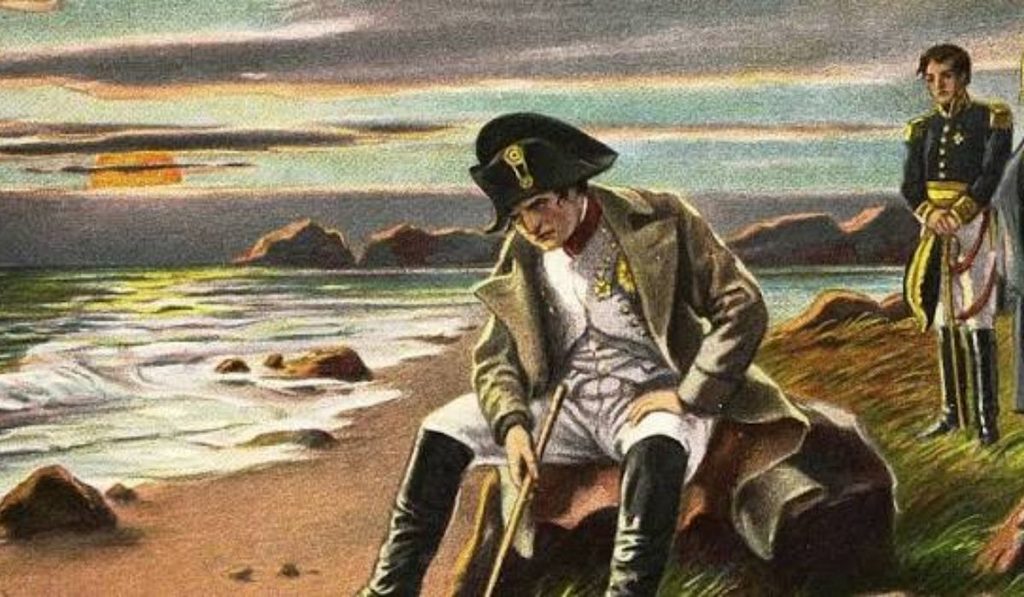
Surrendering to British naval forces in July 1815, captive Emperor Napoleon was exiled to Saint Helena, a remote island in the South Atlantic Ocean. Guarded by British troops at Longwood House, he spent his final years dictating his detailed memoirs to loyal companions. Through these strategic writings, he meticulously crafted his historical legacy as a defender of revolutionary ideals, champion of European unity, and victim of monarchical tyranny. Suffering from deteriorating health, severe abdominal pain, and isolation, his quiet exile marked the final chapter of a turbulent life that had reshaped modern world history.
Death and Return of the Ashes
Passing away on May 5, 1821, at age fifty-one, legendary conqueror Napoleon died at Longwood House, likely from stomach cancer. Initially buried on Saint Helena, his remains were exhumed in 1840 under King Louis-Philippe and returned to France in a grand state procession known as the Retour des cendres. Millions of citizens lined Paris streets to honor the fallen emperor as his casket was placed in a magnificent red quartzite sarcophagus beneath the dome of Les Invalides. His tomb remains a prominent national monument, attracting millions of international visitors seeking to honor his historic legacy.
Enduring Legacy in Global Warfare and Law
Reflecting on the monumental life work of Napoleon confirms his permanent standing as an eternal titan of military strategy, civil statecraft, and European history. His innovative military tactics, organizational reforms, and legal codes transformed modern nation-states across Western civilization. Holding supreme power over continental Europe for over a decade, his campaigns accelerated the decline of feudalism and sparked modern national movements. His complex legacy stands as a timeless symbol of human ambition, military genius, and legal modernization, proving that individual leadership can fundamentally alter the trajectory of human history.
Frequently Asked Questions
- Who was Napoleon?
- Napoleon was a French military commander and Emperor who ruled France and conquered much of continental Europe in the early 19th century.
- What was the Napoleonic Code?
- The Napoleonic Code was a unified civil legal code established in 1804 that guaranteed legal equality, property rights, and religious freedom.
- Where was his final military defeat?
- His final military defeat occurred at the Battle of Waterloo in Belgium on June 18, 1815, against British and Prussian armies.
- Where was he exiled after his final defeat?
- He was exiled by the British to Saint Helena, a remote island in the South Atlantic Ocean, where he remained until his death in 1821.
- Where can readers find additional official biographical information regarding his life?
- Detailed historical records, military campaign maps, and official summaries are available on his dedicated page on