Leonardo Da Vinci: 10 Masterpieces Of and Inventions That Shaped the High Renaissance

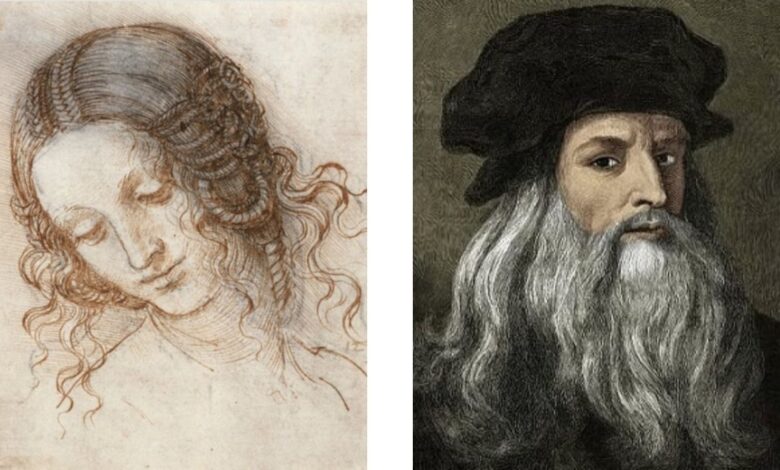
The transcendent legacy of Italian polymath Leonardo Da Vinci remains one of the most brilliant, influential, and legendary achievements in human intellectual history. Recognized as the ultimate archetype of the Renaissance man, he revolutionized fine art, mechanical engineering, human anatomy, and natural science during a period of unprecedented cultural transformation. His iconic paintings transformed compositional balance, oil rendering, and psychological depth, setting enduring standards for Western artistic expression. Beyond canvas and plaster, his forward-thinking notebook sketches anticipated modern flight, military armor, and hydraulic systems. This comprehensive biographical study explores his childhood in Tuscany, artistic training, famous masterworks, scientific discoveries, and timeless legacy.
Quick Bio
| Attribute | Details |
| Full Birth Name | Leonardo di ser Piero da Vinci |
| Date of Birth | April 15, 1452 |
| Place of Birth | Vinci, Republic of Florence |
| Date of Death | May 2, 1519 |
| Place of Death | Amboise, Kingdom of France |
| Primary Professions | Painter, Sculptor, Engineer, Architect, Scientist |
Early Life in Tuscan Countryside
Born in the hilltop Tuscan village of Vinci, young Leonardo Da Vinci spent his earliest years surrounded by lush natural landscapes that sparked his lifelong curiosity. As the illegitimate son of a respected Florentine legal notary and a local peasant woman, he received informal basic schooling in reading, writing, and elementary arithmetic. Free from rigid academic traditions, he spent long hours roaming countryside fields, observing bird flight, sketching local flora, and studying flowing streams. This intimate childhood connection with nature cultivated his keen powers of observation, establishing the foundational analytical mindset that would eventually define his artistic and scientific achievements.
Apprentice Years in Verrocchio Workshop
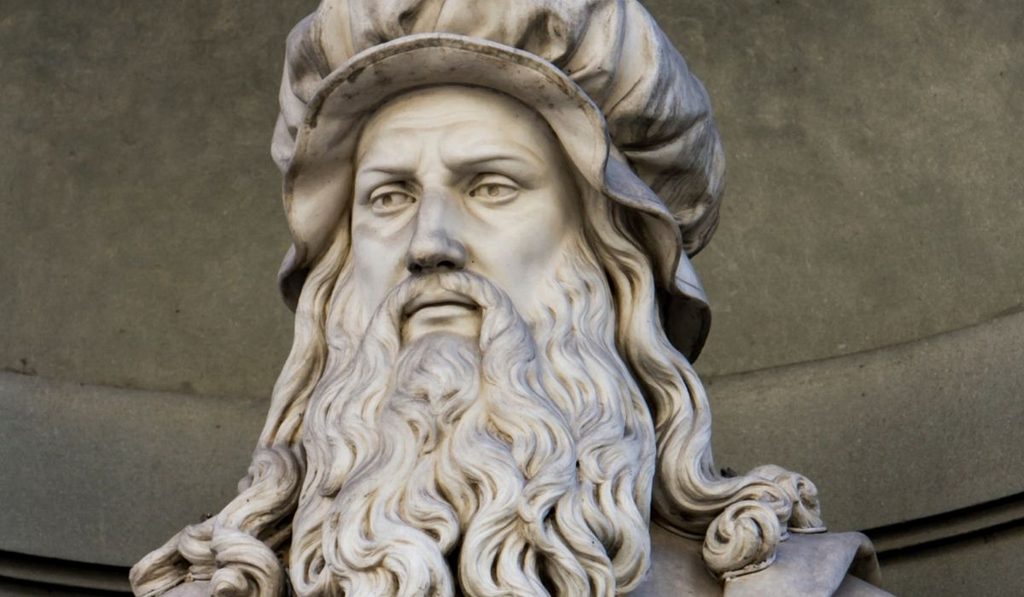
Relocating to vibrant Florence around 1466, ambitious teenager Leonardo Da Vinci entered the prestigious workshop of Andrea del Verrocchio, a leading master sculptor and painter. In this dynamic studio environment, he mastered drafting, chemistry, metallurgy, plaster casting, mechanics, and oil painting alongside rising peers like Sandro Botticelli. His remarkable skill surpassed his master during the creation of The Baptism of Christ, where he painted an ethereal angel using delicate oil glazes. Qualifying as a master in the Guild of Saint Luke by 1472, his years in Florence honed his technical discipline, visual precision, and deep understanding of light.
First Independent Works in Florence
Establishing his independent career in Florence, visionary artist Leonardo Da Vinci accepted prestigious commissions that demonstrated his expanding creative mastery. During this formative professional phase, he painted exquisite works like the Annunciation and the captivating portrait Ginevra de’ Benci. In 1841, Augustinian monks commissioned his ambitious panel The Adoration of the Magi, which introduced revolutionary atmospheric depth, complex human grouping, and dramatic narrative motion. Although left unfinished when he relocated, this early Florentine output proved his unmatched ability to convey human emotion, natural light, and structural volume through innovative panel techniques, instantly capturing the attention of wealthy Italian patrons.
First Milanese Period and Sforza Court
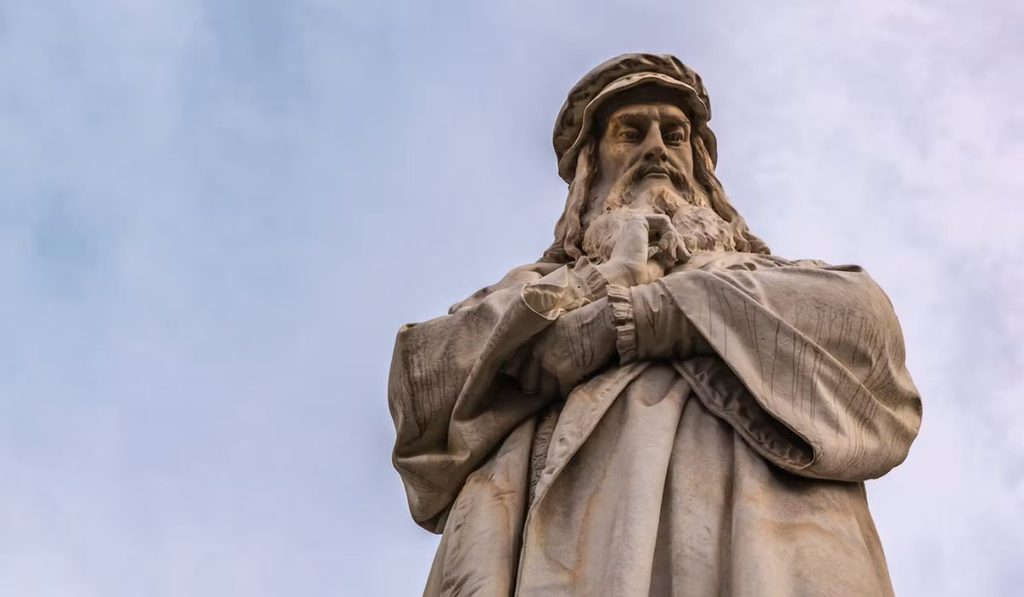
Seeking broader opportunities beyond Florence, multi-talented creator Leonardo Da Vinci moved to Milan in 1482 to serve Duke Ludovico Sforza as court artist and military engineer. During seventeen fruitful years at the Milanese court, he designed elaborate pageant sets, musical instruments, urban plans, and advanced military machinery. He also painted masterpieces like Virgin of the Rocks and Lady with an Ermine, refining his famous sfumato technique to create soft, imperceptible tonal transitions. His prestigious position at court allowed him to blend creative visual arts with practical engineering, expanding his reputation across northern Italy as a brilliant polymath.
Creation of The Last Supper Mural
Commissioned by Duke Ludovico Sforza for the refectory of Santa Maria delle Grazie, master painter Leonardo Da Vinci created The Last Supper between 1495 and 1498. Capturing the dramatic psychological moment when Jesus reveals an upcoming betrayal, the mural displays groundbreaking linear perspective and distinct emotional reactions across the twelve apostles. Departing from traditional fresco methods, he applied experimental tempera and oil onto dry plaster, which unfortunately caused early physical deterioration. Despite structural wear over centuries, the masterpiece remains one of the most celebrated, analyzed, and influential narrative compositions in Western history.
Studies in Human Anatomy and Dissection
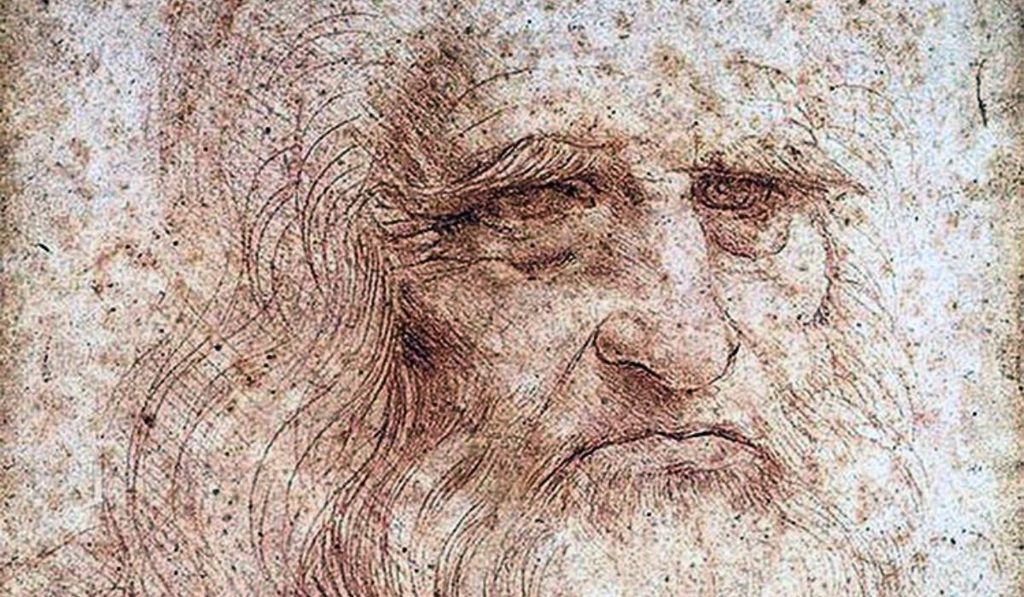
Driven by a quest to understand physical life, scientific investigator Leonardo Da Vinci conducted meticulous anatomical dissections in hospital morgues across Milan and Florence. Collaborating with medical scholars, he dissected over thirty human corpses, drawing precise cross-sections of muscles, bones, nerves, and vascular systems. His pioneering anatomical illustrations, including detailed studies of the human fetus and heart valves, were centuries ahead of contemporary medical knowledge. By combining artistic precision with rigorous scientific inquiry, his anatomical codices bridged the gap between medical science and visual art, establishing foundational standards for modern medical illustration.
Vitruvian Man and Human Proportions
Illustrating the harmonious relationship between geometry and human anatomy around 1490, intellectual pioneer Leonardo Da Vinci drew the iconic Vitruvian Man pen-and-ink study. Based on the architectural writings of ancient Roman architect Vitruvius, the drawing depicts a male figure in two superimposed positions inscribed within a circle and a square. The famous artwork symbolizes the Renaissance belief in the human body as a microcosm of universal order and mathematical perfection. Combining artistic grace with geometric precision, this timeless sketch remains an enduring global symbol of humanism, scientific curiosity, and classical proportion.
Mechanical Engineering and Military Designs
Serving various political rulers during turbulent Italian conflicts, brilliant engineer Leonardo Da Vinci conceptualized extraordinary mechanical devices that anticipated modern war technology. His detailed notebook sketches contained designs for armored fighting vehicles, multi-barrel cannons, giant crossbows, and covered siege bridges. While many designs were too complex to fabricate using fifteenth-century materials, his mastery of gears, levers, pulleys, and transmission systems revolutionized mechanical drafting. His visionary engineering manuscripts laid fundamental groundwork for modern mechanical design, proving his practical capacity to solve complex physical problems through systematic visual analysis.
Flight Studies and Aerial Inventions
Fascinated by bird aerodynamics and natural atmospheric motion, visionary thinker Leonardo Da Vinci spent decades studying avian mechanics to construct human flying machines. His extensive flight codices contained detailed mechanical drawings for flapping ornithopters, glider wings, lightweight mechanical linkages, and a helical aerial screw resembling a modern helicopter. He also conceptualized a pyramid-shaped cloth parachute designed to lower individuals safely from high structures. Though human flight remained impossible during his era due to lack of lightweight power sources, his flight studies laid early theoretical foundations for modern aviation and aeronautical engineering.
Painting the Enigmatic Mona Lisa
Beginning the portrait in Florence around 1503, master artist Leonardo Da Vinci worked on the iconic Mona Lisa for several years, keeping it with him until his death. Depicting Lisa Gherardini, the painting revolutionized portraiture through its subtle sfumato shading, atmospheric landscape background, and famously enigmatic facial expression. By layering ultra-thin oil glazes, he achieved soft tonal transitions that brought unprecedented lifelike warmth and psychological complexity to the subject. Housed today in the Louvre Museum, this masterpiece stands as the most famous, visited, and analyzed individual portrait in world art history.
Return to Florence and Battle of Anghiari
Returning to Florence in 1503, celebrated master Leonardo Da Vinci received a civic commission to paint The Battle of Anghiari in the Palazzo Vecchio. Assigned to cover a massive wall opposite his rival Michelangelo, he designed a terrifying, energetic composition depicting cavalry soldiers fighting for a battle flag. Experimenting once again with unconventional oil mixtures on plaster, the paint failed to dry properly, forcing him to leave the mural unfinished. Though lost to history, his dramatic preliminary sketches deeply influenced generations of High Renaissance artists who studied his dynamic compositional movement.
Second Milanese Period and Scientific Codices
Invoked back to Milan in 1506 by French governors, multi-talented scholar Leonardo Da Vinci focused heavily on scientific research, hydraulic engineering, and architectural studies. He filled thousands of notebook pages with mirror-written notes and detailed technical drawings exploring hydrodynamics, geology, optics, and botanical structures. During this period, he took on young nobleman Francesco Melzi as a devoted pupil and lifelong companion who helped organize his extensive written works. His Milanese notebooks reveal a mind using empirical observation and visual drawing as primary tools to uncover fundamental scientific laws governing physical nature.
Years in Rome and the Vatican
Relocating to Rome in 1513 under the patronage of Giuliano de’ Medici, veteran polymath Leonardo Da Vinci resided in the Belvedere Palace at the Vatican. While younger contemporaries Raphael and Michelangelo received massive papal painting commissions, he concentrated on botanical studies, solar power experiments, coin minting machinery, and marsh draining projects. Although political rivalries and failing health restricted his public artistic output in Rome, his time in the Holy City allowed him to refine late paintings like Saint John the Baptist, which showcased dramatic chiaroscuro contrasts and delicate sfumato techniques.
Final Years at Clos Lucé in France
Accepting a gracious invitation from King Francis I in 1516, aging master Leonardo Da Vinci spent his final years living at the Château du Clos Lucé near Amboise, France. Named Premier Painter, Engineer, and Architect to the King, he enjoyed a generous royal pension and complete freedom to pursue theoretical research. He organized royal festivities, designed palace architecture, and arranged his scientific manuscripts. Surrounded by loyal students, his time in France consolidated his legacy, introducing Italian High Renaissance artistic concepts and engineering expertise directly to the French royal court.
The Codex Leicester and Hydrodynamic Studies
Among his most fascinating scientific manuscripts, the famous notebook known as the Codex Leicester showcases Leonardo Da Vinci as a visionary geologist and hydrodynamic researcher. Compiled between 1506 and 1510, the manuscript features detailed observations on water flow, river erosion, dam design, and celestial light reflection. He correctly theorized that mountain fossils were ancient sea creatures buried under prehistoric oceans, predating modern geological theories by centuries. This extraordinary notebook demonstrates his ability to combine acute environmental observation with systematic physical reasoning, solidifying his stature as a pioneer of modern empirical scientific investigation.
Art Theory and the Treatise on Painting
Throughout his active working life, influential theorist Leonardo Da Vinci compiled detailed notes on art practice, color theory, light, and perspective. Later compiled by his pupil Francesco Melzi as the Treatise on Painting, these writings argued that painting was a noble science rooted in geometry, optics, and empirical nature. He emphasized the mastery of sfumato, aerial perspective, and anatomical gesture to convey emotional truth on flat panels. His theoretical guidance transformed art education across Europe, elevating the professional status of painters from simple craft manual laborers to respected intellectual scholars.
Death in Amboise and Royal Legend
Passing away at the Château du Clos Lucé on May 2, 1519, at age sixty-seven, legendary figure Leonardo Da Vinci left behind an incomparable cultural legacy. Romantic tradition popularized by biographer Giorgio Vasari claimed that King Francis I held the dying master in his arms during his final moments. He was buried in the chapel of Saint-Florentin at Château d’Amboise. His sudden passing marked the end of an extraordinary era of Renaissance innovation, mourning across European royal courts, artistic guilds, and scientific communities that recognized his unmatched intellectual genius.
Preservation of Notebooks and Manuscripts
Following his death, thousands of manuscript pages left behind by Leonardo Da Vinci were inherited by his devoted student Francesco Melzi. Though many pages were scattered or lost over subsequent decades, surviving collections were eventually preserved in major European libraries as famous codices. Manuscripts like the Codex Atlanticus and Codex Windsor reveal his astonishing research across botany, geometry, hydraulics, optics, and mechanics. Rediscovered during the nineteenth century, these preserved notebooks transformed public understanding of his career, proving that his scientific mind was equal to his world-renowned artistic talent.
Influence on High Renaissance Masters
The groundbreaking visual techniques developed by master painter Leonardo Da Vinci reshaped European art, directly inspiring High Renaissance giants like Raphael and Michelangelo. His subtle sfumato shading, atmospheric perspective, and harmonious pyramidal compositions became standard practices for succeeding generations of painters. Younger artists studied his panel compositions and preliminary sketches to learn how to represent human emotion, physical movement, and realistic light. By elevating painting into a complex intellectual discipline, his artistic breakthroughs altered the course of Western visual culture, setting standards of beauty and technical excellence that lasted for centuries.
Enduring Universal Legacy in Modern Culture
Reflecting on the monumental life work of Leonardo Da Vinci reveals an enduring legacy that continues to inspire global artistic, scientific, and technological innovation. His remarkable ability to synthesize fine art with empirical science embodies the ultimate potential of human creativity. From iconic museum masterpieces visited by millions annually to modern engineering marvels inspired by his early mechanical drawings, his vision remains intensely modern. He stands across history as an eternal symbol of curiosity, proving that rigorous observation, creative imagination, and relentless questioning can unlock the deepest secrets of nature.
Frequently Asked Questions
- Who was Leonardo Da Vinci?
- Leonardo Da Vinci was an Italian High Renaissance polymath famous as a painter, sculptor, engineer, scientist, and inventor.
- What are Leonardo Da Vinci’s most famous paintings?
- His most recognized masterworks include the Mona Lisa, The Last Supper, and the Vitruvian Man drawing.
- Where was Leonardo Da Vinci born?
- He was born in or near the Tuscan hill town of Vinci, located near Florence, Italy.
- Why are his notebooks so famous?
- His surviving notebooks contain thousands of pages of mirror-written notes and drawings detailing human anatomy, flying machines, and advanced engineering concepts.
- Where can readers find additional official biographical information regarding his life?
- Comprehensive historical records, art catalogs, and biographical summaries can be explored directly on his dedicated page on